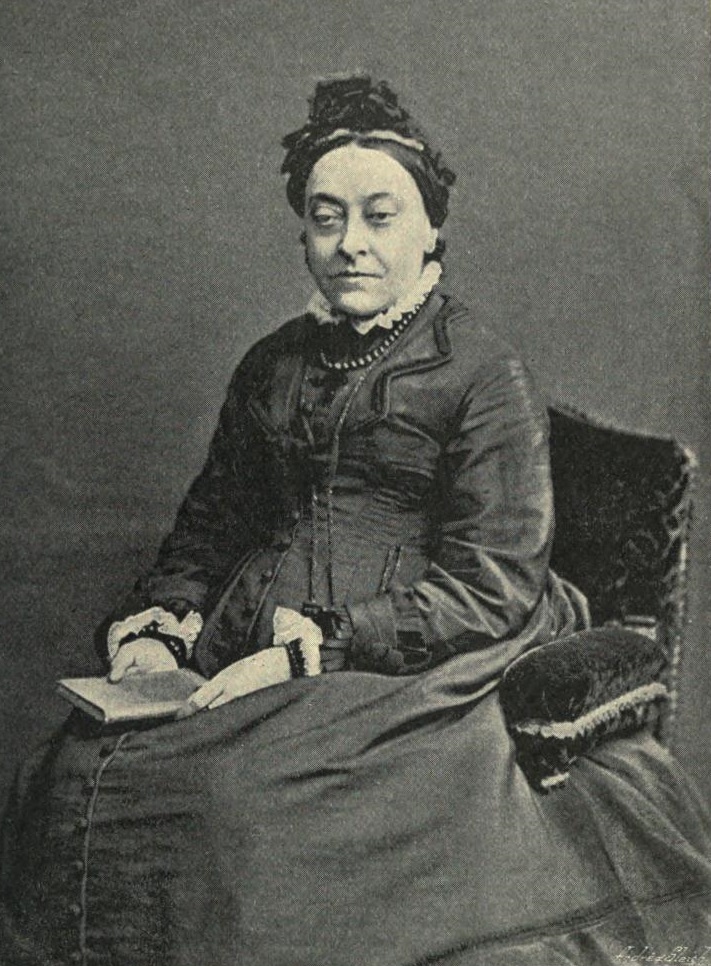
Christina Rossetti's "Remember" looks, at first, like a poem that asks for one simple thing. The title gives the command. The first line repeats it: "Remember me when I am gone away."[1] A speaker imagines death as distance, silence, and the end of ordinary physical contact. The beloved will no longer hold her hand. The future they once discussed will no longer be available for advice, correction, or shared planning. Memory seems to become the last form of fidelity left to the living.
That is the poem's opening pressure, but not its final wisdom. The sonnet is powerful because it changes its mind without betraying its first desire. It begins by asking to be remembered, then discovers that love may have to loosen even that demand. The closing proposition is not cold stoicism. It is stranger and kinder: if remembering turns the survivor's life into grief, then forgetting may be the more loving outcome.[1]
Rossetti wrote inside a Victorian culture that took mourning, devotion, and self-command seriously, but her poem does not simply repeat a period formula. The Academy of American Poets identifies "Remember" as a public-domain sonnet by Christina Rossetti, and both Britannica and the Academy's poet page place her among the central Victorian poets, shaped by religious seriousness, family artistry, and a lyric gift for making inward conflict sound exact.[1][2][3] The poem condenses that gift into fourteen lines. It does not dramatize a deathbed scene. It stages an argument inside tenderness.
The First Half Makes Memory Feel Like Touch
The octave, the first eight lines of the sonnet, treats memory as a substitute for presence. Death is not imagined as spectacle. It is "the silent land," a phrase that matters because it removes voice before it removes emotion.[1] The speaker is not asking to be admired after death. She is asking that a line of relation survive when speech, touch, and shared time have stopped.
The physical details are ordinary and therefore devastating. A hand held. A half-turn toward staying. Daily talk about a future. These are not grand romantic emblems; they are small habits of attachment. Rossetti's art is to make the beloved's future loss feel practical before it feels metaphysical. What disappears is not only the speaker's body, but the whole grammar of mutual adjustment. No more reaching out. No more changing one's mind at the threshold. No more plans that can still be revised together.[1]
That is why the repeated command does not sound vain. "Only remember me" is not a demand for monumentality.[1] It is a plea that the relationship not be erased by the asymmetry death creates. One person will still move through days. The other will have become unavailable to correction, advice, prayer, and touch. Memory is the one remaining place where the dead and living can appear to meet.
Yet Rossetti is already preparing the turn. The octave's language is controlled, almost too controlled. The speaker does not rage against death or promise supernatural reunion. She keeps measuring what cannot happen anymore. That restraint creates the ethical force of the sestet, because the poem's second half does not escape grief by denying death. It accepts the severity of separation and then asks what love should require from the person who remains alive.
The Turn Refuses To Make Grief A Duty
The hinge arrives with "Yet."[1] In many sonnets, the turn introduces a complication, answer, or reversal. Here it changes the moral weather. The speaker who has asked to be remembered now imagines the beloved forgetting "for a while" and returning to memory later without guilt.[1] That small permission alters the whole poem.
The first half could be read as possessive if it stood alone. Remember me. Keep me present. Let the dead continue to claim the living. The second half prevents that reading from hardening. Rossetti's speaker wants to be remembered, but she does not want memory to become coercion. She does not turn love into an obligation to remain sad.
This is the poem's most radical kindness. It recognizes that grief is not a pure measure of love. A survivor can forget briefly and still have loved deeply. A survivor can smile without committing betrayal. That insight is easy to state abstractly, but Rossetti makes it hard-won because the speaker herself has so clearly wanted remembrance. The permission to forget costs something. It is not indifference. It is self-renunciation made audible.
The word "while" keeps the poem human. The speaker does not announce that she is happy to be erased forever. She imagines forgetfulness as intermittent, the ordinary lapse by which life keeps living. That makes the poem more truthful than a grand theory of selfless love. It knows that memory comes and goes. It knows that sorrow cannot remain at ceremonial pitch every hour. It knows that the living body has its own claims.
Thought Matters More Than Ritual Memory
The late lines introduce a difficult condition: if something of the speaker's thoughts remains, then the beloved's happiness matters more than conscious mourning.[1] This is subtler than saying, "Forget me if you must." The poem distinguishes between explicit remembrance and inward influence. A person may stop actively summoning the dead and still carry traces of how the dead thought, loved, judged, feared, or hoped.
That distinction gives the poem its philosophical depth. Memory is not only recall. It is formation. To remember someone can mean to name them, picture them, speak of them, and grieve them. But to be changed by someone is a deeper and less visible survival. Rossetti's speaker seems to understand that the beloved may someday live under her influence without always turning that influence into sadness.
This helps explain why the poem's ending does not feel sentimental. "Forget and smile" and "remember and be sad" are almost brutally plain alternatives.[1] Rossetti does not ornament the choice. She strips it down to emotional consequence. If remembrance wounds the living more than it honors the dead, then remembrance has become morally suspect. Love must care about the beloved's life, not only about its own afterimage.
The poem also resists the vanity of perfect memorial control. The dead cannot manage the living. They cannot dictate how often they are thought of, what associations survive, or whether grief will soften into habit. Rossetti lets the speaker say this from inside the position that has the least power. That is why the sonnet feels composed rather than defeated. It accepts powerlessness and turns it into generosity.
Why The Sonnet Still Feels Fresh
"Remember" remains fresh because it refuses the two easiest postures around loss. It refuses the hard posture that says the living should simply move on. The poem's first half insists that memory matters, that love wants continuity, and that disappearance hurts because ordinary presence mattered. But it also refuses the opposite posture, in which grief proves love by refusing relief. The closing lines make sadness answerable to care.
This double movement is very Rossetti. Britannica emphasizes her ability to join devotional and passionate energies, while the Academy's poet page presents a poet whose life and work were shaped by family intellect, religious seriousness, illness, and artistic ambition.[2][3] "Remember" does not require a biographical key to work, but that context helps clarify the poem's discipline. It is passionate without losing restraint, devotional in its seriousness about death, and unsparing about the moral risks hidden inside attachment.
The sonnet form matters too. Fourteen lines leave little room for narrative padding. Rossetti uses that compression to make the reader experience a genuine inward turn. The poem begins in command, moves through absence, and ends in permission. Nothing has happened in the plot except a speaker thinking more truthfully about what love can ask. That is enough.
The final kindness is that the poem does not abolish remembrance. It purifies it. To remember well is not to keep grief lit at all costs. It is to let the beloved's good outrank the speaker's wish to be consciously preserved. In that sense, "Remember" is not finally a poem about being forgotten. It is a poem about releasing memory from ownership. The speaker asks to remain, then learns to love the survivor more than the request.
Sources
- Academy of American Poets, "Remember" by Christina Rossetti, public-domain text of the sonnet.
- Encyclopaedia Britannica, "Christina Rossetti," biographical context and literary significance.
- Academy of American Poets, "Christina Rossetti," poet biography and selected work context.
- Wikimedia Commons, "File:Portrait of Christina Rossetti.jpg," source page for the archival Elliott & Fry photographic portrait.