Rosalind is often praised as Shakespeare's most buoyant heroine, but that praise can make her sound effortless. As You Like It is lighter than the tragedies, yet Rosalind's lightness is not weightlessness. She begins as a daughter under political pressure, a young woman whose father has been banished and whose own safety depends on an uncle's unstable favor.[1][2] What makes her extraordinary is not simply that she is witty. It is that she turns wit into a practical intelligence for living under constraint.
The play's basic movement is familiar: court gives way to forest, danger gives way to comedy, and exile becomes the space where people are rearranged.[1][3] But Rosalind does more than benefit from Arden's freedom. She makes freedom usable. Once she becomes Ganymede, disguise stops being only protection and becomes a thinking machine. It lets her test Orlando's love without surrendering to it, rebuke other lovers without standing outside desire, and stage the ending before anyone else understands the shape of the play.
That is why a character study of Rosalind should not treat Ganymede as a costume gag. The disguise is her method. Britannica usefully notes that Rosalind has the most dialogue in the play and the most lines of any female Shakespearean character; more important than the count is what she does with that verbal room.[4] She does not merely speak often. She speaks in order to create conditions: shelter, courtship, correction, delay, revelation, and finally audience response.
Grief Learns To Move
Rosalind's first problem is not romance but displacement. Folger's scene summary places her at court with Celia after Duke Senior's banishment, before Duke Frederick turns against her too.[1] The opening court world is therefore already damaged. Kinship has been broken by usurpation, and affection survives inside a political household that can revoke safety without warning.
This matters because Rosalind's comic energy is sometimes misread as natural cheer. In Act 1, she is not carefree. She is grieving a father and trying to answer Celia's loyalty without making grief the whole room.[1] Her first emotional gift is modulation. She can be sad without making sadness sovereign; she can enter banter because banter is one way of staying alive in a place where direct complaint would be useless.
When Duke Frederick banishes her, Rosalind's intelligence becomes immediately tactical. She does not collapse into lyric misery. She plans. Celia's loyalty gives the escape its emotional core, but Rosalind supplies the risk calculation: if they travel as women, they are vulnerable; if she dresses as a young man, height and costume can become a shield.[1][4] Even before Arden, then, Ganymede begins as a practical answer to danger rather than a romantic ornament.
That origin keeps the later comedy honest. Rosalind's freedom in the forest is born from coercion. She discovers range because she has been forced out of place. The character's brilliance lies in refusing to let exile remain only injury.
Ganymede Is An Experiment, Not An Escape
In Arden, Rosalind finds Orlando's love poems hanging from trees, and the comedy could easily become a fantasy of mutual adoration. Instead, she edits the fantasy. Folger summarizes the crucial arrangement: disguised as Ganymede, Rosalind tells Orlando she can cure him if he pretends that Ganymede is Rosalind and comes daily to woo.[1] The premise is absurd and precise at once. It gives Rosalind proximity without exposure, power without public confession, and a way to discover whether Orlando loves a person or merely a rhyme.
Her genius is that she does not reject romance; she rehearses it under pressure. The brief cure scene changes the courtship from declaration to practice. Orlando can write Rosalind into flattering verse, but Ganymede forces him into conversation, timing, contradiction, and comic correction.[1][4] Love must answer questions. Love must survive interruption. Love must learn that theatrical excess is not the same thing as fidelity.
The famous line about curing him is short, but its dramatic force is large: "I would cure you."[1] Rosalind makes herself doctor, actor, beloved, critic, and stage manager in four words. She knows she is in love, and that knowledge does not make her passive. It makes her more exacting. Under disguise, she can ask what open femininity at court could not safely ask: what kind of lover is Orlando when he cannot simply adore an image?
The answer is affectionate but incomplete. Orlando is brave, loyal, and capable of growth; he is also susceptible to poetic inflation. Rosalind's role-play gives him a better education than praise would. She mocks love's deathly rhetoric, punctures his punctuality failures, and keeps drawing him from posture toward relation.[1][4] In character terms, this is Rosalind's rare balance: she is inside the feeling and outside its cliches at the same time.
Wit With A Social Use
Rosalind's wit can sound like pure pleasure, but Shakespeare gives it social work. She buys a cottage for the disguised party, manages Touchstone's disruptive presence, observes Silvius and Phoebe, and keeps Celia's patience from snapping entirely.[1][3] She is not only the clever lover. She is the administrator of comedy.
That administrative talent becomes clearest when Phoebe falls in love with Ganymede. Rosalind's disguise has produced an unintended effect, but she does not abandon the field. She reads Phoebe's vanity, Silvius's abasement, and the danger of romantic asymmetry, then tries to turn the whole mistaken circuit toward a workable ending.[1][4] Her intervention is not sentimental. She can be severe because she understands that worship can deform both worshiper and beloved.
This is one reason Rosalind feels more modern than a simple pastoral heroine. Arden does not make her innocent. It gives her enough room to become managerial, skeptical, tender, and theatrical all at once. The Shakespeare Birthplace Trust's summary rightly emphasizes that Rosalind, disguised as a boy shepherd, has Orlando woo her under the pretense of curing his love.[3] But the larger pattern is that nearly everyone in Arden enters a tutorial. Orlando studies love; Phoebe studies vanity; Silvius studies self-respect; even Duke Senior's exile studies the difference between courtly loss and forest adaptation.
Rosalind is the only character fluent across all those lessons. Jaques can comment, Touchstone can parody, and the dukes can symbolize political reversal. Rosalind can act. Her speech changes what other people do next.
The Body Betrays The Role
The play never lets Rosalind become pure mastermind. When she hears that Orlando has been wounded saving Oliver, she faints.[1][4] That moment is sometimes treated as comic exposure, and it is funny: Ganymede's masculine composure fails under the pressure of Rosalind's fear. But the scene also protects the character from becoming merely brilliant.
Her body keeps the stakes alive. She can manage scripts, but she cannot fully manage love. She can mock romantic melodrama, but Orlando's blood on a handkerchief undoes her theater.[1] Shakespeare's subtlety is to make this collapse deepen rather than weaken her. Rosalind's power has never depended on being untouched by feeling. It depends on being able to return from feeling into form.
That return matters because the final act requires composure. Rosalind must coordinate Orlando, Phoebe, Silvius, Celia, the restored family structures, and the public unveiling of her own identity.[1][4] She ends by doing what she has been doing all along: converting emotional confusion into staged consent.
The Epilogue Completes The Character
Rosalind's epilogue is not an afterthought. It is the final proof of her command. After resolving the plot, she steps beyond it and addresses the audience directly.[1][4] The move gathers the play's layered performance history into one gesture. In Shakespeare's theater, a boy actor played Rosalind, who had spent much of the play as Ganymede, who had pretended to be Rosalind. The epilogue knows this and uses it.
Folger's text gives her direct appeal to spectators: "I charge you, O women."[1] The phrase is brief, almost legal in its force. Rosalind does not beg for approval; she organizes it. She addresses women and men separately, teasing desire, theatrical convention, and audience judgment into one final social contract.[1][4] The Globe's essay on Rosalind is right to resist calling her inexpressive: her prose, timing, and audience address make her one of Shakespeare's great makers of social meaning.[6]
The character's arc, then, is not from silence to speech. She speaks from the beginning. The arc is from vulnerable speech inside another person's court to sovereign speech at the edge of the stage. Court Rosalind must survive power. Forest Rosalind tests power. Epilogue Rosalind exercises it.
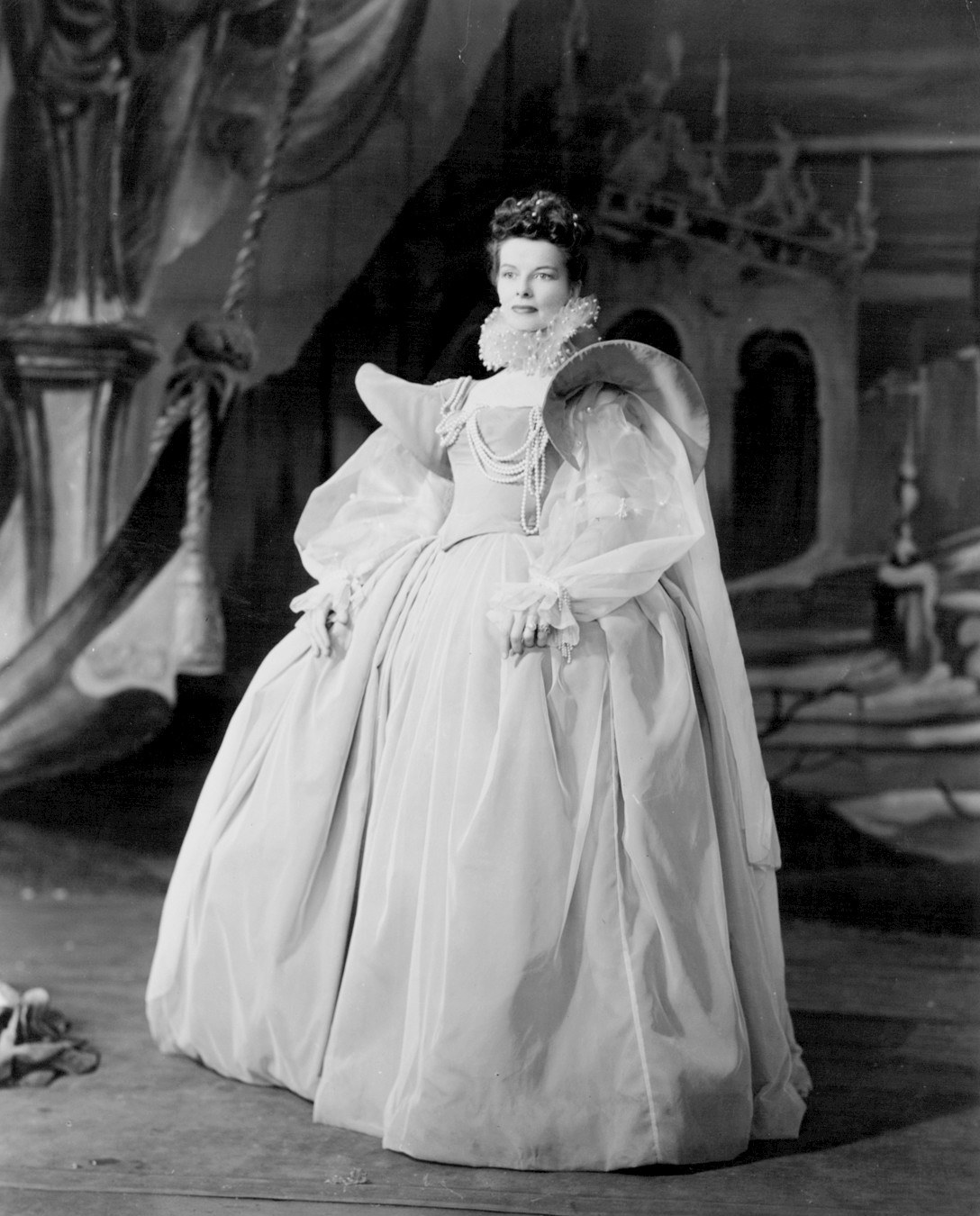
This is why a production photograph works better than a document image for this article's cover. Rosalind's vitality does not live only on the printed page; it depends on a body using costume, stance, address, and timing to make thought theatrical.[5] She is not free because the forest is magical. She is free because she learns how to make a role think more sharply than the world that assigned it. Disguise does not hide Rosalind. It gives her the instrument by which she becomes most visible.
Sources
- William Shakespeare, As You Like It, Folger Shakespeare Library full text; source for cited scenes, plot sequence, and quoted lines.
- Folger Shakespeare Library, "As You Like It" overview and early printed texts note; source for First Folio publication context.
- Shakespeare Birthplace Trust, "As You Like It Summary"; concise institutional plot and character overview.
- Encyclopaedia Britannica, "Rosalind"; character overview, role analysis, line-count context, and performance history.
- Wikimedia Commons, "File:Katharine Hepburn Rosalind As You Like It 1951.jpg"; source page for the archival production photograph used as the cover image.
- Shakespeare's Globe, "'The unexpressive she': Who is Shakespeare's Rosalind?"; critical performance-context essay on Rosalind's language, role, and agency.