Arthur Rimbaud's Le Bateau ivre is often introduced as a prodigy poem: a teenage poet, a runaway imagination, a boat speaking in the first person, oceans turning into hallucination.[1][2][3] That summary is true, but it can make the translation problem sound simpler than it is. If the poem were only a young poet's marine fireworks, the translator's job would be to find bright English equivalents for reefs, storms, phosphorescence, monsters, and drunken motion. The harder task is stranger: English has to preserve a poem that begins in liberation, grows addicted to sensation, and then discovers that endless drift can feel like exhaustion.
The title itself tempts a decision too early. Le Bateau ivre is conventionally "The Drunken Boat," and that title is serviceable because ivre carries intoxication, not just looseness or instability.[2] But "drunken" can make the boat sound comic or merely disordered. Rimbaud's boat is not simply reeling. It has been released from human guidance, and once it is free, its grammar starts to behave like an appetite. The poem keeps asking whether freedom is command, abandonment, vision, or damage.
That is why the opening line matters more than a translation of the title. Rimbaud begins, "Comme je descendais..."[1] The boat is already going down the rivers before the reader can ask who controls the journey. The verb is ordinary, almost quiet, but its direction is decisive. "As I was descending" keeps the motion continuous; "as I came down" sounds more punctual; "as I drifted down" adds passivity too soon. The French line lets descent feel both physical and grammatical. The boat speaks because it is moving, and it is moving because its old human relation has snapped.[1][2]
The poem's freedom is not a clean escape
The first translation trap is to make the boat too triumphant. The haulers are gone; the river releases the vessel; the speaker can move where it wants.[1] In an English version, this can easily become a fantasy of adolescent escape from rules. Rimbaud certainly wants that pressure: the poem arrives out of the same 1871 moment in which his poetry was becoming a program of visionary derangement, linguistic invention, and rebellion against inherited forms.[3][4] But the stanza logic is rougher than liberation rhetoric. The boat's freedom is born out of violence, and the human world does not vanish cleanly. It leaves cargo, habit, memory, and a body that can be penetrated by water.
This is where a translator needs verbs with grain. The poem does not merely say that the boat sailed away. It is washed, lightened, pushed, filled, thrown, and finally made almost porous.[1] Too many polished English verbs would make the poem elegant in the wrong way. The French keeps physical insult close to visionary ascent: stains, vomit, sapin wood, ropes, anchors, and cargo sit beside stars and strange skies.[1] The translator has to let vulgar matter and radiant matter share the same deck.
That mixed register is a major part of Rimbaud's afterlife. The Academy of American Poets biography gives the stark career frame: Rimbaud's poetry belongs to an astonishingly brief span, with Le Bateau ivre listed at 1871 and his poetic output largely concluded a few years later.[4] Britannica reads the poem itself as a demonstration of method: form pressed into the service of vision, with rhythm and imagery driven forward by the imagined sea.[3] Translation should not smooth that method into pretty symbolism. It should let the line feel overloaded, even when the English sentence has to remain readable.
"I know" is more dangerous than "I saw"
Readers remember the poem's images, but the repeated claim of knowledge is just as important. Rimbaud's speaker says "Je sais" before skies, waters, currents, evening, dawn, and what humans thought they had seen.[1] "I know" is blunter than "I have seen." It makes the boat sound like a witness who has passed through ordinary perception into possession. The poem is not presenting scenery for contemplation. It is claiming a kind of sensory authority.
That authority is unstable. A translator can make the catalog too painterly, turning each marine image into a separate framed marvel. But the French often works by saturation rather than by display. Color, motion, weather, animal life, rot, erotic charge, and cosmic scale do not politely succeed one another. They ferment. The sea is not a setting; it is a medium that remakes the speaker's senses.[1][3]
The word "lactescent," for instance, should make an English translator hesitate. It is close enough to English to tempt direct borrowing, but in a poem already dense with color and liquid, it can sound either wonderfully strange or academically stiff. "Milky" is clearer and more bodily, but it loses the learned shimmer. The decision depends on what kind of Rimbaud the translation wants: a visionary adolescent with violent clarity, or a decadent verbal chemist. The poem contains both. A good translation should not choose one so completely that the other disappears.
The late turn: Europe as a parapet
The poem's most moving reversal comes when the boat, after its visionary overreach, admits: "Je regrette l'Europe aux anciens parapets."[1] That line is easy to underplay. If rendered too simply as homesickness for old Europe, it sounds like a retreat from adventure. If inflated into civilizational allegory, it becomes too grand. The force lies in the scale change. After archipelagos, maelstroms, strange Floridas, behemoths, and skies broken open, the poem suddenly wants parapets: edges, old walls, bounded human architecture.[1][2]
The line also makes the poem's earlier freedom look less simple. The boat has escaped the haulers, flags, cargo, and commercial routes, but it has not escaped the need for form. This is the hidden translation problem in the final movement. English must carry not only fatigue but the humiliation of scale. The speaker who crossed impossible waters now imagines a child releasing a small fragile boat.[1] The enormous poem contracts into a toy-sized image, and the translator has to keep that contraction from sounding sentimental.
"Fragile" is useful here, but it is not enough. Rimbaud's final comparison, "un bateau frêle comme un papillon de mai," is delicate and almost unbearable because it turns the boat into a seasonal, hand-released thing.[1] The poem that has been too large for ordinary geography ends by desiring a small European puddle at dusk. That is not a moral defeat exactly. It is a recognition that pure unboundedness has become unlivable.
What translation has to keep afloat
The best way into Le Bateau ivre is to stop treating it as a sequence of spectacular images and read it as a drama of pronouns, verbs, and scale. The "I" is a boat, a poet, a vehicle, a body, and an experiment in perception.[1][3] Its verbs move from release to rapture to weariness. Its scale expands until Europe looks small, then contracts until a child's toy boat becomes the most piercing image in the poem.[1][2]
For translation, that means four pressures have to survive together:
- the roughness of physical release, not just the romance of escape;
- the intoxicated forward rush of the alexandrine without mechanical sing-song;
- the collision of beautiful, ugly, learned, and bodily diction;
- the late desire for boundary after visionary excess.
No English version can solve all of this permanently. The poem is too kinetic for that. But the translator who keeps only the dazzling sea loses the ending, and the translator who makes the ending merely nostalgic loses the danger of the sea. Rimbaud's boat is drunk because it has been freed into too much world. It is unforgettable because, by the end, even its freedom wants a shore.
Sources
- French Wikisource, Poésies (Rimbaud), éd. Vanier, 1895 / Le Bateau ivre - validated French text of the poem.
- Encyclopaedia Britannica, "The Drunken Boat" - publication and interpretive overview.
- Encyclopaedia Britannica, "Arthur Rimbaud: Major works" - context for Rimbaud's 1871 Paris moment and the poem's method.
- Academy of American Poets, "Arthur Rimbaud" - biographical timeline and bibliography.
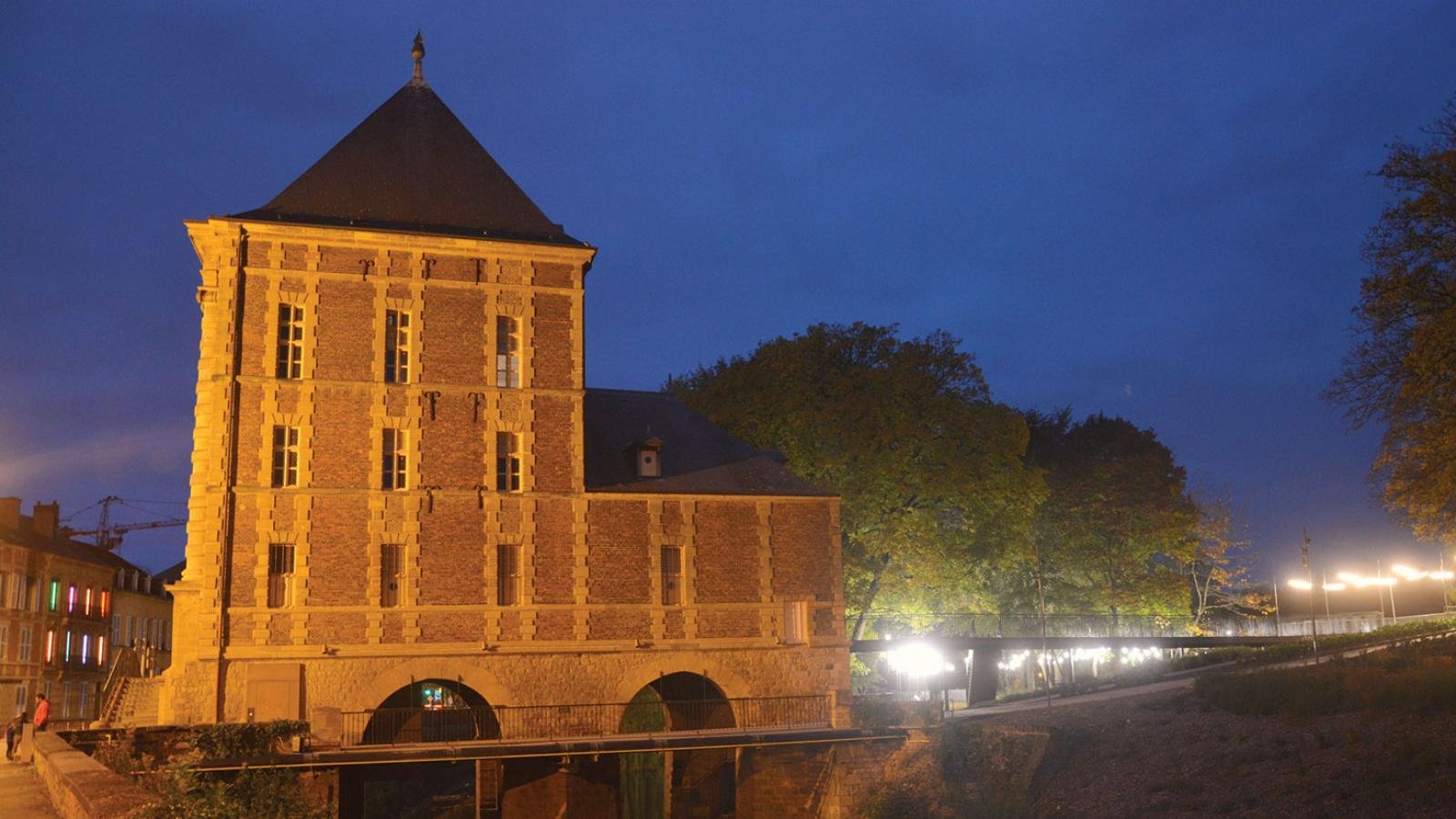
- Charleville-Mézières Sedan tourism office, "The Arthur Rimbaud Museum" - riverside museum context and lead image source.