Many first-time readers come to The Return of the Native expecting a tragic love polygon, a thick dose of Hardy fatalism, and perhaps a gloomy moral about passionate people choosing badly on a moor.[1][2] None of that is false, but it is a clumsy way in. The cleaner entrance is to stop treating the book as a melodrama that happens to take place on Egdon Heath and to start with the three forces that actually organize the experience of reading it: the heath itself, Eustacia Vye's appetite for a larger life, and Clym Yeobright's attempt to turn homecoming into a vocation.[1][3][4]
That route also makes better sense of the book's place in Hardy's career. The Thomas Hardy Society notes that Hardy wrote the novel with serial publication in mind and that its opening movement devotes itself to the bleakness of Egdon Heath, with the early chapters set overwhelmingly outdoors and at night.[2] Cambridge's edition description adds the historical framing that matters for a reader now: when Hardy composed the novel in 1878, his Wessex was not yet the fully consolidated imaginative territory it would later become, and the book is one of the works through which that world took shape.[4] Read that way, The Return of the Native is not just a plot of unfortunate collisions. It is one of Hardy's most exact experiments in making environment, desire, and moral purpose fail to keep the same time.
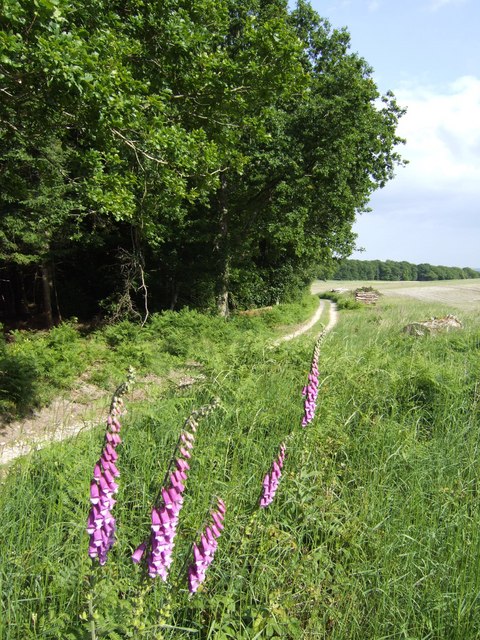
Image context: the cover uses a real photograph of Dorset heathland rather than a Victorian portrait or a generic storm image. That is deliberate. The novel's first demand is topographical and atmospheric before it is psychological. You enter it best by feeling how ground, darkness, paths, and open distance alter the scale of every wish made on them.[5]
1) Start with Egdon Heath as the first protagonist
The novel tells you how to read it almost immediately. Hardy's famous opening does not rush to a central person or household scandal. It teaches you the temperament of a place. He writes that "the face of the heath by its mere complexion added half an hour to evening."[1] That is a practical clue, not only a flourish. On Egdon, time itself seems to thicken, darken, and arrive early.
Philip V. Allingham's setting essay on the Victorian Web puts the point well in critical prose: in The Return of the Native, the natural backdrop becomes "another person in the picture," and Egdon is not described merely for local color.[3] If you hold onto that idea, the opening chapters become easier. You do not need to treat the long description as an obstacle before the "real story" starts. The description is the real story's operating system. The heath changes tempo, shrinks certainty, and gives public ritual an uncanny scale. Even the Guy Fawkes bonfires read less like village decoration than like signals floating over an older darkness.[1]
So the first practical rule is simple: do not hurry past the landscape in order to reach psychology. Hardy has already fused them. Read the early pages for dusk, paths, ridges, bonfires, and listening rather than for plot data alone.[1][3] Once you accept that the heath acts on people instead of merely containing them, the whole novel becomes more legible.
2) Read Eustacia as appetite before you read her as blame
Many readers meet Eustacia Vye under the sign of danger first. She is often remembered as the destructive beauty, the restless woman who makes disaster likelier wherever she turns. That reading is too blunt for a first entrance. Hardy introduces her with mythic exaggeration, calling her "the raw material of a divinity."[1] He also gives her perhaps the cleanest statement of longing in the novel: "To be loved to madness" is her great desire.[1]
Those lines matter because they show that Eustacia is not merely a plot function or a warning against female intensity. She is the book's strongest instrument for registering what Egdon cannot satisfy. Britannica's synopsis is useful here because it reduces the conflict to its visible shape: Clym and Thomasin are more aligned with traditional local life, while Eustacia and Wildeve long for urban excitement.[2] But the novel itself is finer-grained than that summary. Eustacia does not just want a city. She wants expansion, radiance, dramatic scale, and a life in which feeling does not have to echo back from the same heath-paths and dim rooms.[1][2]
This is why Paris matters so much in the middle of the novel, even before anybody gets there. Paris is not only a place-name. It is a pressure term. Eustacia imagines amplitude through it, and she initially mistakes Clym for the vehicle who will carry her there.[1] A good first reading keeps that distinction clear. Her tragedy is not only that she wants too much. It is that she attaches immense imaginative weight to exits that do not in fact lead out of the structure enclosing her.
If you read Eustacia this way, she becomes less a stock fatal woman and more the novel's sharpest index of misfit between desire and environment.
3) Treat Clym's return as a failed conversion, not a reassuring homecoming
The title tempts readers to think the book centers a stable return: a man comes home, rediscovers his native ground, and either belongs again or tragically fails to belong. Hardy is doing something stranger. Clym comes back from Paris carrying prestige, foreign polish, and the expectations of others, but he does not come back as a restorer of the old order.[1][2]
The key scene is his conversation with his mother after renouncing his business career. "I am not going back to Paris again, Mother," he says, and then explains his new plan: "As a schoolmaster I think to do it ... to teach [the poor and ignorant] what nobody else will."[1] This is not the language of a prodigal son reclaiming inheritance. It is the language of a man trying to convert return into ethical mission.
That difference matters because it makes Clym's conflict with Eustacia more than a marital mismatch. She hears "return from Paris" and imagines passage outward through him. He hears "return from Paris" and imagines a stripping away of vanity into local usefulness.[1][2] Both use the same journey to mean opposite futures. The novel's middle pressure comes from that semantic break. The same man can represent deliverance to one imagination and renunciation to another.
This is one reason the book remains so modern. Cambridge's description stresses how ambitiously the novel engages ideas and conditions of existence, and that is not abstract praise.[4] Clym is not simply noble or foolish. He is Hardy's test case for whether moral seriousness can ever settle easily into a landscape and social world already saturated with memory, gossip, erotic frustration, and stubborn local form. The answer the novel gives is severe.
4) Let the night scenes and public rituals teach you how Hardy moves fate
Readers sometimes talk about The Return of the Native as though Hardy merely loads coincidence into a gloomy machine and waits for drowning, blindness, quarrel, and remorse to accumulate. The better way to read the book is to watch how ritual and night weather keep tightening the emotional field before any catastrophe becomes final.[1]
The bonfires early on are the clearest example. They make the heath communal without making it comforting. Signals appear across darkness; people gather, watch, mistake, and desire beneath open sky.[1] Later, meetings on the heath, delayed messages, rain, closed doors, and the movement toward Shadwater Weir do not feel arbitrary if you have tracked the novel's method from the start. Hardy keeps arranging human decisions in spaces where seeing is partial, timing is unstable, and intensity outruns explanation.[1][3]
This is where first-time readers should resist reducing the book to "fate." The force at work is more material than that. The environment alters visibility. Social codes alter what can be said plainly. Desire alters judgment. By the time the novel arrives at its worst events, Hardy has already shown you the machinery piece by piece.[1][2][3]
5) A practical route through the novel now
If you are opening The Return of the Native in 2026, keep four questions beside you:
- What is the heath doing to time in this scene: slowing it, darkening it, enlarging it, or making it uncanny?
- Is Eustacia asking for a particular person, or for a scale of life no person around her can really supply?
- When Clym speaks about purpose, does the novel make that purpose look sustainable, or already strained by the world receiving it?
- Is Hardy moving the scene by coincidence alone, or by the accumulated pressures of visibility, delay, pride, and weather?
Those questions keep the novel from shrinking into either plot summary or thesis statement. They also keep reading pleasure where it belongs. Hardy is superb at atmosphere, but the atmosphere is never decorative. It is argumentative. The heath enters the bloodstream of the book. Eustacia turns longing into voltage. Clym turns return into a noble project that the novel steadily refuses to make easy.[1][2][3][4]
That is the best entrance. Start with land, then with appetite, then with the failed translation between one person's dream of elsewhere and another person's dream of service. Once those three elements lock together, The Return of the Native stops looking like static Victorian gloom and starts feeling like one of Hardy's most exact books about how a human life can be defeated without ever becoming trivial.
Sources
- Thomas Hardy, The Return of the Native (Project Gutenberg HTML edition, full text).
- Thomas Hardy Society, "The Return of the Native" (serial-publication context and overview of the novel's dark environmental design).
- Philip V. Allingham, "An Introduction to Hardy's Novels: Physical Setting," Victorian Web.
- Cambridge University Press, The Return of the Native (Cambridge Edition description and publication-context page).
- Wikimedia Commons, "File:Summer on Egdon Heath - geograph.org.uk - 460579.jpg" (source page for the lead image).