The Reef is easy to misremember as one more high-society adultery novel: old lovers reunited, one Parisian detour, one compromising past, one country house, and then the moral pain of finding out too much too late.[1][2] That outline is accurate enough to flatten the book. Wharton's real technical achievement is structural. She builds the novel so that delay is never just a pause before plot resumes. Delay is the thing that makes plot possible. Messages arrive late, letters are held back, rooms stand side by side without becoming transparent, and people keep learning one another through atmospheres before they learn one another through facts.[1][3]
The shape matters because The Reef is a five-book novel, and each movement changes the reader's distance from the central secret.[1] Book I opens with George Darrow already in motion and then abruptly checks him. Book II relocates the center of gravity to Anna Leath and to Givre, the French house in which desire will have to live under scrutiny. Books III and IV turn the household into a charged field of half-knowledge. Book V returns to Paris for aftermath, but the return no longer carries the freedom that Paris seemed to promise at first.[1][2] Once you track that architecture, the novel stops looking like a mere revelation story and starts looking like a study in how knowledge is staged.
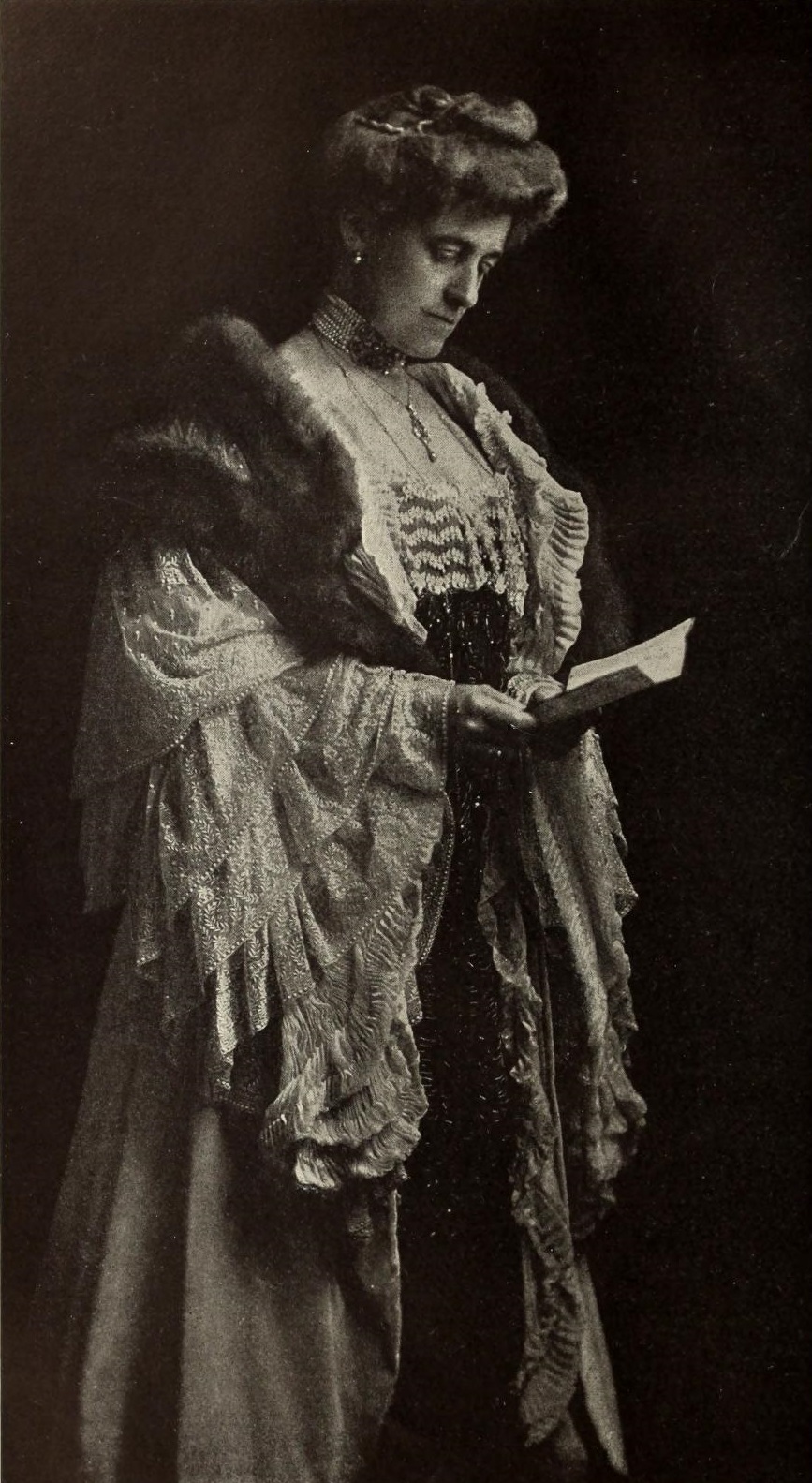
Image context: the cover uses Wharton rather than a hotel corridor or a French chateau facade. That choice keeps the essay anchored in authorial construction. The novel's power lies less in scenic glamour than in how Wharton arranges intervals, thresholds, and delayed recognitions into one continuous pressure system.[4][5]
1) The telegram makes postponement the novel's first formal act
The book begins with a telegram that does almost everything at once: "Unexpected obstacle. Please don't come till thirtieth. Anna."[1] Before the reader has time to settle into reunion or romance, the novel makes deferral its opening event. Darrow is already traveling toward Anna Leath when the message hits him, so the narrative does not start from stable intention. It starts from interruption.[1]
That opening decision is more consequential than it first appears. A weaker novel might have used the telegram only as a convenient device to send Darrow into temporary temptation. Wharton uses it to establish method. From the first paragraph forward, The Reef insists that motive will arrive through postponement and that interpretation will begin before certainty does.[1][2] Darrow spends the opening pages not simply waiting but mentally reordering Anna's tone, her memory of their London reunion, and the meaning of her "good" reasons for delay.[1] The reader enters the same state. We do not yet know what the obstacle is, but we are already watching one mind overread a brief message.
That is why the title starts to matter almost immediately. A reef is not the dramatic wreck itself; it is the hidden structure that catches movement and changes its course. The telegram is the novel's first reef. It does not destroy Darrow. It alters his line of travel just enough to make the rest of the book possible.[1][2]
2) Book I turns Paris into a machine for adjacency, not freedom
Once Anna's postponement sends Darrow into Paris with Sophy Viner, the novel appears to widen into improvisation: city streets, restaurants, chance companionship, and a brief holiday from moral design.[1] But Book I is more controlled than that. Wharton keeps building around adjacency. Darrow and Sophy are near each other in trains, cafes, cabs, and finally adjoining hotel rooms. Nearness keeps generating possibility before either character can claim a settled intention.[1]
The crucial structural detail is the letter Darrow does not post for Sophy. By withholding it, he creates a second delay inside the first one. Anna's telegram had already suspended his forward motion; now he suspends Sophy's in turn.[1] The novel's moral pressure depends on this repetition. Darrow does not simply drift into an affair because Paris is seductive. He actively collaborates with postponement. He chooses an interval in which consequences can be deferred a little longer.[1][3]
Wharton then sharpens the pattern with the adjoining-room sequence. Darrow hears Sophy on the other side of a thin partition and imagines the hotel as a long line of rooms, each one holding its own secret.[1] That image is not decorative. It is the novel's form in miniature. People are separated by very little, yet they are never directly legible to one another. Sound travels; certainty does not. Sympathy, desire, vanity, and self-excuse all slip through the partition more easily than truth.[1]
Book I therefore does not merely narrate a lapse. It builds a chamber piece about proximity without transparency. Paris looks like freedom, but structurally it is a place where delay can be felt sensually before it is judged ethically.[1][2]
3) Givre shifts the novel from event to atmosphere
Book II makes the boldest structural turn in the novel. Instead of following Darrow straight onward, Wharton relocates the center to Anna Leath at Givre.[1] The move matters because it prevents the book from staying inside male misadventure. The house receives its own long opening perspective, and Givre becomes more than a backdrop. It is the place where feeling hardens into habit, where social arrangement gives private desire a public surface, and where the earlier Paris secret must eventually enter household life.[1][3]
Anna's relation to Givre is already double when we meet her there. The house has been dream, prison, duty, habit, and identity in succession.[1] That complexity prepares the novel's middle books. Wharton does not let discovery happen as one clean confession scene. She lets knowledge circulate through rooms, glances, interruptions, Effie's innocent observations, Owen's changing mood, and Sophy's visible strain.[1] The effect is that revelation becomes atmospheric before it becomes explicit.
This is one reason the middle of The Reef feels so tense even when very little is "revealed" in the ordinary melodramatic sense. Darrow has to keep two obligations in play at once: he wants Sophy's safety, but he also knows Anna is placing trust in the very woman he has compromised.[1] That contradiction cannot be solved by cleverness because the novel has moved into a house where everyone is related through care, rank, inheritance, or dependence. Givre converts a private past into a social medium.[1][4]
Books III and IV deepen that pressure by slowing the pace and widening the field of implication. Owen, Effie, Madame de Chantelle, and Sophy are not decorative secondary figures orbiting a central couple. They are the structure by which the secret acquires moral weight. The more the novel binds Darrow's hidden past to Anna's child and step-son, the less the Paris episode can remain a detachable mistake.[1][2]
4) Book V proves that explanation comes after damage
When the novel returns to Paris in Book V, Wharton refuses the release pattern a reader may still expect.[1] Anna travels there in shock, action resumes, conversations happen, and the machinery of concealment gives way. Yet the last movement does not reward anyone with clean possession of the truth. It shows that knowledge, once it finally arrives, has already been shaped by fatigue, wounded pride, and belated moral sight.[1]
That is the point of the book's final architecture. Wharton does not build toward the pleasure of solving a puzzle. She builds toward the harder recognition that by the time all the relevant facts can be spoken, innocence has already been spent.[1][3][4] Anna's pain is not only that Darrow did wrong. It is that the world in which she loved him had already been arranged around an omission she did not know she was inhabiting. The form makes her experience readable. The reader has lived in intervals, withheld messages, adjoining rooms, and household atmospheres long before the full confrontation arrives.[1]
Seen that way, The Reef is one of Wharton's most exact novels about the cost of second-hand knowledge. Its five-book design keeps moving the reader from interruption to improvisation, from improvisation to atmosphere, and from atmosphere to after-knowledge.[1][3] The telegram starts the delay. The hotel gives delay bodily nearness. Givre gives it social depth. Paris at the end reveals that even truth can arrive too late to restore a first relation. That is how the book is built, and that is why it still feels sharper than its scandal plot.
Sources
- Edith Wharton, The Reef (Project Gutenberg HTML text).
- Open Library, The reef, a novel (edition record and publication context).
- Library of America, Edith Wharton: Novels (volume page including The Reef).
- Encyclopaedia Britannica, "Edith Wharton."
- Wikimedia Commons, "File:Picture of Edith Wharton.jpg" (lead image source page).