Ray Bradbury's 2001 keynote for the Sixth Annual Writer's Symposium by the Sea is easy to misfile as a genial craft talk: the beloved author comes onstage, tells stories, jokes about work, and sends the room away with a handful of writing habits.[1][2] That surface is real, but it is not the whole event. The talk is also a compact statement of Bradbury's literary ethic. He treats the library as a training ground, the short story as a daily instrument, and pleasure as a discipline rather than a reward after discipline has already done its work.[1][2]
That matters because Bradbury's reputation often arrives through the large icons: The Martian Chronicles, Fahrenheit 451, The Illustrated Man, Something Wicked This Way Comes.[3][4][5] Those titles can make him look like a writer of grand premises: Mars, firemen who burn books, carnival darkness, speculative futures. The keynote pulls the lens closer. Bradbury keeps returning to a smaller mechanism: a person reads widely, falls in love with sound and image, writes constantly, and learns to trust the weird pressure of accumulated enthusiasms.[1] The public advice is therefore not separate from the fiction. It explains how the fiction found its fuel.
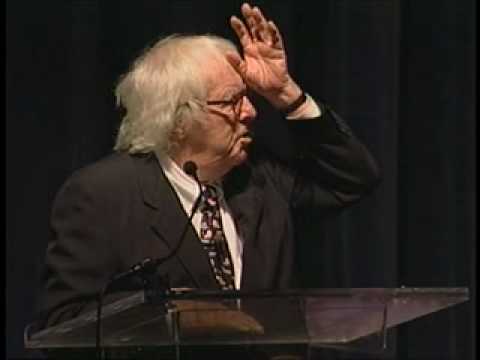
The embedded video below is UCTV's upload of "An Evening with Ray Bradbury 2001." UCTV identifies it as the keynote address, "Telling the Truth," from the Point Loma Nazarene University symposium, with Bradbury speaking about his life and love of writing.[2] That provenance gives the clip a useful institutional frame: not a fan reupload, not a chopped excerpt, but a university television record of Bradbury making his method public.
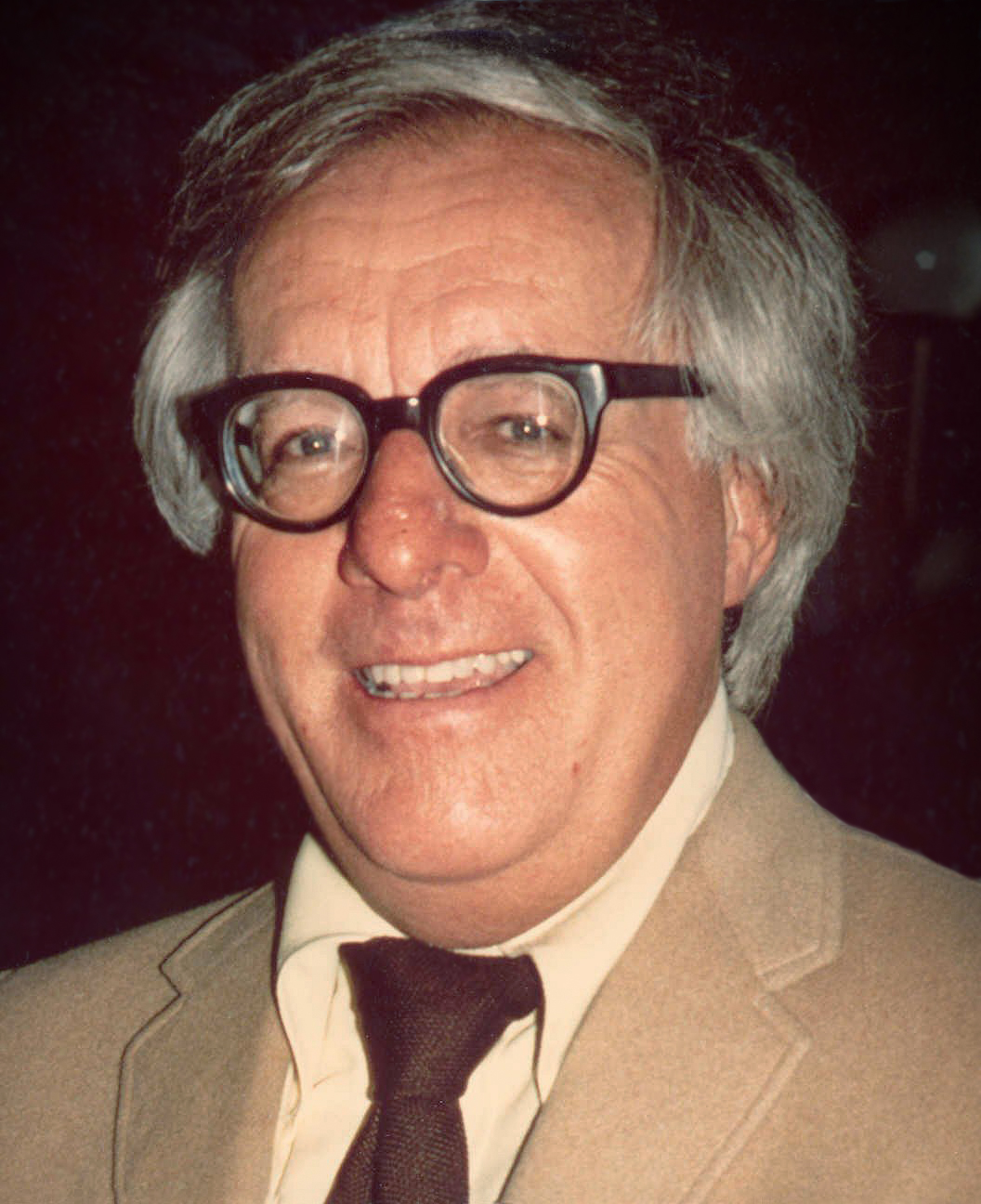
Image context: the cover image is a real 1975 photograph from Wikimedia Commons. It supplies documentary presence without pretending to illustrate the talk literally; the essay uses the video for movement and voice, and the photograph for the archival fact of Bradbury as a working public writer.[6]
What to Watch For
The first thing to notice is how little Bradbury separates biography from technique. He does not present childhood reading as colorful background before the serious instruction begins. The childhood is the instruction. When he talks about libraries, movie houses, magic shows, comics, and fantasy, he is describing an ecology of intake: a writer's mind becomes usable because it has been fed by more than one respectable shelf.[1] That detail connects directly to the National Endowment for the Arts account of the young Bradbury finding libraries during the family's cross-country move to Los Angeles and later discovering science-fiction fandom in Hollywood.[3] The talk turns that biography into a rule of composition: range comes before polish.
This is why his famous short-story advice lands with more weight than a productivity slogan. Bradbury urges writers toward regular story-making because a short story is small enough to finish and various enough to keep appetite alive.[1] The point is not merely output. It is hygiene. A novel can let a young writer brood inside one giant ambition for too long; a short story forces a return to the world, a reset of subject, tone, weather, premise, and emotional pressure. Bradbury's own career makes the argument concrete. The NEA's National Medal page notes that he published Dark Carnival in 1947, moved into the linked story-cycle power of The Martian Chronicles in 1950, followed with The Illustrated Man in 1951, and then published Fahrenheit 451 in 1953.[4] The keynote's practice ethic sits inside that sequence: many small combustions made the larger fires possible.
Around the middle of the talk, watch the way Bradbury's sentences keep leaping sideways. He does not define imagination as escape from ordinary life. He defines it, in practice, as the habit of making unlike materials meet. That is the same habit that made Fahrenheit 451 durable. The NEA Big Read overview describes the 1953 novel as a work that carries pulp materials into the mainstream of American literature while turning book burning into a poetic and disturbing parable of cultural self-destruction.[3] The keynote makes the source of that movement audible. Bradbury is not defending "genre" as a market category. He is defending the right of dinosaurs, rockets, libraries, circuses, myths, and civic terror to share one imaginative room.
The talk also complicates the simple picture of Bradbury as an anti-technology prophet. Fahrenheit 451 is often flattened into a warning against screens, but the Big Read materials are more precise: the novel's book burning belongs to a society that has stopped reading and outsourced inward life to shallow comfort.[3] In the keynote, Bradbury's answer is not nostalgia for old media. It is a practice of attention. He wants writers to read poems, stories, essays, plays, and old loves every day because that rhythm keeps language charged.[1] The danger is not the machine by itself. The danger is a self that has gone undernourished long enough to welcome any machine that removes friction.
That is where the library ethic becomes moral rather than merely literary. Library of America places Bradbury among American writers whose work brought science fiction, dark fantasy, and horror into a broader canon, while the NEA medal citation emphasizes his imaginative originality, language, and commitment to individual freedom.[4][5] The keynote shows the workshop version of that public claim. Freedom, for Bradbury, is not just a political theme inside Fahrenheit 451. It is a daily relation to books: read promiscuously, write before taste turns censorious, and let enthusiasm outrun respectability long enough to discover its shape.[1]
The performance style matters, too. Bradbury's delivery is comic, warm, and almost vaudevillian at points, but the looseness is carrying a strict argument. He distrusts sterile ambition. He distrusts writing that begins by asking whether it will impress the right people. Again and again, he routes the young writer back to appetite: what did you love before you knew it counted as culture, what image keeps returning, what story can be finished this week, what library shelf has not yet been opened.[1] His advice sounds simple because it is procedural. It asks for repeated acts, not a purified identity called "the writer."
The lasting value of the UCTV clip is that it lets readers hear Bradbury's method before it hardens into quotation. Detached from the performance, his advice can sound like encouragement printed on a poster. In the room, it is stranger and tougher. He is arguing that joy is not softness. Joy is a sorting force: it tells the writer where attention still has heat. When that heat is trained by reading, by revision, and by finished short forms, it becomes the same force that can imagine a book-burning state, a colonized Mars, a haunted carnival, or a child walking into a library and finding a future there.[1][3][4]
Sources
- UCTV, "An Evening with Ray Bradbury 2001," YouTube video.
- UCTV, "An Evening with Ray Bradbury 2001" program page.
- National Endowment for the Arts, "Fahrenheit 451" Big Read guide.
- National Endowment for the Arts, "Ray Bradbury" National Medal of Arts recipient page.
- Library of America, "Ray Bradbury."
- Wikimedia Commons, "File:Ray Bradbury (1975) -cropped-.jpg."