Samuel Johnson's Rasselas is easy to misread if you enter it expecting a novel of adventure. A prince leaves an enclosed valley, travels with his sister, her attendant, and a poet-philosopher, studies many ways of life, and returns with no clean formula for happiness. That can sound thin beside the crowded machinery of later fiction. The better entry point is to treat the book as a compact testing device. Each episode offers a system for living; each system looks plausible for a moment; each fails because human restlessness, dependency, pride, fear, imagination, or mortality puts pressure on it.
The book was published in 1759 as The Prince of Abissinia, and Penguin's edition description catches its movement neatly: Rasselas leaves the easy life of the Happy Valley, travels to Egypt, studies different conditions of life, and arrives at a "conclusion in which nothing is concluded."[2] That phrase is not a joke at the book's expense. It is the book's design principle. Johnson does not withhold closure because he has no view. He withholds closure because every closed system in the story has already proved too small for the mind that tries to live inside it.
The first reading move, then, is simple: do not hunt for the winning answer. Watch how the answers fail.
Start With The Happy Valley As A Prison Of Success
The Happy Valley is not a dystopia in the usual sense. Its power comes from being comfortable. Rasselas has music, gardens, instruction, pleasure, safety, and abundance. He is not trapped in misery. He is trapped in managed satisfaction. Johnson's narrator makes the place almost absurdly complete, yet Rasselas feels the wrongness of a life where desire has no real object and choice has no consequence.[1]
That matters because the book's first target is not suffering. It is the fantasy that perfect conditions would settle the human heart. Rasselas discovers that an environment can remove many external troubles without answering the inward question of what a life is for. If every appetite is supplied in advance, appetite itself becomes stale. If every path is smoothed, motion begins to feel like pacing.
The valley is therefore the book's first happiness system: protected pleasure. Johnson lets it fail before the journey begins. This keeps the later episodes from becoming tourism. Rasselas is not simply curious about the world. He is trying to escape a system that has made comfort feel like confinement.
Let Imlac Be A Guide, Not A Solution
Imlac, the poet who has seen more of the world, can look at first like the book's answer key. He has traveled, read, observed court life, met scholars, and survived disappointment. He supplies many of the work's most memorable judgments. Yet a reader should resist turning him into Johnson's final spokesman in every scene.
Imlac is valuable because he teaches Rasselas how to test claims. He is less useful as a happiness model. His wisdom is largely diagnostic. He can expose false expectations, warn against fantasy, and explain why professions and reputations rarely satisfy the whole person. What he cannot do is hand Rasselas an inhabitable life. In that sense, Imlac's authority is bounded by the book's method. He can sharpen judgment, but sharpened judgment is not the same as contentment.
This is especially clear in Johnson's treatment of the imagination. Imlac understands the poet's vocation as a large and demanding one, requiring a mind that can range over nature, life, and moral possibility.[1] But the book also worries over imagination as a power that can torment, not only enlarge. To imagine a better life is necessary; to imagine that one has found the final shape of happiness is dangerous.
Read Imlac as the figure who keeps Rasselas from naive optimism, not as the figure who rescues him from uncertainty.
Keep Nekayah In The Center
Nekayah, Rasselas's sister, is one reason the book is warmer and stranger than its reputation for moral austerity suggests. She does not merely accompany the prince. She redirects the inquiry. When the travelers examine domestic life, social life, solitude, learning, and power, Nekayah's responses keep asking what these choices do to actual dependence, affection, and vulnerability.[1]
This is important because Rasselas could have become a male philosophical itinerary: a prince and a sage assessing the world from above. Nekayah pulls the book toward relational life. Happiness is not just a private mental state. It is entangled with family, friendship, marriage, fear for others, and grief. A solitary scheme may sound elegant until it has to survive love. A public ambition may sound grand until it has to account for household sorrow.
Her presence also changes how readers should hear the book's famous skepticism. Johnson is not saying that nothing matters because everything disappoints. He is saying that serious life requires attention to the costs hidden inside every attractive arrangement. Nekayah makes those costs harder to abstract. She keeps philosophy near ordinary feeling.
Watch The Book Refuse Extremes
The middle of Rasselas works by trying out extremes. The travelers consider the active life, the contemplative life, retirement, scholarship, monarchy, pastoral simplicity, scientific speculation, and domestic affection.[1][3] None is mocked away completely. Johnson's method is more exact than satire alone. Each mode contains a real appeal, then reveals a real insufficiency.
Retirement promises peace, but solitude can curdle into self-absorption. Ambition promises consequence, but public life exposes people to envy, vanity, and dependence on unstable judgment. Learning promises elevation, but scholars can become as narrow and anxious as courtiers. Science promises mastery, but speculation can detach the mind from the scale of human need. Marriage and family promise intimacy, but they also expose love to fear, illness, loss, and unequal desire.[1]
This pattern can feel repetitive if read for plot. Read for pressure, it becomes the pleasure of the book. Johnson is not marching from error to truth. He is making the reader feel how quickly a reasonable choice becomes unreasonable when treated as total. The book's enemy is not pleasure, study, retirement, ambition, or affection. Its enemy is system-worship.
That is why the pace stays brisk. Rasselas does not need long scenes of psychological development because its real protagonist is not a personality changing in the modern novelistic sense. Its protagonist is the question of choice itself.
The Ending Is Not Cynicism
The final chapter is often remembered through its title, "The conclusion, in which nothing is concluded."[1][2] The danger is to hear that as a shrug. It is sharper than that. The ending refuses to convert experience into doctrine. Rasselas, Nekayah, Pekuah, and Imlac have learned enough to distrust easy answers, but not enough to live outside choice. They still desire. They still imagine futures. They still return.
The unresolved ending is humane because it protects the book from a false finality. A lesser moral tale might tell readers to choose moderation, religion, work, domesticity, retirement, or public duty and be done. Johnson knows that each of those can be meaningful and each can fail when made absolute. So the travelers do not discover the one life that defeats disappointment. They discover the need to choose without pretending choice can abolish the human condition.
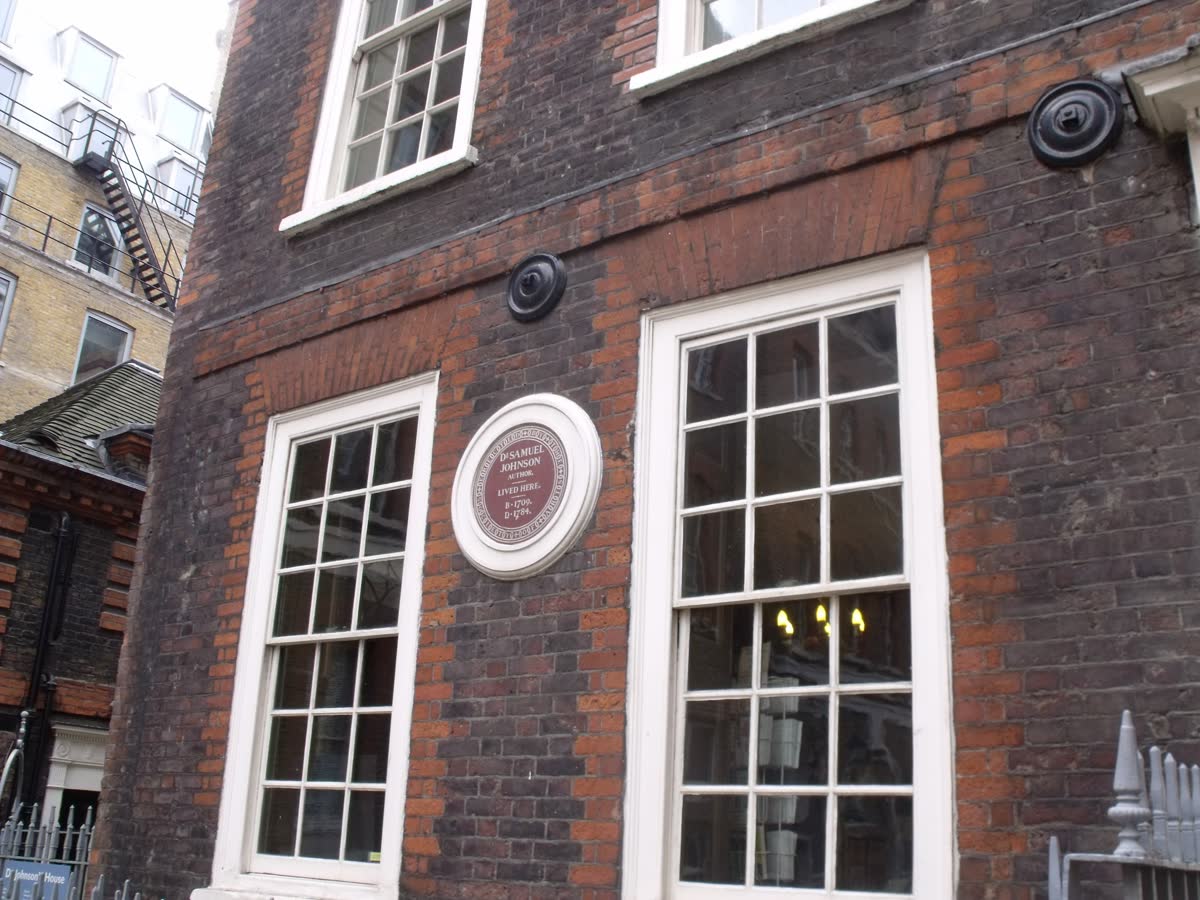
This is where Johnson's own context matters. Dr Johnson's House describes him as a professional writer in a new age of print, one of the major figures who reshaped English literary and linguistic culture.[4] The Project Gutenberg introduction to Rasselas also preserves the traditional account of urgency around 1759: Johnson wrote the book in the year of his mother's death, under financial pressure related to her debts and burial.[1] That biographical frame should not reduce the story to an anecdote, but it does clarify its emotional weather. Rasselas is not a young person's puzzle about whether happiness exists. It is a working writer's severe, compassionate account of why no plan can exempt a person from need, loss, imagination, and hope.
How To Read It Now
For a first reading, keep four questions in view.
First, what does this episode promise? Each encounter in Rasselas advertises a way of making life bearable or meaningful. Name the promise before judging it.
Second, what human fact breaks the promise? Johnson's answers are rarely exotic. Restlessness, mortality, boredom, pride, dependence, grief, fear, and fantasy do most of the breaking.
Third, who pays the cost? Nekayah is especially useful here because she keeps abstract choices attached to relationships. A theory of happiness that ignores other people is already suspect.
Fourth, what remains usable after the system fails? Johnson is severe, but he is not empty. The book repeatedly strips away overconfidence while leaving behind prudence, sympathy, humility, and the freedom to keep choosing without worshiping the choice.
Read this way, Rasselas becomes less dry than its summary. It is not a list of disappointments. It is a disciplined guide to disappointment as a form of knowledge. The Happy Valley fails because comfort without meaningful motion is not enough. Imlac's wisdom fails as a total cure because diagnosis is not life. Nekayah's feeling complicates every neat theory because happiness has to survive attachment. The ending refuses conclusion because living well cannot be reduced to one victorious arrangement.
Johnson's book still works because it does not flatter the reader with a secret. It gives the reader a practice: distrust any happiness that depends on narrowing the mind, denying dependence, or pretending that one chosen system can silence every future question.
Sources
- Samuel Johnson, Rasselas, Prince of Abyssinia, Project Gutenberg HTML edition; public-domain primary text and introductory publication context.
- Penguin Random House, The History of Rasselas, Prince of Abyssinia by Samuel Johnson; edition description, journey summary, and "conclusion in which nothing is concluded" framing.
- Oxford Text Archive, "Rasselas, Prince of Abissinia / Samuel Johnson"; public text record, 1759 date, author metadata, and archive context.
- Dr Johnson's House, official homepage; author-house context for Johnson as a professional writer in the age of print.
- Wikimedia Commons, "File:Dr Johnsons House - 17 Gough Square, City of London (4043391177).jpg"; source page for the real photograph used as the cover image.