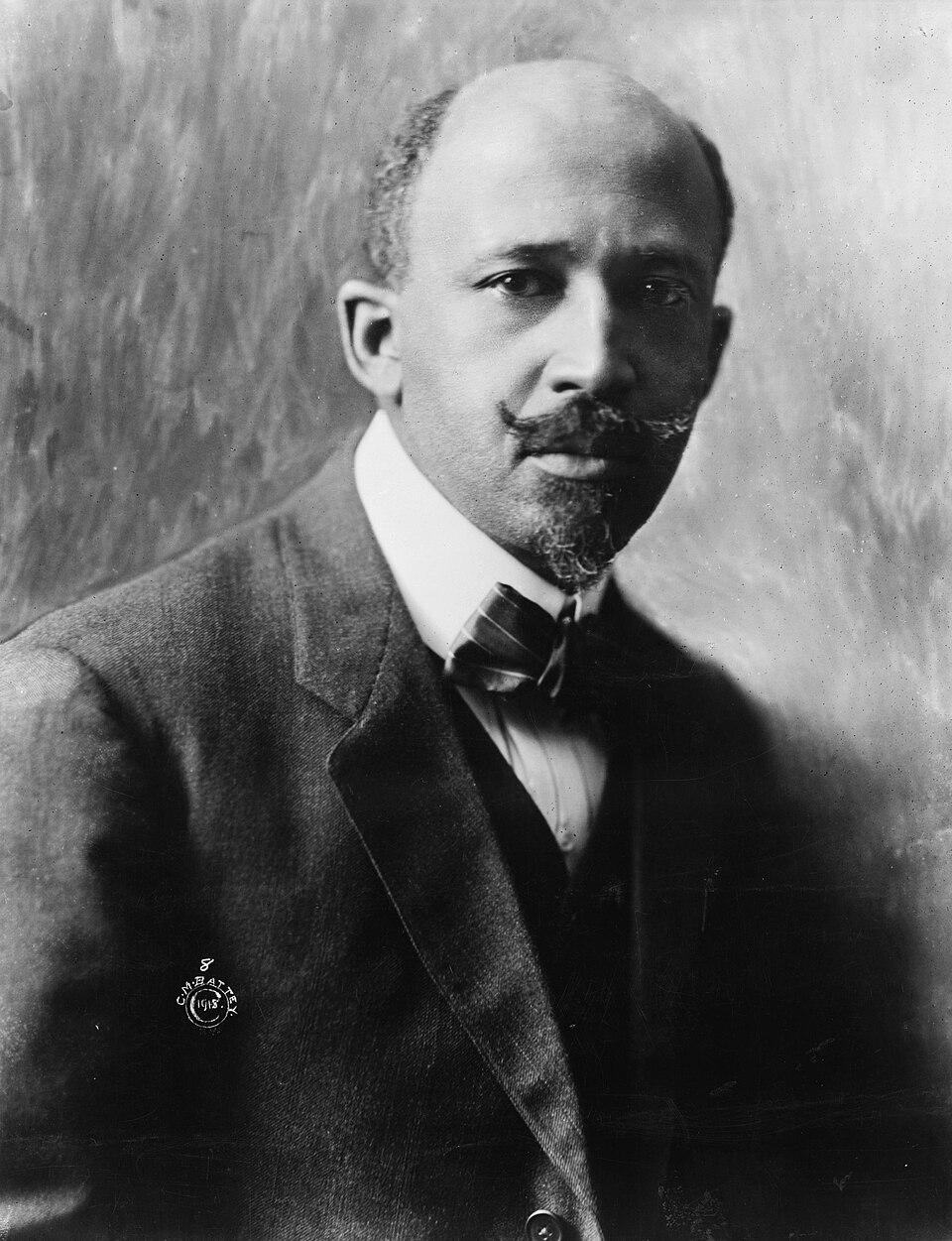
A boy stops beside an Alabama swamp after dark. His belongings weigh on his shoulder; somewhere ahead is the school he has travelled to reach. Crickets have “made the silence audible.” Then a girl's singing draws him off the road. Before W. E. B. Du Bois explains who owns this landscape, he makes us feel how frightening and alluring it can be.[1]
Published in 1911, The Quest of the Silver Fleece was Du Bois's first novel. It carries its young lovers from rural poverty into a much wider world of money, philanthropy, and political ambition.[2] For a first reading, follow the cotton. The same crop that promises the lovers a future also pays for other people's comfort. Watching it change hands will keep the novel's many rooms connected.
Let the swamp be strange
The opening chapter, “Dreams,” belongs to Bles Alwyn's uncertain senses. A cabin glows through the trees; a dancing girl seems almost supernatural; daylight turns terror into curiosity. The girl is Zora, who knows the place that frightens him. Their first encounter gives each something the other lacks: Bles brings food and news of a world beyond the swamp; Zora brings confidence in the ground beneath their feet.[1]
Read these pages slowly enough to hear their changes of pace. The night passages accumulate shadows and movement. The morning conversation is teasing, direct, sometimes funny. Bles's fear is already becoming material for Zora's amusement. A relationship begins through the correction of a first impression.
The narration also surrounds Zora with exoticizing language that deserves scrutiny. Her body becomes spectacle before her thoughts become familiar. Keep track of that imbalance as she gains experience and speaks at greater length. One useful question to carry forward is how often the person others find mysterious has simply been denied the chance to explain herself.[1]
Keep the school in view
Chapter 2 abruptly changes the sound. Someone is hammering on Miss Sarah Smith's door. Bles wants to enrol; Miss Smith is waking into another day of financial worry. Her school for Black children depends on support from people whose ideas about those children's future may differ sharply from her own.[1]
This is an early lesson in how to follow the crowded cast. Remember what each newcomer can give, withhold, or learn. Miss Smith needs money to sustain education. Mary Taylor, a newer teacher, has convictions that the people around her will test. The Cresswells possess land and local power. Mary's brother John sees opportunities in the cotton business. Their encounters become easier to follow once these desires have faces.[1]
The school also changes the meaning of generosity. In chapter 2, Mrs. Vanderpool is willing to support training that would supply useful servants, while resisting education that might overturn the hierarchy she enjoys. A gift can contain an instruction about who its recipient is allowed to become. Listen for those instructions whenever a benefactor speaks.[1]
Notice who gets to be the hero
The title's classical allusion unfolds in conversation, so there is no need to arrive with a handbook of Greek myth. Mary Taylor tells Bles about Jason and the Golden Fleece in chapter 4, “Town.” She admires the adventurer. Bles hears a story of taking someone else's wealth. “I thought he was a thief,” he says.[1]
The exchange is a compact demonstration of reading against a teacher's expectations. Bles has understood enough to dispute the hero's moral status. Taylor's discomfort comes from the connection he makes between a distant legend and the nearby cotton fields. A story offered as culture returns as an accusation.
Later, in chapter 5, Bles passes the tale to Zora and proposes that they grow their own exceptional cotton. Its sale could pay for her schooling. The fleece now names something they might cultivate together, giving their affection a material project. Follow this movement from a story heard, to a story challenged, to a future imagined.[1]
There is a larger literary context for that small scene. In the published abstract of her 2021 study, Verena Adamik argues that Du Bois draws on Western literary traditions while also unsettling their authority and making space for African American lives.[3] The Jason conversation offers an accessible place to begin testing that reading for yourself: who inherits a famous story, and who gets to change its meaning?
Follow the crop into other rooms
Chapter 6, “Cotton,” suddenly widens the view to people across the world who need clothing, then to the workers and traders between the field and the wearer. John Taylor studies this immense human need as an opportunity to enrich himself. Du Bois's lyrical account of labour gives way to the chill of calculation.[1]
That change in register can initially feel like an interruption. Try reading it as an expansion of the lovers' predicament. Their crop enters a market whose powerful participants have plans of their own. Affection and hard work cannot determine what happens to it. The novel keeps moving because the consequences of an act in one place arrive somewhere else.
When the business conversations grow dense, retain a simple question: who can decide the terms? Growing cotton, owning land, extending credit, and arranging a sale confer different kinds of power. You can follow the dramatic pressure before mastering every transaction. Watch for the moment a character's hope requires another person's agreement.[1]
Read the two educations together
Two adjacent chapter titles provide a useful marker later on: chapter 23 is “The Training of Zora”; chapter 24 is “The Education of Alwyn.” Bles and Alwyn are the same person. The change of naming suits the different social surroundings, and remembering it spares a new reader needless confusion.[1]
Travelling north with Mrs. Vanderpool, Zora discovers the scale of a world no one has adequately described to her. In New York she compares the moving crowds to the swamp. That analogy lets her use knowledge she already possesses while recognizing how much she still wants to understand. Her curiosity survives her employer's weary sophistication.[1]
In Washington, Caroline Wynn teaches Bles to navigate another set of expectations. An apparently playful exchange of neckties quietly improves his appearance for company. The scene is comic, tactful, and revealing: social admission has details, and somebody has to teach them. Read it beside Zora's questioning. Both young people are learning, but fitting into a room and understanding the world are different achievements.[1]
For a first pass, read the chapters in order and save a detailed plot summary until afterwards. Project Gutenberg supplies the full text with the chapter headings used here; Penn Press's reissue lists the original illustrator, H. S. De Lay, and four illustrations, if the book's visual presentation interests you.[1][4] Let the later returns and reversals arrive at their own pace.
By then, the question raised by the cotton has grown. A private harvest once seemed capable of buying a shared future. The novel asks what else must change before such a future can endure. Keep the tenderness of that first plan in mind as the ambitions grow larger. The business of the fleece matters because of the lives its growers hoped to make.
Sources
- W. E. B. Du Bois, The Quest of the Silver Fleece (A. C. McClurg, 1911), Project Gutenberg full text — author's note and chapters 1–6, 23–24; primary text for quotations and the reading guide.
- Penguin Random House, The Quest of the Silver Fleece — publisher's account of the novel's 1911 first publication, romance, and political-economic setting.
- Verena Adamik, “Making worlds from literature: W.E.B. Du Bois's The Quest of the Silver Fleece and Dark Princess,” Thesis Eleven 162, no. 1 (2021), pp. 105–120 — publicly accessible abstract consulted for its argument about literary inheritance.
- University of Pennsylvania Press, The Quest of the Silver Fleece: A Novel — 2004 paperback edition, illustrator credit, and illustration count.
- Wikimedia Commons, “File:WEB DuBois 1918.jpg” — Cornelius Marion Battey's photographic portrait; Library of Congress digital identifier cph.3a53178 and image provenance.