Most stories about a royal double ask whether the substitute can pass. The Prisoner of Zenda asks the more dangerous question: what happens after he passes too well?
Anthony Hope gives Rudolf Rassendyll every advantage an impostor could want. He shares the king's name, red hair and long nose; his own cosmopolitan education, languages and aristocratic ease equip him for the rest. He survives the coronation, wins the capital, outthinks Black Michael and falls in love with Princess Flavia. By the middle of the novel, returning the throne to its owner can feel less like restoration than a demotion of the better man.[1]
That temptation is the book's real engine. The doubled face supplies spectacle; refusal gives the spectacle a moral shape. Rassendyll can save the crown only because he is able to wear it, and he remains a hero only because he will not keep it. Stage and film versions have repeatedly inherited that mechanism. The most revealing screen afterlife goes further: the 1952 film reused the 1937 version's shooting script, score, settings and many camera angles. A story about resemblance eventually produced a remake that behaved like a double.[4][5]
A face becomes a public fact
Hope prepares the substitution before Rassendyll reaches Ruritania. In Chapter 1, the English Rassendyll family carries visible traces of an eighteenth-century affair with the royal Elphbergs. Red hair and a long, sharp nose keep advertising what polite genealogy would prefer to suppress. Heredity, the narrator jokes, is “the finest scandalmonger in the world.”[1]
The line does more than explain a coincidence. It makes the body into an unauthorized archive. Portraits preserve the old scandal; Rassendyll's face brings it abroad. When he finally meets King Rudolf in Chapter 3, the king laughs that his English cousin will always enjoy “the King's countenance.” The pun becomes the plot. A countenance is a face, but also favor and authorization. Rassendyll soon possesses the first without the second, while the people of Strelsau supply the rest.[1]
This is why the coronation adapts so naturally to stage and screen. The audience knows it is watching one performer inhabit two identities; the fictional crowd does not. Uniform, shaved face, posture and ceremony turn resemblance into public fact. The sequence offers an actor's showcase, but it also exposes an institutional weakness: nobody at the cathedral can inspect inward legitimacy. If the right body arrives on time and completes the rite, the nation sees a king.
The novel returns to that problem through visual media in its final chapter. Back in England, Rassendyll's brother lays a photograph of the king beside an Illustrated London News engraving of the coronation. He decides that the newspaper image looks more like Rassendyll than the photograph does. The official picture has preserved the substitute while naming the sovereign. Before the film versions double one actor on screen, Hope has already made reproduction part of the riddle: which Rudolf does a public image record?[1]
Hope does not use that discovery to make a democratic argument. Rassendyll can enter the role because blood, class training and physical inheritance have already prepared him for it. The novel's pleasure depends on monarchy as theater while its ending protects monarchy as birthright. That contradiction—kingship is performable, yet the performer must surrender it—is exactly what later versions get to stage again.
The understudy improves the part
The substitute is supposed to last one day. Black Michael's men have drugged the king before his coronation, and Colonel Sapt treats Rassendyll as an emergency bridge: take the oath, then leave when the real king wakes. The plan lengthens after Michael's men discover and imprison the monarch. Sapt's instruction becomes a compact definition of the mission: “keep his throne warm for him.”[1]
Warmth is the problem. Rassendyll does not remain a blank placeholder. He learns the court, manages information, answers danger and earns affection. In Chapter 11, the Marshal praises him as a “wise King and a brave man,” unaware that he is judging an English visitor rather than his sovereign. Flavia also responds to the person before her. Every successful scene makes the original distinction between owner and understudy harder to feel, even when the reader never loses track of it.[1]
The novel could easily turn that superiority into a right of replacement. Instead, Rassendyll draws a boundary in Chapter 16: “I have been an impostor for the profit of another,” he says, but not for his own. If the king cannot be restored before the betrothal, he will tell the truth.[1] The sentence converts honor from costume into limit. Courage lets him play Rudolf; restraint prevents the performance from becoming a coup.
This is the structural reason the rescue at Zenda matters more than its swordplay. Rassendyll is not merely freeing a captive. He is recovering the person whose return will end his own most vivid life. The better he has performed, the more the rescue costs.
Flavia is not the reward for good acting
An adaptation can flatten Princess Flavia into proof that Rassendyll makes the more attractive king. Hope gives her a harder function. Once the deception is disclosed, love does not erase her political knowledge. In Chapter 21 she asks, “But is love the only thing?” If it were, she says, she would follow Rassendyll; it is not.[1]
Her refusal keeps the ending from becoming a simple sacrifice imposed on the hero. Rassendyll cannot take Flavia without asking her to desert the role her country expects her to occupy, and Flavia cannot choose him without leaving Ruritania and the House she understands herself to serve. Their renunciation is painful because each has seen an available private happiness and identified the public obligations it would break.
The last chapter preserves desire without pretending it can be solved. Rassendyll has “been for three months a King,” then returns to a quiet English life. Once a year, a red rose and the message “Rudolf—Flavia—always” cross the border through Fritz.[1] The token is deliberately smaller than the adventure. It lets feeling survive while keeping the crown, the marriage and the two Rudolfs in their proper places.
The stage saw the mechanism at once
The novel appeared in 1894; Oxford University Press describes it as the work that originated the genre of the “Ruritanian romance.”[2] Its theatrical afterlife began almost immediately. A surviving University of Birmingham archive record documents Edward Rose's adaptation at London's St James's Theatre in 1896, complete with a large cast, designed scenery, costumes and incidental music.[3]
That speed makes sense. Hope had already built the part for transfer. The double role supplies transformation and recognition; the coronation supplies mass ceremony; Zenda supplies a prison, moat and forced entrance; Rupert of Hentzau supplies mobile danger; Flavia supplies a love scene that cannot become an escape hatch. Prose narration can move through Rassendyll's confidence, but theater can make the central risk visible every time another character studies his face.
The stage version also helped turn a novel into a repeatable property. Oxford's modern edition includes a chronology of adaptations and emphasizes the story's long popular afterlife, from direct stage and screen versions to the wider family of invented pocket kingdoms.[2] “Ruritania” escaped the book because Hope created less a map than a set of permissions: modern dress beside feudal loyalty, rail travel beside castles, flirtation beside dynastic danger. A new version can rearrange the furniture without losing the room.
The remake becomes its own impostor
The American Film Institute's production history of the 1937 film shows how readily the story could attach itself to a contemporary royal crisis. After the publicity around Edward VIII's abdication, AFI records, David O. Selznick decided to capitalize on the topical idea of a morganatic union.[4] The film did not need to turn Ruritania into Britain. It only needed viewers to feel that romance and crown might still demand incompatible performances.
Then M-G-M remade the film in 1952 with Stewart Granger and Deborah Kerr. According to the AFI catalog, it used the 1937 shooting script and Alfred Newman's score; many settings and camera angles were also the same.[5] This is adaptation as impersonation. Color, stars and studio surface change, while the earlier film's dramatic body remains underneath.
The resemblance is more than production trivia. It reveals why Zenda tolerates repetition. Suspense does not depend on the audience being surprised that two men look alike; the premise announces that immediately. Pleasure comes from watching a known arrangement acquire a fresh public face. Every actor playing Rassendyll must convince the court while allowing the audience to detect the labor of conviction. Every remake is therefore permitted to look familiar. Familiarity is its subject.
The crown must travel back
There is a severe limit inside Hope's exuberant romance. Rassendyll can expose kingship as performance but cannot convert performance into ownership. He can be braver than the king, more disciplined than the king and more loved than the king; none of those comparisons gives him the right to keep another person's life.
That boundary explains both the story's durability and its politics. The Prisoner of Zenda makes hereditary rule look alarmingly theatrical, then asks its most capable performer to defend the hereditary order. Readers can enjoy the contradiction without mistaking it for a solution. The novel does not prove that the rightful king is the best king. It makes the double's refusal to exploit that weakness the proof of his character.
An adaptation may change medium, decade, star or national accent. It may rebuild the castle or copy an earlier camera angle. But if Rassendyll keeps the crown, the design becomes a different story. The adventure closes only when the face that saved public legitimacy disappears from public view—and gives the role back.
Sources
- Anthony Hope, The Prisoner of Zenda. Project Gutenberg HTML text—primary source used for chapter references and short quotations.
- Oxford University Press, The Prisoner of Zenda, second edition, edited by Nicholas Daly—publication, genre, textual and adaptation-afterlife context.
- University of Birmingham Cadbury Research Library, “The Prisoner of Zenda adapted by Edward Rose”—catalog record for the annotated program from the 1896 St James's Theatre production.
- American Film Institute Catalog, The Prisoner of Zenda (1937)—production history, credits and the film's connection to the Edward VIII abdication crisis.
- American Film Institute Catalog, The Prisoner of Zenda (1952)—documentation of the reused shooting script, score, settings and camera angles.
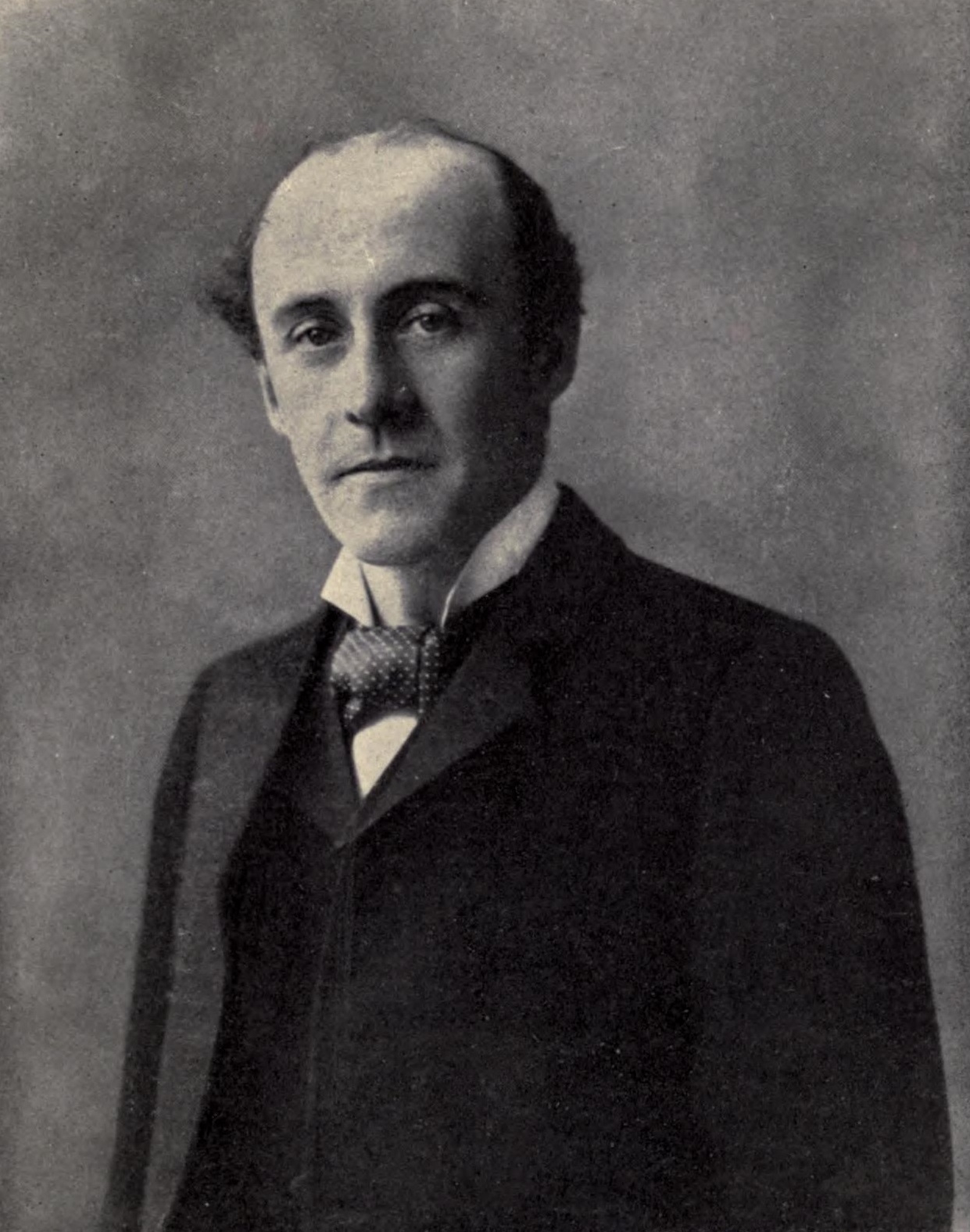
- Wikimedia Commons, “Portrait of Anthony Hope.jpg”—public-domain archival portrait published no later than 1912, with original scan provenance.