The first proposal in Pride and Prejudice is often remembered as a romance milestone, but Austen builds it as a failure scene before she lets it become a love story. Chapter 34 matters because it refuses the lazy rule that strong feeling should automatically earn emotional credit. Darcy is sincere. He is also condescending, self-dramatizing, and structurally unable to hear how insulting he sounds. Elizabeth’s refusal hurts because Austen makes us hear that contradiction in the very rhythm of his speech.[1][2]
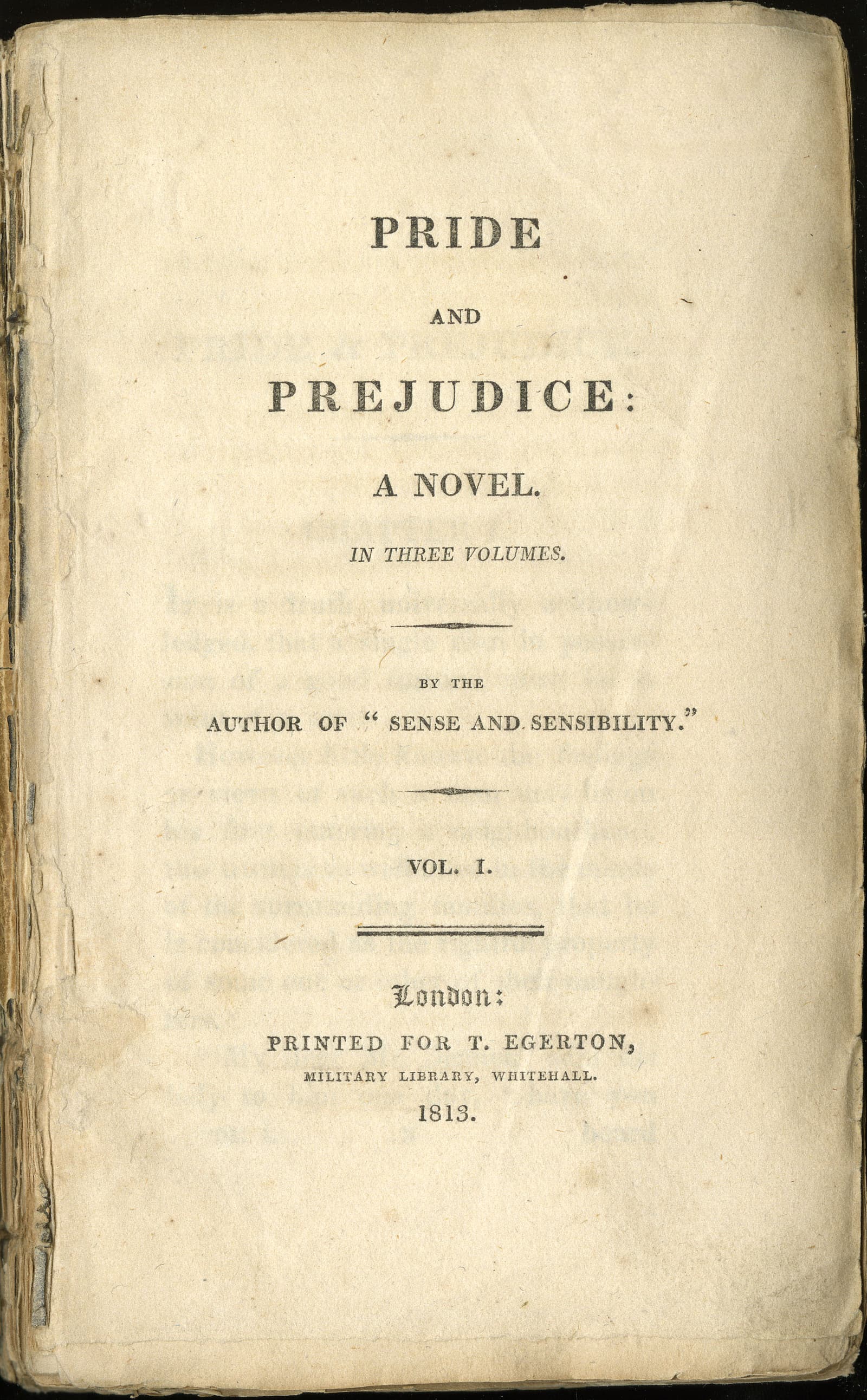
*Image context: the cover image uses the 1813 first-edition title page as a publication-history cue. It fits this essay because the novel’s abandoned working title, *First Impressions, remains fully alive in the proposal scene: Darcy thinks confession should override first impressions, while Elizabeth shows that manners are themselves evidence.
One extra reason the scene lasts is that Austen lets Elizabeth win the room by listening better than Darcy speaks. He treats confession as a moral event in itself; she treats phrasing, emphasis, and omission as evidence. The result is a courtship scene that reads a little like cross-examination, which is exactly why it remains so re-readable.
Start with the opening burst: desire arrives already carrying grievance
Darcy does not begin with grace. He begins with pressure:
“In vain have I struggled. It will not do. My feelings will not be repressed. You must allow me to tell you how ardently I admire and love you.”[1]
The line is famous because it sounds forceful, but what gives it lasting bite is its structure. The proposal opens less as an invitation than as a report from a man narrating his own defeated resistance. Before Elizabeth can answer, Darcy frames the moment around his struggle, his repression, his permission to speak. Love enters the room carrying the memory of everything that had supposedly made the match undesirable.
That is Austen’s first hard move in the scene. She does not hide the class wound in subtext. She puts it inside the proposal’s breathing pattern. Darcy’s declaration is emotionally real, yet the sentence logic keeps reminding Elizabeth that he thinks his love has had to fight through her family, her connections, and the humiliation of wanting where he believed he ought not to want.[1][3]
The insult is not accidental. Austen makes it audible.
Austen then sharpens the damage by refusing to separate tenderness from rank-consciousness. After the opening declaration, the narrator tells us that Darcy is “not more eloquent on the subject of tenderness than of pride,” and that he dwells on “her inferiority,” on “its being a degradation,” and on the family obstacles that judgment had long set against inclination.[1]
That sentence matters because it prevents a flattering misread. Readers are not meant to think Elizabeth is merely too angry to appreciate sincere love. Austen has already supplied the diagnostic frame. Darcy’s offer is compromised by the fact that he still treats his own desire as evidence of moral largeness. He imagines that overcoming prejudice is itself generous enough to excuse the prejudice he continues to perform.
This is why the scene still feels modern. It understands a form of bad self-knowledge that survives well beyond Regency marriage plots: the person who believes interior sincerity cancels the social meaning of what they have actually said. Austen turns courtship into a form of forensic listening: if you attend to the syntax, hierarchy is already in the room.
Elizabeth’s refusal is not a tantrum. It is an evidentiary counter-reading.
Elizabeth’s answer lands so hard because Austen lets her respond in analytic prose rather than romantic shock. She does not merely say no. She names the grounds of refusal, and she roots those grounds in observed character.
Her most devastating sentence remains one of Austen’s cleanest verdicts:
“From the very beginning, from the first moment, I may almost say, of my acquaintance with you, your manners impressing me with the fullest belief of your arrogance, your conceit, and your selfish disdain of the feelings of others, were such as to form that groundwork of disapprobation, on which succeeding events have built so immovable a dislike...”[1]
The force here lies in the accumulation. “Arrogance,” “conceit,” “selfish disdain”: each term moves from posture to moral implication. Elizabeth does not reject Darcy because his proposal is clumsy in a narrow social sense. She rejects him because manner, in Austen’s world, is never merely cosmetic. Manners are where judgment becomes visible.
That is one reason Pride and Prejudice was originally drafted under the title First Impressions.[3][4][5] The proposal scene becomes the novel’s most concentrated test of that abandoned title. Elizabeth’s first impressions are not wholly wrong, but neither are they complete. Darcy’s first understanding of himself is also incomplete: he mistakes depth of feeling for adequacy of character.
Why the scene works before the letter revises it
Readers who know the novel well may be tempted to read Chapter 34 backward through Darcy’s explanatory letter. The letter matters, but the proposal scene keeps its integrity only if we resist that shortcut.
At this point in the novel, Elizabeth is wrong about some facts and right about something deeper. She misjudges the Wickham story, and she does not yet understand Darcy’s role in protecting Bingley from what he saw as an imprudent match. But she reads his manner exactly. The proposal proves that his moral education is unfinished. Austen therefore gives Elizabeth a refusal that is ethically sound even before her information becomes fully sound.
That balance is part of the novel’s durability. Austen does not ask the heroine to reward latent goodness she cannot yet verify. She makes revision earned. Darcy has to be corrected in conduct, not merely reinterpreted in secret.
A useful rereading method: hear the proposal in three passes
If you want to feel why the scene is so exact instead of just “iconic,” reread it in three passes:
- Mark every place where Darcy narrates himself before he addresses Elizabeth. That reveals how much of the proposal is still organized around his own struggle.
- Mark the nouns of rank, injury, and degradation. Once those words are isolated, the class logic becomes audible rather than atmospheric.
- Read Elizabeth’s refusal as if it were a lawyerly brief, not a burst of offended feeling. The scene changes once you hear that she is assembling a case from manners, not merely venting pain.
That method is useful because Austen wrote the scene to reward forensic listening. The emotional heat is real, but the judgment lives in sentence order, not only in sentiment.
Reception and afterlife: why adaptations keep returning to this room
Pride and Prejudice appeared in 1813 after a long gestation from Austen’s 1796–97 draft, and the novel was well received enough that its first edition sold out within a year.[2][3][4] That long afterlife matters here because adaptations repeatedly circle back to the first proposal, not only because it is romantic conflict, but because it condenses Austen’s larger achievement: dialogue that functions as social x-ray.
The scene is not memorable simply because two attractive people quarrel before eventually marrying. It lasts because it stages a harder proposition. Love without self-critique is still vanity. Good judgment without full evidence is still vulnerable to revision. Austen lets both truths stand in the same room, which is why the scene can feel romantic and accusatory at once.
Why the passage still stings in 2026
The proposal scene survives because it refuses fantasy timing. Darcy arrives emotionally early and ethically late. Elizabeth answers from a position of partial knowledge but solid self-respect. Neither character is fully right, which is exactly why the scene keeps moving.
In weaker novels, the moment would flatten into chemistry. Austen makes it procedural. One person offers desire wrapped in status injury; the other answers by treating language as evidence. The result is a scene that does not just advance plot. It teaches the reader how to listen.
Sources
- Jane Austen, Pride and Prejudice (Project Gutenberg ebook 1342)
- Encyclopaedia Britannica, “Pride and Prejudice”
- Encyclopaedia Britannica, “Jane Austen”
- Encyclopedia.com, “Pride and Prejudice”
- Wikipedia, “Pride and Prejudice” (working title and publication reference)
- Wikimedia Commons, first-edition title page file page