The most useful way to approach Bleak House is to stop asking first whether it is a legal satire, a mystery, a social novel, or a family plot. It is all of those things, but its real achievement is structural. Dickens builds a book in which institutional delay becomes the medium of narration itself. Weather, paperwork, inheritance, rumor, illness, and conscience all move at different speeds, and the novel makes you feel those speeds rubbing against one another.
That is why the book still feels modern. It understands that systems do not ruin lives only through dramatic verdicts. They do it through drag, leakage, backlog, drift, and the slow conversion of human attention into administrative residue.
The serial-publication history matters too. Bleak House ran in monthly numbers from March 1852 to September 1853.[2][3] That cadence fits the book’s formal obsessions almost suspiciously well: recurrence, backlog, suspended revelation, and lives shaped by what keeps not ending. Each monthly return behaves a little like the suit itself: another packet arrives, more paper accumulates, and closure is displaced one installment further out. Even in book form, you can still feel Dickens writing for readers who were being trained to live with procedural return.
1) Dickens opens by making procedure feel like climate
Chapter 1 does not begin by introducing a protagonist. It begins by introducing a condition. The famous opening piles mud, soot, smoke, and fog into a total environment, then locks that environment to the High Court of Chancery. Dickens writes: “Fog everywhere,” before sending it up the river, down the river, into ships, bridges, lungs, pipes, and finally into “Lincoln’s Inn Hall, at the very heart of the fog.”[1][4]
That choice is structural, not ornamental. The novel could have started with Richard Carstone, Esther Summerson, or Lady Dedlock. Instead, Dickens starts with an atmosphere so thick that individual intention is immediately demoted. Chancery is not yet explained in doctrine, but it is already experienced as weather.
The form consequence is crucial: before readers learn what Jarndyce and Jarndyce technically is, they learn what it feels like to live under it. The lawsuit is not only a plot engine. It is a pressure system.
Victorian Web’s reading of the fog remains useful here because it highlights how Dickens externalizes social disorder into the city’s visible surface.[4] In Bleak House, setting is never neutral background. It is the first explanatory instrument.
2) The book runs on a split sensor system: panoramic satire and Esther’s local moral register
The novel’s second major structural decision arrives in Chapter 3, when Esther begins: “I have a great deal of difficulty in beginning to write my portion of these pages, for I know I am not clever.”[1] That line does several jobs at once. It lowers the temperature after the grand impersonal opening, establishes modesty as Esther’s verbal habit, and announces that the novel will divide perception between two different instruments.
One instrument is the third-person narrator, who can range across London, mock institutions, widen scale, and thicken atmosphere. The other is Esther, whose first-person chapters narrow the aperture and restore ordinary human calibration: embarrassment, kindness, confusion, attachment, and misrecognition at room scale.
Wikipedia’s summary gets the basic fact right: the novel is told partly by Esther and partly by an omniscient narrator.[3] But the point is not merely that Dickens alternates viewpoints. The point is that he assigns different kinds of knowledge to different voices.
- the third-person voice is diagnostic, public, theatrical, and often prosecutorial;
- Esther’s voice is intimate, local, self-doubting, and corrective;
- meaning emerges from the friction between the two, not from either voice alone.
This is why the book can hold both satire and tenderness without collapsing into tonal confusion. When Dickens wants to show system scale, he can move into accumulative panoramic prose. When he wants consequences to feel lived rather than abstract, he routes experience back through Esther.
Critical commentary on voice and performance in Bleak House is useful here because it helps show how deliberately Dickens differentiates registers inside the novel rather than merely alternating viewpoints for variety.[5] That broader point feels right. Esther is not there to soften the satire into sentiment. She is there to prove that system damage can only be fully measured once it enters private attention.
3) Jarndyce and Jarndyce is designed as narrative corrosion, not suspense
A lesser novel would treat the lawsuit as a puzzle to be solved. Dickens instead treats it as a machine that corrupts time. The third-person narrator describes it early with brutal efficiency: “Jarndyce and Jarndyce drones on. This scarecrow of a suit has, in course of time, become so complicated that no man alive knows what it means.”[1]
That sentence tells you how to read the whole book. The case does not merely delay the resolution. It colonizes the imagination of everyone near it. Richard Carstone cannot hold to a profession because the suit trains him to live in anticipated windfall time. Miss Flite has been half-destroyed by waiting. Lawyers metabolize endlessness into livelihood. Even people only tangentially connected to the case are forced to live near its administrative gravity.
Britannica’s summary is helpful here because it frames the novel as a pointed attack on Chancery delay and legal convolution.[2] But the structural brilliance is that Dickens does not keep that critique at the level of argument. He distributes it through pacing, recurrence, and deferred payoff. Readers are made to inhabit a world in which proceedings continue long after intelligibility has collapsed.
That is why the case feels less like plot and more like corrosion. It is an acid bath for vocation, love, money, and health.
4) The novel keeps expanding outward, then drags everything back to contact points
One reason Bleak House can feel baggy on first encounter is that Dickens keeps widening the social field. Aristocratic houses, slums, graveyards, law offices, schools, streets, and sickrooms all enter the same design. But the book is not shapeless. It is built on repeated contact points.
These contact points include handwriting, copied documents, doorstep encounters, letters, detective work, chance recognitions, disease transmission, and burial sites. Information does not flow through one clean channel. It leaks across classes and spaces through physical traces.
This matters because it turns the novel’s enormous cast into a system rather than a heap. Nemo’s handwriting, Lady Dedlock’s reaction, Jo’s street knowledge, Tulkinghorn’s surveillance, Esther’s parentage, Richard’s legal obsession: all of these are separate lines only until Dickens crosses them through material contact. The form keeps telling you that institutions try to classify life cleanly, but life itself re-enters through dirt, paper, bodies, and memory.
The result is a novel whose structure feels networked before modern network language existed. Dickens’s London is full of compartments, but compartments do not stay sealed.
5) Esther’s chapters are not a pause from the machine; they are where the machine becomes measurable
It is easy to misread Esther’s narrative as a softer subplot running beside the harder public book. Structurally, that is too weak. Esther is the measuring device that lets readers see how large systems change intimate life without announcing themselves as “systems.”
Her chapters show what the panoramic narrator cannot fully supply on his own:
- how care work actually feels while legal and class drama continues elsewhere,
- how shame and gratitude distort self-description,
- how illness changes identity and social visibility,
- how moral knowledge often arrives late and in partial fragments.
This is why the novel’s split voice is so durable. If Dickens had written only the panoramic satire, Bleak House would be sharper but thinner. If he had written only Esther’s domestic memoir, it would be gentler but less architecturally ambitious. Together the two voices let the novel move between structural diagnosis and human cost without translating one fully into the other.
6) The ending works because the case does not resolve; it liquidates meaning
The lawsuit’s ending is one of the coldest structural jokes in nineteenth-century fiction. The crowd hears the cause is “over for good,” and for a second both characters and readers can imagine release.[1] Then Dickens reveals the real mechanism: the estate has been “absorbed in costs.”[1]
This is not just satire. It is the formal completion of everything the novel has been teaching. A system organized around endless procedure does not need a villainous final verdict to destroy value. It can simply consume the substance at issue while everyone continues behaving as though adjudication will someday restore order.
That ending also explains why the novel feels less like a mystery solved than a world clarified. Bleak House is not finally asking, “Who gets the money?” It is asking, “What kind of society lets mediation become predation?” By the time the answer arrives, the answer is already visible in the book’s structure: recurrence without relief, connection without transparency, delay without dignity.
A practical reading key: three places to mark on a first or second pass
If you are rereading Bleak House—or trying to help a first-time reader see why the book is built the way it is—mark these three moments:
- The opening fog paragraphs. They show Dickens assigning institutional meaning before he assigns individual motive.
- Esther’s first sentence in Chapter 3. That is the exact point where the novel installs its second measuring instrument and changes how social damage can be felt.
- The announcement that the estate has been absorbed in costs. Read it back against the opening weather and the middle delays; the ending is not a twist but a formal completion.
Those three markers are a good shortcut because they let you feel the whole design in miniature: atmosphere first, private calibration second, institutional consumption last.
What this structure lets Dickens do that a simpler novel could not
Three durable gains come from the design:
-
He turns abstraction into sensation.
Bureaucratic delay becomes fog, mud, stacks of paper, and bodily exhaustion rather than policy complaint alone. -
He keeps scale flexible.
The novel can move from citywide indictment to a self-conscious sentence in Esther’s voice without feeling like it changed subjects. -
He makes moral judgment emerge from form.
Dickens does not only tell readers that Chancery is destructive; he makes the reader experience how delay, complication, and misdirected hope deform a whole social field.
That is why Bleak House rewards rereading more than synopsis. Its power lies less in revelation than in arrangement. Dickens builds a narrative machine where public institutions generate weather, weather enters consciousness, and consciousness returns as damaged private life. Once you see that design, the novel stops looking sprawling and starts looking frighteningly exact.
Sources
- Charles Dickens, Bleak House (Project Gutenberg full text)
- Encyclopaedia Britannica, “Bleak House” (publication context and summary)
- Wikipedia, “Bleak House” (serial publication dates and narration overview; used as supplementary context)
- Victorian Web, “Descriptions of Fog in Bleak House”
- Victorian Web, “The Pitchman and the Protégée: Oral Performance Art in Bleak House”
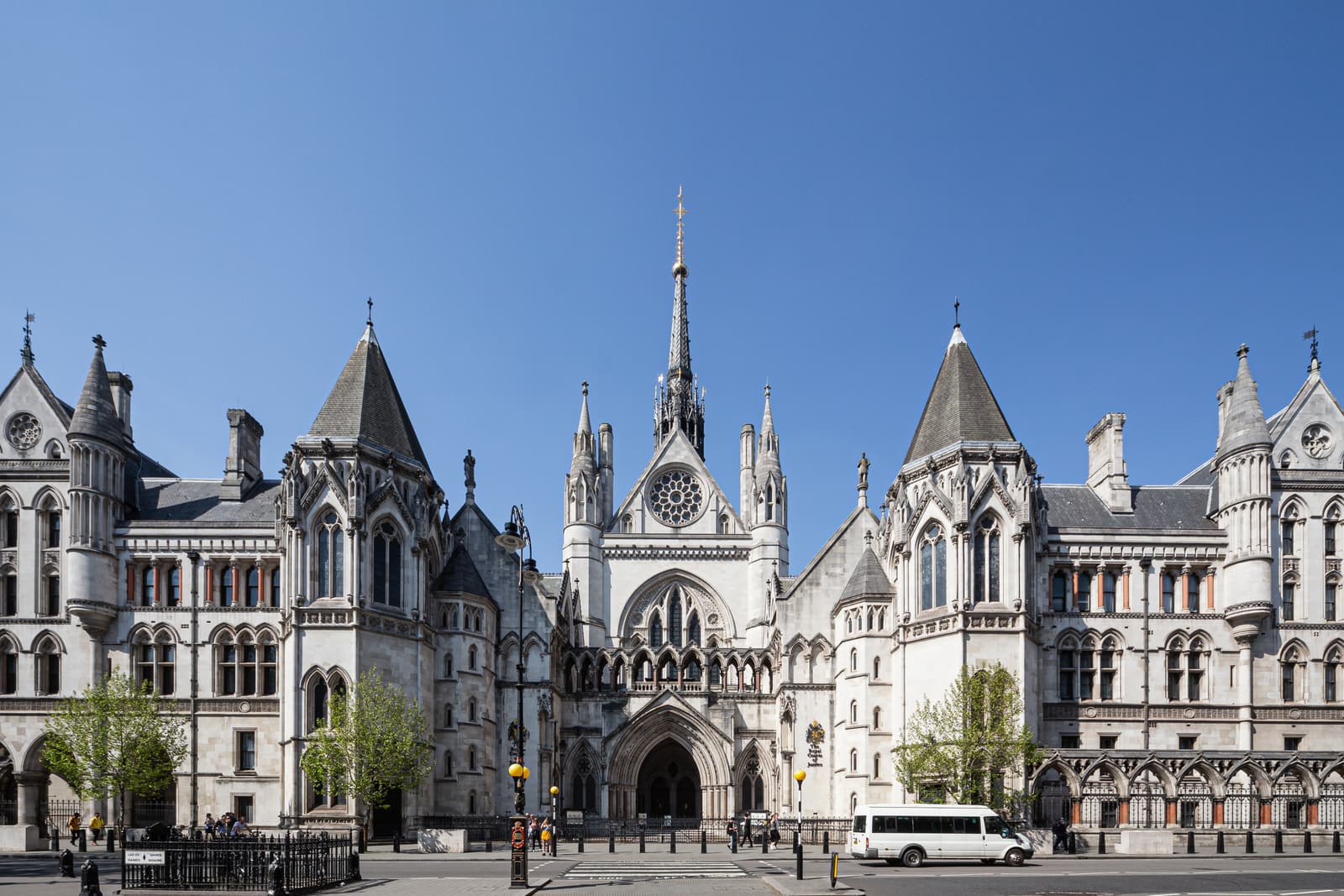
- Image source (Wikimedia Commons, Royal Courts of Justice, London)
Editor’s Pick Review
This one earns the pick because it does the difficult editorial thing exceptionally well: it makes literary form feel operational. Instead of praising Bleak House in vague canon language, the piece shows—step by step—how fog, split narration, serial rhythm, and Chancery delay all belong to the same machine, and why that machine still feels modern.
What really carries it is control of scale. The essay keeps moving cleanly from institutional weather to Esther’s private calibration and back again, so the novel’s architecture becomes legible without losing reading pleasure. It turns a book many readers remember as sprawling into something sharply designed, teachable, and newly alive.