Many readings of The Brothers Karamazov begin with theology and end with metaphysics. That is understandable, but it can miss Dostoevsky’s harder claim: the novel is not mainly asking whether God exists; it is asking what people do when they want to hand their moral burden to someone else.[1][2]
In this book, the temptation repeats across classes and temperaments. Fyodor Pavlovich treats appetite as a right. Dmitri treats passion as destiny. Ivan treats intellect as exemption. Smerdyakov treats theory as permission. Against all of them, the novel keeps returning to one counter-principle: freedom without responsibility becomes cruelty fast, while responsibility without spectacle is the only path that can actually hold a social world together.
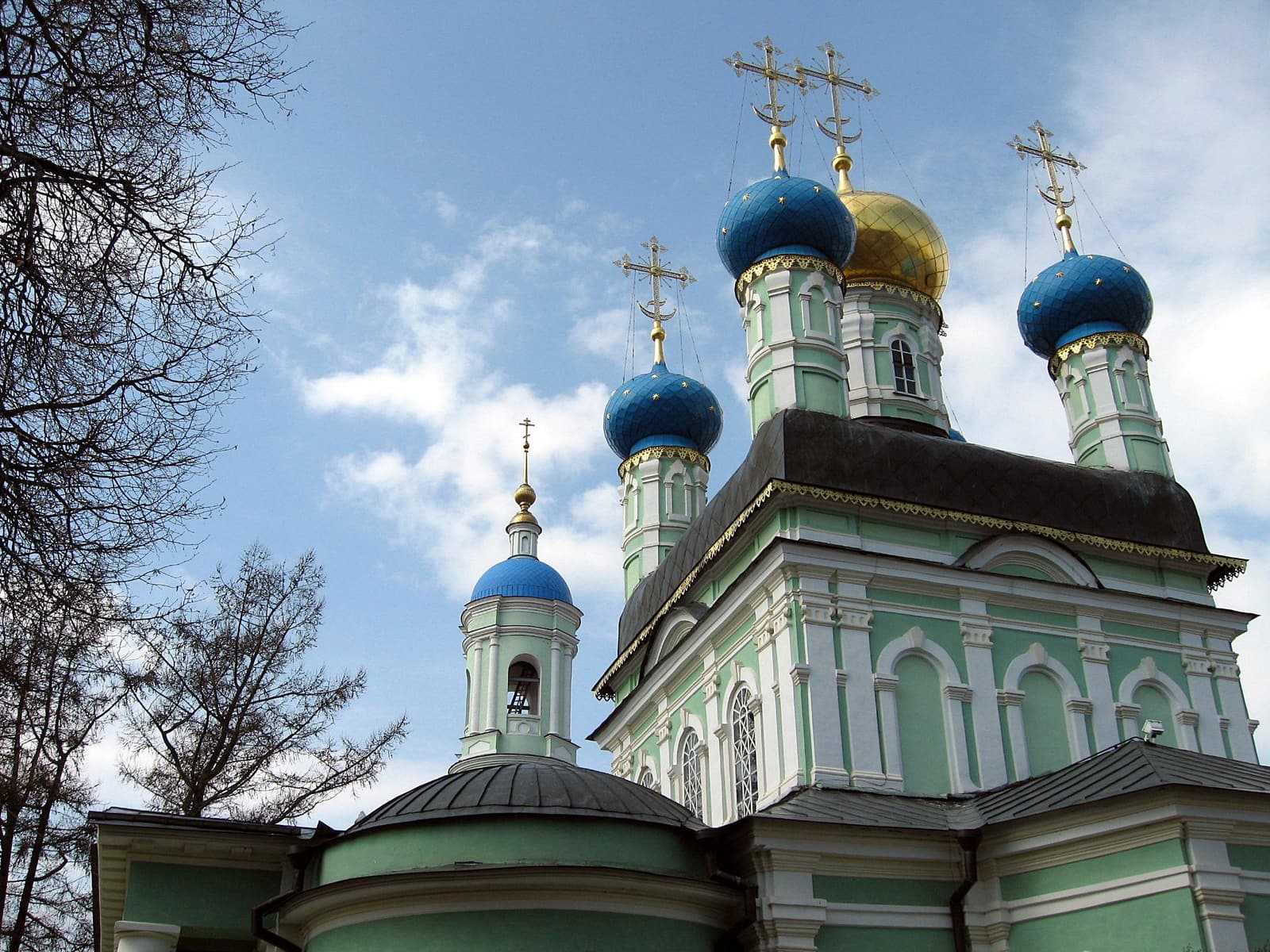
Image context: the cover image shows the churches of Optina Monastery, a monastic site often discussed in relation to Dostoevsky’s spiritual imagination and the elder tradition behind Zosima’s voice.[4][6]
1) The novel’s most difficult ethic is practical, not abstract: “active love”
Dostoevsky gives the cleanest formulation of his ethical wager in Elder Zosima’s counsel, where he distinguishes performative generosity from sustained obligation. In Constance Garnett’s translation, Zosima calls “love in action” a “harsh and dreadful thing compared with love in dreams,” and insists that it requires labor, patience, and endurance rather than emotional theater.[1]
That distinction matters because almost every major figure in the novel wants moral clarity without moral duration. They want one decisive gesture that settles the account. Zosima’s framework denies that shortcut. If moral life is mostly long-run conduct—how one speaks, pays, restrains, forgives, repairs—then no private self-image can substitute for practice.
This is where the novel still feels contemporary. It treats virtue as process control, not branding. The point is not to feel righteous; the point is to stay in relation long enough to become less dangerous to others.
2) Ivan’s rebellion is intellectually powerful because it is morally unsheltered
Ivan remains one of literature’s great anti-sentimental minds because he refuses cheap reconciliation. His rebellion against a world built on innocent suffering has force precisely because he does not soften its evidence.[1][2] But Dostoevsky does something subtler than simply refuting him: he stages what happens when critique becomes a private jurisdiction.
Once the mind claims sovereign distance from ordinary moral limits, language can become a solvent. Late in the novel’s logic, the formula “all things are lawful” appears as an inferential endpoint that others can operationalize.[1] Ivan does not commit a cartoon-villain conversion; instead, he discovers that ideas migrate through weaker, angrier, more opportunistic actors. The novel’s warning is systemic: you are responsible not only for what you mean, but also for what your framework authorizes when it leaves your mouth.
That is why Ivan’s arc is tragic rather than triumphant. He sees too much to be naive, but he cannot build a livable ethic out of negation alone.
3) Zosima’s “everyone is responsible for all” is not mystical excess—it is anti-excuse design
Readers often treat Zosima’s claim—each person is “responsible for all men and everything on earth”—as spiritual hyperbole.[1] Inside the novel, it functions more like a design rule against moral outsourcing.
The Karamazov world is full of causal dodges:
- I acted because of my blood.
- I acted because of ideas.
- I acted because society was corrupt.
- I acted because someone else began it.
Dostoevsky does not deny structural causes. He denies that structural cause erases personal agency. Zosima’s principle is therefore less about collective guilt than about anti-evasion discipline: start with your share of blame, and you reduce the energy available for self-justifying violence.
In modern terms, this is an argument about distributed responsibility. Harm travels through households, institutions, inheritance systems, legal process, and speech norms. If everyone waits for pure innocence before acting, nobody repairs anything.
4) The trial architecture exposes a second theme: institutions can judge facts while missing moral mechanics
The murder plot and courtroom sequence are not detachable thriller machinery; they are philosophical instrumentation.[1][3] The trial can arrange testimony, motive, and narrative coherence, yet still fail to capture the full moral topology of what happened.
Dostoevsky uses this gap to test another assumption modern readers still carry: that procedural closure equals ethical closure. It does not. The novel repeatedly separates three layers:
- legal attribution,
- social interpretation,
- interior responsibility.
When those layers drift apart, a verdict may stabilize public order while leaving the deeper causal network untreated. This is one reason the novel’s afterlife has been so strong in legal theory, theology, psychoanalytic reading, and political thought: it demonstrates that blame is never only a forensic question.[2][5]
5) Why this novel keeps returning in moments of ideological fatigue
The Brothers Karamazov has remained canonically durable not because it offers one doctrine, but because it refuses both available simplifications: moral innocence and moral nihilism.[2][3][5]
- Against innocence, it says: you are implicated.
- Against nihilism, it says: implication does not cancel obligation.
That double refusal is exhausting, which is why many readers resist it on first pass. But it is also why the book survives across political climates. In periods of polarization, people crave total acquittal for their side and total condemnation for the other side. Dostoevsky gives neither. He offers responsibility as a daily, unspectacular discipline under uncertainty.
That is the cost of freedom in this novel. Freedom is not permission to escape the human ledger; it is the burden of writing on it carefully, with other lives in view.
Sources
- Fyodor Dostoevsky, The Brothers Karamazov (Constance Garnett translation, Project Gutenberg)
- Encyclopaedia Britannica, “The Brothers Karamazov”
- Encyclopaedia Britannica, “Fyodor Dostoyevsky”
- Wikipedia, “The Brothers Karamazov” (publication context, structure, and reception overview)
- Fyodor Dostoevsky, The Brothers Karamazov (Wikisource edition reference)
- Wikimedia Commons, “Churches in Optina Monastery” (image source)