Many first-time readers approach A Passage to India as though the book's main job were to solve the Marabar incident: what happened to Adela Quested in the cave, who misread whom, and whether the ending offers a damaged but durable liberal friendship.[1][2] That route gets you through the plot, but it misses the novel's real architecture. The cleaner way in is to follow Forster's three-part shape: mosque, caves, temple. The book keeps changing the pressure under which relation becomes possible. In the opening, courtesy and surprise make friendship briefly imaginable; in the middle, the caves turn language into flattening noise; in the ending, the landscape itself refuses reconciliation that politics has not earned.[1][2]
That structural route matters because the novel keeps relocating its center. What begins as a social book about invitations, tea, amateur goodwill, and local insult turns into something harsher: a study of what happens when a political order and a physical landscape stop returning clear meaning to the people moving through them.[1][2][3] Read that way, the Marabar section stops looking like an isolated scandal. It becomes the point at which the whole book's earlier confidence in tone, interpretation, and liberal repair gets tested under pressure.[1][2]
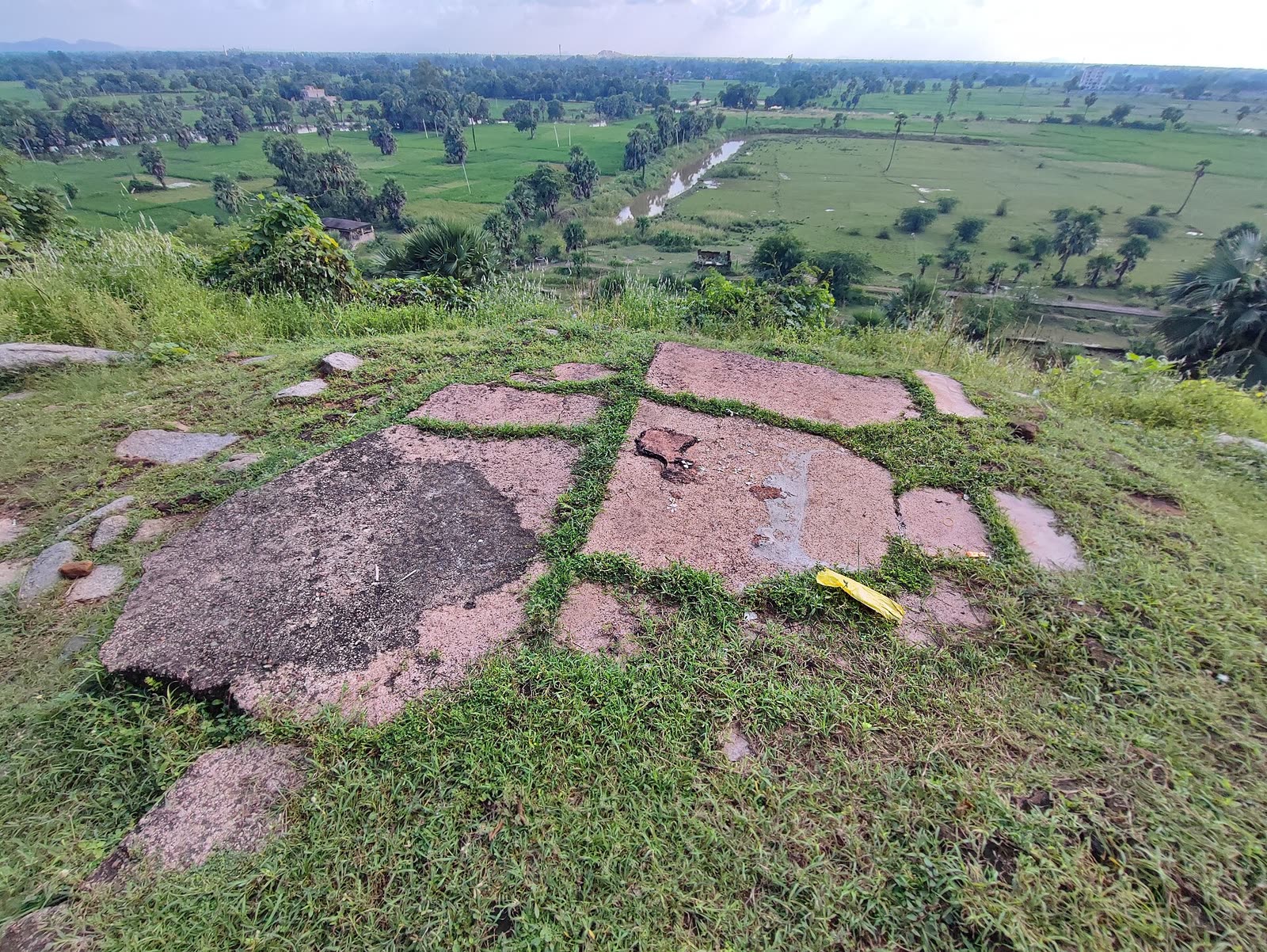
Image context: the cover uses a real photograph of the Barabar caves rather than an author portrait or a decorative colonial-era illustration. That choice fits this guide because the novel's most durable pressure comes from terrain. The cave country is where social manners, liberal optimism, and explanatory confidence all meet a harder medium.[1][4]
1) Begin with the mosque, because the novel does
The first scene you should hold onto is not the accusation or the trial. It is the meeting between Aziz and Mrs. Moore in the mosque. She removes her shoes, he is startled by her respect, and the scene settles for a moment into a form of recognition that the Anglo-Indian public world usually blocks.[1] When Mrs. Moore says, "God is here," the line does more than establish her tact.[1] It creates the novel's first genuine pocket of shared attention.
That beginning matters because it teaches you how rare reciprocity will be in this book. In Chandrapore's official and clubby spaces, everyone is pre-sorted by empire, race, rank, and suspicion.[1][2] The mosque scene briefly suspends that sorting without pretending it has disappeared. Britannica's summary is useful here: the novel is centrally about colonial tension, but it keeps testing whether private relation can open inside that political arrangement.[2] So your first reading task is simple. Do not treat the mosque as warm-up material before "the real story." It is the standard against which the rest of the book measures loss.
2) Read the three parts as changes in medium, not just stages of plot
The subtitles are not decorative. "Mosque," "Caves," and "Temple" tell you that Forster is moving through distinct environments of thought and feeling.[1] In the mosque section, the novel still trusts talk, manners, invitations, and provisional curiosity. Even when misunderstandings crowd in, words can still do work. Aziz can dream up the Bridge Party's failure, the tea gathering at Fielding's house, or the expedition itself because social form still feels negotiable.[1][2]
The caves section changes the medium entirely. The trip begins as hospitality and turns into disorientation. Forster had already linked India with "muddle" before the expedition, but the cave sequence gives that word material force.[1] It is not only that characters fail to interpret what happened. The world itself seems to stop returning differentiated meaning. The famous sound "boum" is not symbolic decoration; it is the book's way of making distinction collapse at the level of experience.[1] In the temple section, the novel does not simply tidy up the wreckage. It moves into another rhythm altogether: festival, weather, music, crowd, and devotional overflow. That last part feels baggier to some readers because it is supposed to feel less governable by Anglo-Indian categories.[1][2]
If you keep those three media in mind, the novel stops feeling structurally lopsided. It becomes a book about what kinds of human relation each world permits.
3) Do not over-solve the Marabar event
Readers often feel pressure to decide exactly what happened in the cave before they can say what the novel means. Resist that pressure. The moral interest of the Marabar section lies less in one recoverable fact than in the speed with which uncertainty gets converted into imperial narrative.[1][2] Adela's panic, the absence of stable witnesses, Mrs. Moore's psychic collapse under the echo, and the British station's appetite for racial certainty all matter more than any mechanical whodunit solution.[1]
Forster even plants the terms early. When Fielding says he likes mysteries but dislikes muddles, Aziz replies, "A mystery is a muddle."[1] That exchange is a reading instruction. The book will not always give you a noble hidden truth underneath confusion. Sometimes the confusion is the truth of the social world. The cave takes every sound, whether hope or politeness, and returns the same answer.[1] That is why Mrs. Moore comes out altered before the accusation has even fully formed. The caves do not merely conceal evidence; they damage confidence in scale, value, and sequence itself.[1][2]
So when you reach the trial chapters, watch not only who believes whom, but who needs belief to become administrative fact. The courtroom is where private uncertainty gets processed by public rule.[1][2]
4) Aziz and Fielding are real friends, and the book still refuses to sentimentalize them
One trap in reading A Passage to India is to flatten Aziz and Fielding into allegorical positions: colonized sincerity versus enlightened liberalism, or injured nationalism versus cosmopolitan goodwill. The novel is more exact than that. Their friendship is real because it includes wit, annoyance, generosity, ego, speed of attachment, and the pleasure of being less scripted together than with their own camps.[1] Yet it is structurally fragile from the start, because one man lives under empire and the other benefits from it even when he criticizes its coarseness.[1][2][4]
This is why the ending matters so much. The final ride does not say that friendship was fake. It says it cannot yet take final shape under these conditions. When the land and sky answer "No, not yet," the line should be read as form, not merely sentiment.[1] The novel externalizes political asymmetry as physical refusal. Rocks, horses, and earth break the riders apart because the public world has never stopped arranging them on unequal terms.[1][2]
That ending becomes stronger if you resist the urge to translate it into either optimism or despair. It is closer to a structural verdict: affection exists, but the world around it is still organized against durable equality.
5) Let the novel stay double: social comedy on the surface, metaphysical abrasion underneath
Part of the book's power comes from how quickly it changes register. The early chapters can feel almost comic in their account of official stupidity, club prejudice, conversational vanity, and Aziz's improvisatory social energy.[1] Then the novel abruptly turns abrasive. Mrs. Moore's relation to the world is scraped thin by the cave. Adela's engagement, sexuality, and perception all become unstable. Aziz's charm hardens into political resentment after the trial. None of those shifts are accidental shocks; they are the book's way of showing how a social comedy sits on top of deeper fractures.[1][2]
This is where Forster's broader career helps. Britannica's author profile notes that he repeatedly returned to the problem of relation across social or spiritual division.[3] A Passage to India pushes that concern into its hardest setting, because empire keeps turning ordinary failures of attention into historical injury.[2][3] The novel remains readable because it never gives up the pleasures of scene-making, tone, or human oddity. It remains difficult because those pleasures are constantly being tested by political structure and by a metaphysical pressure the caves make impossible to explain away.[1][2][3]
6) A practical route through the book now
If you are opening the novel for the first time, keep four questions beside you:
- What kind of relation is possible in this part of the book: courtesy, friendship, administration, devotion, or none of them?
- Is the scene asking words to clarify experience, or showing words failing against it?
- Who gets to turn uncertainty into official truth?
- Does the novel widen the space between characters here, or briefly let them meet inside it?
Those questions keep the book from shrinking into either a colonial case file or a generalized hymn to connection. Forster built something stranger. The mosque offers a standard of human tact, the caves destroy the fantasy that explanation will always save relation, and the ending refuses to let private affection outrun political fact. That is the best way into A Passage to India: as a novel that keeps changing the conditions under which any answer could count.[1][2][3]
Sources
- E. M. Forster, A Passage to India (Project Gutenberg HTML edition, full text).
- Encyclopaedia Britannica, "A Passage to India" (novel by Forster).
- Encyclopaedia Britannica, "E. M. Forster".
- Wikimedia Commons, "File:Barabar And Nagarjuni Caves (39).jpg" (lead image source page).