Katherine Mansfield's importance is easy to state too vaguely. She is often praised as a master of the modern short story, a delicate stylist, a writer of atmosphere, a precursor admired by Woolf and many others.[1][2][3] All of that is true, but it can blur the thing she actually changed. Mansfield keeps the decisive event just off-center. She does not rely on the heavy click of conventional plot to tell you where significance lives. Instead she lets weather, furniture, social rhythm, a child's glance, a daughter's hesitation, or a room's class tension accumulate until a life suddenly feels unstable.[1][2][3]
That is why her stories still feel so modern. They are rarely shapeless, but they refuse to announce their shape too early. A Mansfield story often seems to drift sideways until you realize that the drift itself is the design. By the time a character understands what has shifted, the reader has already been living inside the pressure system for several pages.[1][2]
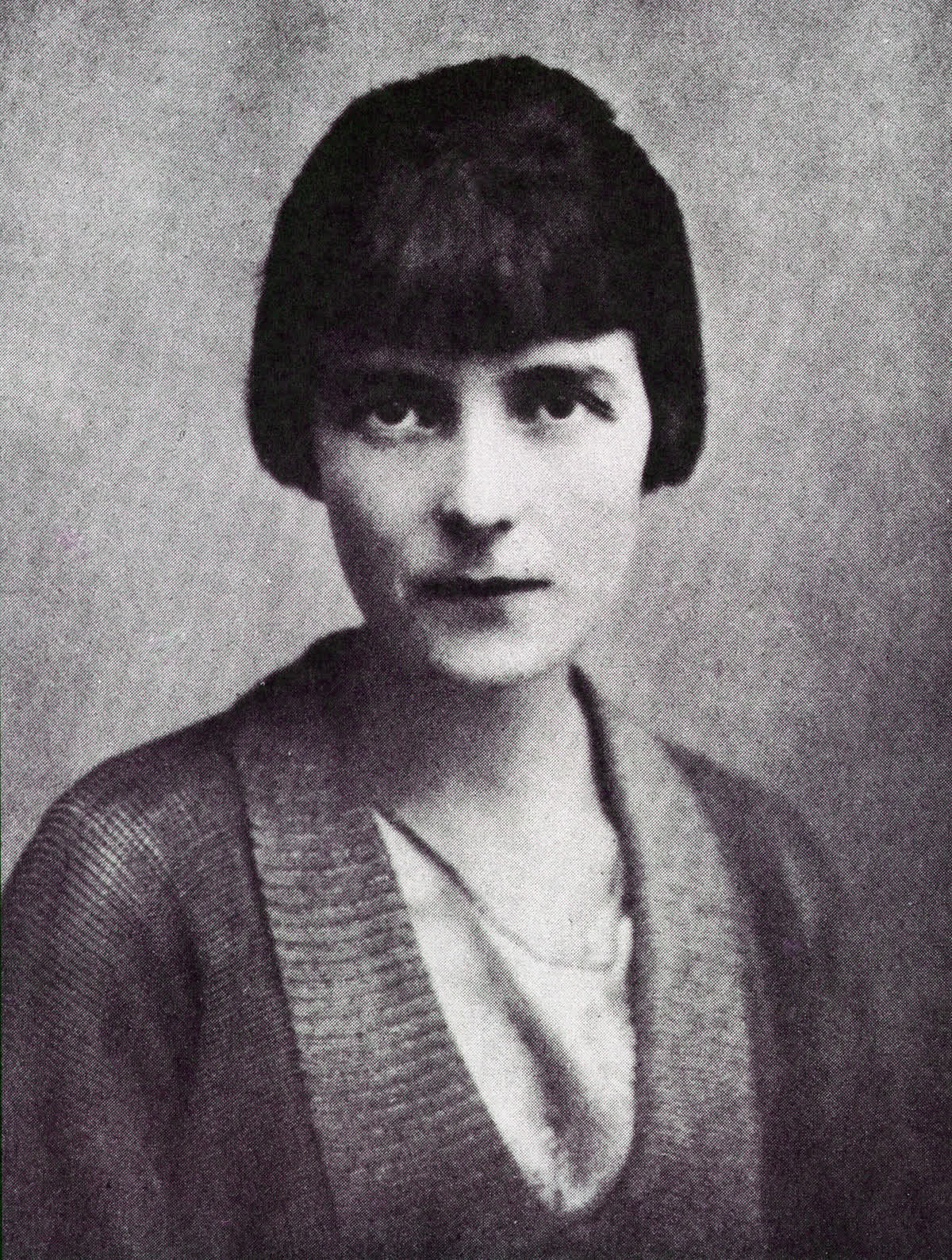
Image context: the cover uses a real archival photograph of Katherine Mansfield from Wikimedia Commons rather than an illustration or a book jacket. That choice suits the article because Mansfield's art works through documentary-seeming surfaces: gardens, clothes, chairs, meals, verandas, drawing rooms, and daylight. The stories become electric not by leaving the visible world behind but by making ordinary visibility suddenly unstable.[4]
1) Mansfield moved the short story's center of gravity from event to pressure
If you want the cleanest first proof, go to the family stories. In "Prelude" and "At the Bay," Mansfield loosens the old expectation that a short story must march straight toward a single dramatic turn.[1][2] Things do happen: a family moves, children wander, adults flirt with fantasy and fatigue, servants work, mothers and grandmothers manage the day. But the deeper action lies in distribution. Feeling is spread across the house, the garden, the shoreline, the sleeping arrangements, and the changes of light.[1][2]
That formal move matters because it changed what a short story could convincingly hold. A lesser writer might treat domestic life as prelude to the "real" event. Mansfield makes domestic arrangement itself eventful. She can turn a child's sense of a "forbidden garden" into a whole theory of how adulthood appears from below: beautiful, segmented, alluring, and governed by rules the child can feel before she can explain them.[1] In her hands, atmosphere is not padding around action. Atmosphere is where action takes place.
This is also why Mansfield remains hard to imitate. Plenty of later fiction borrowed her surface signs: delicacy, flowers, pauses, afternoon light, emotional implication. The harder thing is her control over emphasis. She knows exactly how much pressure a scene can carry before explanation ruins it.[1][2]
2) Her social world trembles because class is always in the room
Mansfield's refinement can make inattentive readers misread her as merely lyrical. That misses her sharpness. Her stories are full of class sensation: not abstract sociology, but immediate bodily knowledge of who belongs, who serves, who pays, who performs ease, and who has been trained to feel awkward at the wrong threshold.[1][2][3]
The famous garden-party story is the clearest example. The Sheridan family's ease depends on labor staying elegantly out of sight until it cannot.[1] Laura wants sympathy to move across class lines; the story lets that desire matter, but it also shows how fragile and theatrical her liberal feeling is inside the machinery of a wealthy household. The dead workman down the lane is not there to provide moral uplift. He is there to break the social sealing that has made hats, sandwiches, lilies, and marquee placement feel natural.[1][3]
The same class vibration runs through "Her First Ball" and "The Daughters of the Late Colonel," though in different registers.[1] Mansfield is brilliant at showing how social polish contains injury. One young woman feels the dance floor as both invitation and exposure. Two middle-aged daughters cannot quite convert filial obedience into independent motion after their father's death.[1] In both cases, what matters is not public catastrophe but a tremor in the script. Mansfield specializes in the instant when a role still holds outwardly yet has already begun to fail from within.
3) She lets consciousness flicker without flooding the page with explanation
This is where Mansfield's craft becomes unmistakable. She can move extremely close to consciousness without turning the story into a lecture on consciousness. "Bliss" is the classic case.[2] Bertha Young experiences an evening of exhilaration so intense that she reads the whole world through it, concentrating that feeling into the image of a "pear tree."[2] Mansfield lets the symbol glow, but she never lets it become a neat summary. By the time the evening's emotional structure cracks, the reader has already felt the danger of Bertha's over-reading.
"Miss Brill" works by a related but colder method.[1] Mansfield does not mock Miss Brill from above, nor does she sentimentalize her solitude. She lets the woman imagine the Sunday public scene as if it were a performance and herself a necessary participant, then arranges one small social wound that forces the fantasy to collapse.[1] The violence is tiny, which is why it hurts. Mansfield understands that humiliation often arrives as a minor adjustment in tone rather than as melodrama.
That control over psychic distance is one reason Virginia Woolf respected her so deeply, and one reason Mansfield still feels central to twentieth-century prose.[3] She discovered how to write interiority without overinsuring it. The stories trust juxtaposition, image, and tonal fracture more than explanatory argument. They let the reader do part of the emotional work.
4) Biography matters, but only if it stays subordinate to form
Mansfield's short life tempts biographical simplification. She was born in Wellington in 1888, moved within colonial and metropolitan worlds, spent important years in London and continental Europe, and died in 1923 at the age of thirty-four.[3] Illness, exile, money pressure, and restless movement all belong to the context. They help explain the intensity and compression of the work's later phases.[3]
But biography alone does not explain the fiction's distinctiveness. What matters more is how Mansfield translated instability into form. She rarely writes as though life will stand still long enough for a final summation. Her stories prefer glimpses, returns, cross-currents, unfinished recognitions, and endings that feel exact without feeling sealed.[1][2] That formal intelligence is why the work survived beyond period charm. Mansfield did not merely record a certain social world; she found a structure adequate to the way perception actually moves inside it.
5) Why Mansfield still reads like a beginning, not a relic
Mansfield remains fresh because she keeps narrative prestige attached to the wrong place, or rather the newly right place. Instead of reserving importance for marriages, deaths, inheritances, and declarations, she lets significance collect around smaller hinges: the arrangement of a breakfast table, a young woman's misread generosity, a flash of vanity, a pause before speech, a body becoming self-conscious in public, a private recoil after a room goes silent.[1][2]
That is a major reason so much later short fiction seems to pass through her even when it does not resemble her on the surface. Mansfield proved that compression did not require bluntness, that lyric feeling did not require vagueness, and that social criticism could live inside texture rather than speechmaking.[1][2][3] She made the modern short story less dependent on climax and more dependent on pressure, distribution, and after-sensation.
The best way to read her now is therefore not as a fragile miniaturist but as a hard formal innovator. She keeps the crisis just off-center so that readers must feel it before they can paraphrase it. That is not delicacy in the weak sense. It is structural nerve.
Sources
- Katherine Mansfield, The Garden Party, and Other Stories (Project Gutenberg HTML text; cited for "At the Bay," "The Garden-Party," "Miss Brill," "Her First Ball," and "The Daughters of the Late Colonel").
- Katherine Mansfield, Bliss, and Other Stories (Project Gutenberg HTML text; cited for "Prelude" and "Bliss").
- Encyclopaedia Britannica, "Katherine Mansfield."
- Wikimedia Commons, "File:Katherine Mansfield (15356040674).jpg" (source page for the lead photograph).