The first mistake readers make with Pale Fire is to treat its scholarly apparatus as packaging.[1][2] A foreword, a 999-line poem, a commentary, and an index can look like furniture placed around the real object. Nabokov designs the opposite effect. The apparatus is the event. John Shade's poem gives the book its lyric and moral center, but Charles Kinbote's notes keep trying to seize that center, rename it, and route the reader somewhere else.[1][4] The novel's deepest suspense is not "what happens next?" It is "who gets to tell us what this text is?"
That is why the book still feels sharper than a generic label like "metafiction" suggests.[1][3] Britannica's compact summary gets the essential mechanical fact right: this is a novel made of a long poem and the commentary of a mad pedant who insists on bending the poem toward his own history.[1] Penguin Random House's description adds another useful emphasis by calling the book a parody of detective fiction and learned commentary.[2] Those two halves belong together. Pale Fire is funny because the editor's apparatus keeps swelling beyond its assigned role; it is unnerving because the swelling is also a kind of theft.
Commentary's contemporary review is useful here not because it settles interpretation, but because it records how strange the form felt on arrival. In 1962, the reviewer called the book an "anti-novel," which catches the immediate shock of a work that pretends to be editorial support material while quietly replacing the usual center of narrative gravity.[5] Nabokov, whose English-language career had already moved through elegant formal games before this point, pushes that habit into something harsher here: the book turns reading order itself into a contest.[2][3]
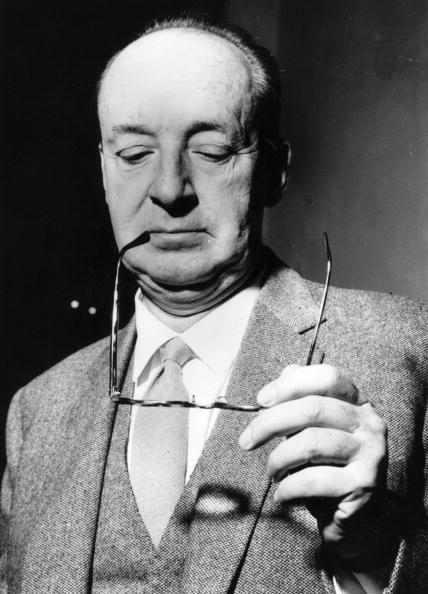
*Image context: the cover uses a real Nabokov photograph rather than a later book jacket or an abstract flame motif.[6] That choice keeps the focus on authorship and control. This article is about structure, but in *Pale Fire, structure is never neutral; it behaves like a person trying to enter the room first and speak over everyone else.
1. The table of contents is already the plot
One reason Pale Fire feels so immediate is that its formal problem is visible before the reader has interpreted a single sentence. The book openly announces its parts: Foreword, Poem, Commentary, Index.[1][2] That sequence promises order. It sounds like the sort of scaffolding that should help a reader move cleanly from primary text to clarifying material. Nabokov uses that promise as bait. The moment Kinbote steps forward in the foreword, the supposedly subordinate voice starts behaving like a claimant.
This is where a form-and-structure reading matters more than a plot summary. If you reduce the novel to "a mad commentator misreads a poem," you miss the pressure created by placement. The foreword comes first, which means the editorial voice receives the reader before the poem does.[1][2] The apparatus is not merely appended after meaning has already formed. It preconditions the act of reading. Kinbote is already managing expectation, already explaining why his notes matter, already asking for custody.
That arrangement turns the table of contents into a miniature drama of rank. The poem may be the achievement, but the book's order lets the editor act like a gatekeeper at the threshold of achievement. Nabokov does not hide this aggression. He gives it institutional manners. The structure says: here is the authorized route. The novel then spends the rest of its pages showing what happens when authorization is unstable.
2. Shade's poem matters because it refuses to be mere raw material
The hostile-takeover metaphor only works because John Shade's poem is not dead matter waiting to be processed.[1][2] The 999 lines bring their own gravity: private grief, married tenderness, mortality, pattern-seeking, and the comic dignity of ordinary intellectual life all live there at a scale quite different from Kinbote's manic self-insertion.[1][2] If the poem were only a hollow pretext, the commentary would read as an ingenious frame. Because the poem has shape and feeling of its own, the commentary reads as annexation.
This difference is easy to underrate in discussions that focus only on the novel's puzzle mechanics. Nabokov needs two energies, not one. He needs Kinbote's centrifugal force, forever dragging attention toward Zembla, royal escape fantasy, and the assassin Gradus.[1][2] But he also needs Shade's centripetal force, the steadier pull of a poem that keeps returning to family, death, art, and the stubborn wish to make pattern out of contingency.[1][4] The form does not work because chaos wins. It works because order remains available and keeps getting interrupted.
Timothy Flower's essay on the novel's "scientific art" is helpful because it points toward design rather than mere trickery.[4] Pale Fire is not random brilliance scattered over an eccentric container. Its structure behaves like a system of pressures. Shade's poem creates one kind of coherence; Kinbote's apparatus creates a rival coherence. The reader is forced to feel the mismatch between them as structure, not just as theme.
That is why the book's emotional stakes remain larger than its gimmick description. Shade writes as though a poem can gather a life. Kinbote reads as though another person's poem exists to validate his own mythology. The struggle between them is not just interpretive error. It is a struggle between two ideas of what literature is for.
3. The commentary does not explain the poem; it keeps defecting from it
The commentary section is where Nabokov's formal aggression becomes impossible to miss. A normal set of notes would illuminate references, gloss difficulties, or place the poem in context. Kinbote's notes keep performing the gestures of scholarship while refusing scholarship's basic discipline.[1][2] A line in Shade's poem becomes a launch ramp for Zembla. A phrase that ought to invite close reading instead opens a corridor into Kinbote's private theater of exile, royalty, secrecy, and pursuit.[1]
That defecting motion is the book's real engine. The reader is repeatedly invited to move away from the line supposedly under discussion and into a different narrative altogether. Commentary becomes diversion. Annotation becomes self-display. The apparatus does not support the poem; it competes with it for page-time, emotional investment, and interpretive authority.[1][4] By calling the book a parody of learned commentary, source summaries capture the surface fact.[1][2] The deeper fact is that the parody hurts because it knows how easily explanatory prose can become territorial prose.
This is also where the detective-fiction element matters.[2][5] Kinbote wants connections everywhere. He wants Shade's poem to contain him, Gradus to confirm him, and the whole book to reveal a hidden master pattern with himself at the center. That hunger gives the notes their manic propulsion. They do not behave like marginalia written after understanding. They behave like evidence being manufactured in public.
So the form trains the reader into a peculiar kind of vigilance. You cannot read passively and simply "take the notes along." You have to keep asking what relation, if any, the note actually has to the line it claims to serve. Nabokov turns editorial dependence into interpretive resistance. The more insistently Kinbote explains, the more the reader learns to withhold assent.
4. The index is the last instrument of control
Many experimental novels would stop after the commentary and call the effect complete. Pale Fire goes one step further and adds the index, which matters because indexes normally arrive as a promise of cleanup.[1][2] After digression, they sort. After narrative sprawl, they stabilize retrieval. Nabokov gives us an index that continues the struggle by other means. It does not simply help the reader find the book. It tells the reader what counts as findable.
That is a subtler kind of power than commentary, but in some ways a colder one. Notes can still pretend to be conversational. An index feels administrative. It has the impersonal authority of filing and classification. By letting Kinbote preside here too, Nabokov shows that the contest over the poem was never only about interpretation in the lofty sense. It was also about information architecture: which names recur, which references are foregrounded, which route through the book is made to seem official.[1][4]
Seen this way, the index is the final proof that the apparatus has become plot. Kinbote does not merely interrupt Shade; he tries to outlive him in the mechanisms by which future readers will navigate the page. The form of Pale Fire therefore extends beyond voice into retrieval. Even after the poem has been written, even after the commentary has gone wild, the novel asks one more unnerving question: who gets to organize the remains?
5. Why the structure still feels modern
What keeps Pale Fire contemporary is not just that it is clever.[1][2][4] Plenty of clever novels date quickly. This one stays alive because it understands a pressure that modern readers recognize immediately: primary texts rarely travel alone. They arrive with introductions, threads, annotations, searchable tags, explanatory overlays, prestige frames, and competing narrators of what the text "really" means. Nabokov's formal invention feels prophetic because it makes that pressure visible without pretending the pressure is harmless.
That is why the book's structure matters more than the easy label of puzzle or game.[1][5] The poem, the notes, and the index do not simply offer multiple perspectives in a generous pluralist sense. They stage a custody battle. Shade writes one kind of order. Kinbote builds an apparatus that keeps trying to absorb that order into another story, one in which his own obsessions become central. The reader's job is not to solve a neat riddle and exit satisfied. It is to keep noticing the difference between illumination and takeover.
Read that way, Pale Fire becomes less a novelty cabinet than a severe lesson in literary power.[1][2][4] Nabokov makes form do the moral work. He does not tell us that interpretation can become vanity, possession, or delusion. He builds a book in which we have to experience those transformations page by page. That is why the novel still feels so bracing. Its wildness is real, but its wildness is disciplined into one of the sharpest structural arguments in twentieth-century fiction.
Sources
- Encyclopaedia Britannica, "Pale Fire" (overview of the 1962 novel's poem-commentary structure and Kinbote's role).
- Penguin Random House, Pale Fire by Vladimir Nabokov (publisher page describing the novel as a parody of detective fiction and learned commentary).
- Encyclopaedia Britannica, "Vladimir Nabokov" (biographical overview noting Pale Fire as a culmination of Nabokov's unorthodox structural mastery).
- Timothy F. Flower, "The Scientific Art of Nabokov's 'Pale Fire'," Criticism 17, no. 3 (Wayne State University Digital Commons page).
- Commentary, "Pale Fire, by Vladimir Nabokov" (1962 contemporary review describing the book's anti-novel shock on arrival).
- Wikimedia Commons, "File:Vladimir Nabokov in Roma (1960).jpg" (source page for the lead photograph).