
The Nobel Prize upload of Derek Walcott reading "Sea Grapes," published on April 3, 2008, lasts only 1 minute 25 seconds.[1] That brevity is part of what makes it worth slowing down. The clip does not offer an interview, a lecture, or a long retrospective frame. It gives one late public reading by a poet whose work kept finding ways to pull the Caribbean into conversation with Homer, empire, migration, and domestic obligation.[1][3][4] In miniature, it behaves like a compressed map of Walcott's larger method.
The poem itself is short enough to seem almost casual on a page.[2] A schooner leans through Caribbean light; Odysseus appears; a husband and adulterer get folded into the same stretch of longing; then the poem closes on surf, epic meter, and a famously unsatisfied judgment about the consolations of the classics.[2] What the video clarifies is that Walcott does not read this material as literary ornament. He reads it as lived weather. The Greek reference is never allowed to float above the islands as borrowed prestige. It comes ashore in fatigue, salt, guilt, and the hard knowledge that homecoming does not end conflict.
That matters because Walcott's whole career sits inside that pressure. The Nobel biographical page and Britannica both describe a writer formed in Saint Lucia, trained also as a painter, and drawn again and again to the mixed inheritance of the Caribbean world: African, European, colonial, creole, maritime, theatrical.[4][5] His Nobel lecture later gave that inheritance its most expansive public formulation, arguing for an Antillean culture assembled from fragments that are wounded by history but still fully alive.[3] "Sea Grapes" is much smaller than the lecture, yet the reading shows the same conviction at work. Fragments are not leftovers. They are the actual material of vision.
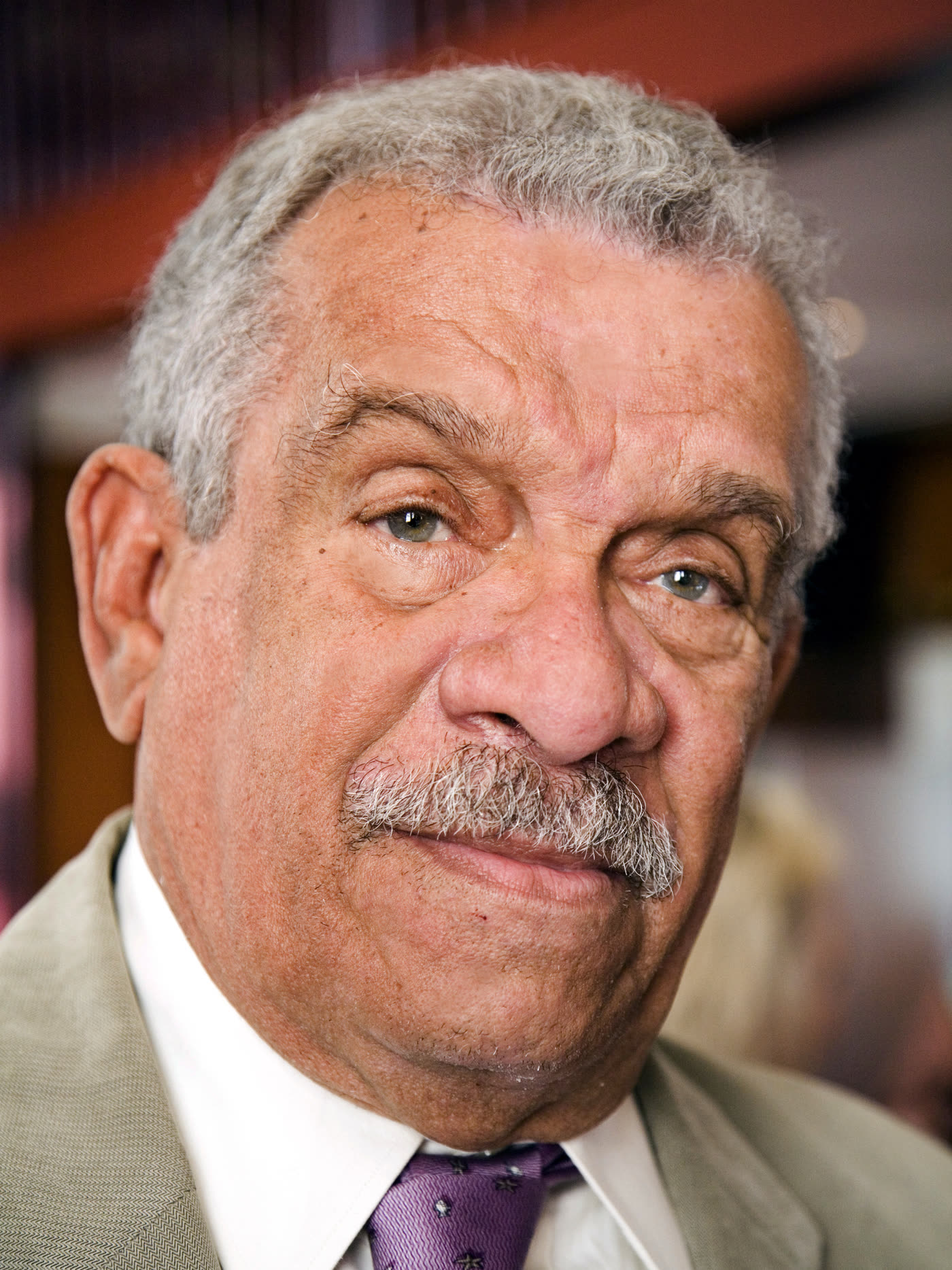
Image context: the cover uses a real 2008 photograph from Wikimedia Commons rather than an invented seascape or symbolic still life.[6] That choice keeps the article close to the kind of evidence the video supplies. What matters in this clip is the public human presence carrying the poem: Walcott's measured face, his pace, and the sense that the poem's argument has passed through a long life before reaching the microphone.
The embedded video below is the official Nobel Prize upload.
Around 0:00, the opening schooner already carries exhaustion rather than adventure
The first thing the reading changes is scale.[1][2] On the page, the poem opens with a sail and a schooner, and a quick reader could mistake that beginning for atmosphere.[2] In Walcott's voice, the motion is heavier. He gives the image enough drag that the boat does not feel picturesque. It feels worked, burdened, and late. That tonal weight matters because the poem is not about maritime freedom. It is about what happens when the old epic idea of voyage returns inside a Caribbean setting where movement is tied to labor, dispersal, and imperial routes as much as to romance.[2][3]
This is one reason Odysseus belongs here without sounding imported.[2] Walcott's larger writing repeatedly places classical forms under Caribbean light, but he does so by changing the emotional pressure inside the reference.[3][5] The hero does not arrive as an untouchable monument from school culture. He arrives as one more figure for divided desire, one more traveler whose path back toward home has already become morally compromised. The reading makes that reduction in grandeur audible. Walcott does not "perform the classical." He domesticates it into salt air.
His delivery also preserves the painter's eye people sometimes forget about when they discuss him only as a Nobel laureate.[4][5] The sail leans on light; the islands tire the boat; the sea surface works as both setting and argument.[2] Those details are not scenic padding. They are how the poem thinks. Walcott's line of sight always wants the visible world to do intellectual labor, and the clip lets you hear how naturally that habit survives in his voice.
Around 0:23, longing splits into responsibility, and the poem refuses heroic innocence
The middle of the reading is where the poem becomes hardest.[1][2] Walcott reaches the point where homeward desire and erotic betrayal occupy the same emotional field, then lands on the sentence "This brings nobody peace."[2] In a weaker reading, that line might sound like moral commentary attached after the image. Here it lands as the poem's center of gravity. The homeward pull in "Sea Grapes" is never clean. Odysseus is not only the voyager who wants to return. He is also the man whose longing has already implicated other people.
That doubleness is central to Walcott's Caribbean use of myth.[2][3] He does not turn the classical world into a museum of exemplary forms. He uses it to show that the old stories remain recognizable because private conflict still moves through empire, shorelines, marriage, and wandering. The poem's great pressure lies in its refusal to let the reader choose one dignity at the expense of the other. If you admire the voyager's ache for home, you still have to keep the adulterer's damage in view.[2] If you fixate on guilt alone, you miss the pull of return that gives the poem its ache.
The video sharpens that tension because Walcott reads without melodrama.[1] There is no heavy tragic emphasis telling the listener where to feel. He trusts the moral weather already built into the lines. That restraint is important. It is consistent with a poet who spent decades writing against caricature, whether the caricature was of the Caribbean as a paradise, the colonial subject as a passive fragment, or the classical inheritance as the property of Europe alone.[3][4][5] In this clip, the old myth survives because it can still bear mixed motives honestly.
Around 0:48, the poem sets a boundary on what the classics can actually do
The last turn of "Sea Grapes" is the one most likely to linger after the video ends.[1][2] Walcott moves from Troy, the Cyclops, and the sea's hexameters toward the closing judgment that "The classics can console. But not enough."[2] That sentence is short, but it is doing almost all of the poem's philosophical work. It grants the power of inherited form while refusing to let that power become consolation by itself. The old stories can steady perception. They can name recurrence. They can make suffering legible across time. What they cannot do is cancel the unfinished business of the present.
This is where the clip becomes a key to Walcott's broader public argument. In the Nobel lecture, he insists that Caribbean culture should not be read as damaged imitation of metropolitan originals; its fragmentary condition is the basis of its creativity and truth.[3] The ending of "Sea Grapes" sounds like the lyric counterpart to that claim. Classical memory is real, nourishing, and available, but it has to pass through local history, local speech, and local grief before it becomes honest. Otherwise it remains only citation.
The video's provenance helps the point. It is an official Nobel Prize upload from late in Walcott's public career, presenting him not in theatrical debate but in bare recital.[1] There is almost nothing in the frame except the voice and the poem. That spareness reveals how much pressure the poem can carry on its own. It also shows that Walcott's authority did not depend on academic explanation. He could make a whole civilizational argument through cadence, pacing, and one final qualification.
That is why this short clip deserves more than casual circulation. It provides a self-contained introduction to Walcott's way of thinking: history enters through shorelines and weather, myth enters through ordinary conflict, and form earns its dignity only after it has admitted the insufficiency of inherited comfort.[1][2][3] The reading is brief, but it stands on a large threshold. It lets Homer reach the Caribbean and makes the Caribbean answer back.
Sources
- Nobel Prize, "Poem reading by Derek Walcott, Nobel Laureate in Literature," YouTube video, published April 3, 2008.
- Poetry Foundation, "Sea Grapes" by Derek Walcott.
- NobelPrize.org, "Derek Walcott - Nobel Lecture: The Antilles: Fragments of Epic Memory."
- NobelPrize.org, "Derek Walcott - Biographical."
- Encyclopaedia Britannica, "Derek Walcott" (biography, books, Nobel Prize, and facts).
- Wikimedia Commons, "File:Derek Walcott (3x4 cropped).jpg" (source page for the lead photograph).