George F. Babbitt is one of those literary names that escaped the book and became a social label. That can make Sinclair Lewis's 1922 novel sound easier and flatter than it is. Once "Babbitt" becomes shorthand for a complacent businessman, the character risks shrinking into pure satire: a realtor in a Midwestern boom city, full of club loyalties, sales talk, and civic noise, built mainly to be mocked.[1][2][3] Lewis certainly mocks him. But Babbitt lasts because the mockery never entirely seals him off. The novel studies a man who has learned to perform success so completely that he can barely tell where appetite ends and obedience begins.[1][2]
That distinction matters because Babbitt is not written as a villain of conviction. He is written as a man saturated by atmosphere. Zenith gives him slogans before it gives him thought: efficiency, pep, progress, standardization, booster spirit, good fellowship, the proper enemies, the proper enthusiasms.[1][2] He repeats them with professional energy, but Lewis keeps showing that repetition as a social survival skill rather than a fully coherent philosophy. Babbitt belongs to the civic machine and is rewarded by it, yet he also leaks loneliness through the seams. That leakage is the real subject of the novel.
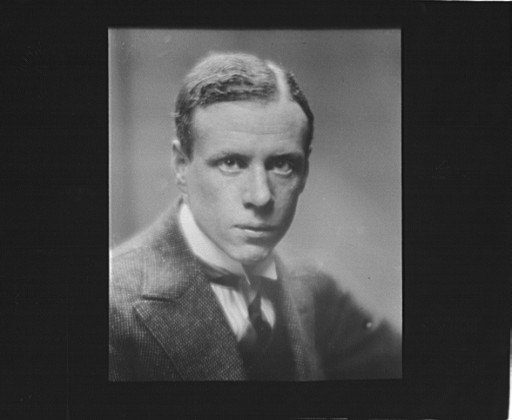
Image context: the lead image uses a real archival portrait of Sinclair Lewis from the Library of Congress, not a poster, illustration, or generated substitute. It belongs here because this character study is really about Lewis's sharpest human type: a man arranged for public approval and left with very little private language once approval begins to feel thin.[5]
Babbitt is built from sales language before he is built from inward depth
Lewis opens by making environment do the work of psychology. Zenith is not a neutral city in which a certain kind of man happens to live. It is a language factory.[1][2] Babbitt wakes inside gadgets, timetables, advertisements, club routines, breakfast habits, and business habits that already speak for him.[1] The famous early description of Zenith as a place of office buildings rather than citadels or churches is not only urban scene-setting. It tells us what kind of soul-world the novel inhabits.[1][2] Public value is measured through circulation, visibility, and hustle.
Babbitt is therefore most himself when speaking in prefabricated registers. He sells real estate, promotes subdivision dreams, praises civic expansion, and handles conversation as if every room were partly a luncheon speech.[1] That is why the book still feels sharper than a simple attack on business culture. Lewis does not say that capitalism produces bad opinions and stop there. He shows how commerce becomes rhythm, diction, and emotional reflex. Babbitt's jokes, hostilities, loyalties, and ambitions all arrive half-packaged by the world he calls common sense.[1][2][3]
This is the character-study key. Babbitt is not empty because Lewis failed to deepen him. He is shallow in a historically specific way. He has been trained into surfaces that function well enough to win approval, make money, and keep the right company.[1][2] The satire bites because those surfaces are accurate. The pathos enters because a person still remains inside them.
His dissatisfaction arrives before his courage does
The novel's strongest intelligence lies in this gap. Babbitt is not a heroic rebel trapped in the wrong town, nor is he so perfectly adjusted that no crack can appear.[1][2] Lewis gives him intermittent flashes of disgust, boredom, erotic restlessness, and vague hunger for some freer life, but those flashes never arrive as doctrine. Babbitt can feel the insufficiency of Zenith long before he can imagine a durable alternative.[1][2][4]
That is why the book's middle stretch matters so much. His friend Paul Riesling's catastrophe, his own attraction to bohemian or liberal company, and his affair do not transform him into a new man.[1][2] They expose how thin his old manhood already was. Babbitt has lived by being legible to other prosperous men: a good joiner, a good mixer, a safe opinion-holder, a respectable husband, a man who knows the proper line at the club and the office.[1] When he drifts away from that script, he discovers not hidden freedom but panic. He wants relief more than revolution.
Britannica's summary is useful on this point because it notes both the humanity and the limit in Babbitt's apostasy: he briefly questions the values he has upheld, yet the rebellion remains short because he lacks the inner strength to sustain it.[2] That is exactly right, but "strength" here should not be heard as a moral insult alone. Lewis is showing what conformity does to imagination. If every public reward has trained you to speak in group-approved slogans, then even private revolt will tend to borrow its costume from somewhere else.[1][2][4]
The rebellion is rented because the self underneath it is underfurnished
This is where Babbitt becomes more than a period satire of Rotary-club America. Babbitt's crisis is not that he discovers society is fake. He knew some of that already, at least in flashes. His crisis is that his own self has been built in too much relation to applause.[1][2] He can step outside the consensus briefly, but he cannot yet live there.
Lewis handles that condition with unusual precision. The novel never lets us forget how pleasurable conformity can be. Club life offers warmth. Business success offers measurable standing. Civic boosterism offers belonging. Domestic routine offers recognition. Even Babbitt's prejudices are socially lubricated; they make him feel synchronized with the men whose respect he depends on.[1][2][3] When he defects from that synchronization, the cost is not abstract moral uncertainty. It is social coldness. He feels watched, whispered about, cut off from the easy current of male approval.[1][2]
That is why "rented rebellion" feels like the right phrase for his adventure. He borrows a vocabulary of independence without building an independent structure of life. His gestures toward dissent remain dependent on mood, friendship, secrecy, and temporary nerve.[1][2] Once illness, family pressure, and social isolation tighten around him, the old civic self returns with depressing ease.[1][2] Lewis is severe about that collapse, but not merely contemptuous. He understands how expensive nonconformity becomes in a world where every club, sale, lunch, and election keeps pricing the cost of exclusion.
What keeps Babbitt alive in 2026 is not the type alone, but the half-awakened person
This is why the novel has survived its own vocabulary victory. If Babbitt were only a museum case of 1920s boosterism, the noun might have outlived the book. Instead the book keeps renewing the noun because it preserves the human contradiction inside it.[1][2][3] Lewis gives us a man who is ridiculous, compromised, noisy, and often cruelly conventional, but also intermittently aware that the approved life around him has thinned out his own powers of feeling and judgment.[1][2]
The Nobel material on Lewis helps sharpen that larger context. By the time he became the first American Nobel laureate in literature, his reputation rested on his willingness to attack complacent American self-praise rather than decorate it.[3][4] Babbitt is one of the clearest places where that method becomes durable. Lewis does not merely laugh at a smug middle class. He shows how social conformity colonizes the interior until a person's rebellion can be felt as authentic and still fail for lack of inward furniture.[1][2][4]
So Babbitt should not be reduced to a cartoon of boosterism. He is a character built around a harder recognition. Modern societies do not always produce obedience by terror or by explicit doctrine. Often they produce it by making approval feel practical, sociable, masculine, and safe.[1][2] Lewis makes that process visible, then gives the man inside it just enough consciousness to suffer. That is the source of the novel's lingering force. George F. Babbitt is ridiculous because he has surrendered so much of himself to the crowd; he is memorable because some part of him knows it.
Sources
- Sinclair Lewis, Babbitt (Project Gutenberg HTML text of the 1922 novel).
- Encyclopaedia Britannica, "Babbitt" (novel summary, themes, publication context, and George F. Babbitt's brief revolt).
- Encyclopaedia Britannica, "Sinclair Lewis" (biographical context, Lewis's satirical method, and the cultural afterlife of "Babbitt").
- Nobel Prize, "Sinclair Lewis - Biographical" (career context around Lewis's 1930 Nobel recognition and literary standing).
- Library of Congress Prints & Photographs Online Catalog, "Portrait photograph of Sinclair Lewis" by Arnold Genthe (1914 source page for the article image).