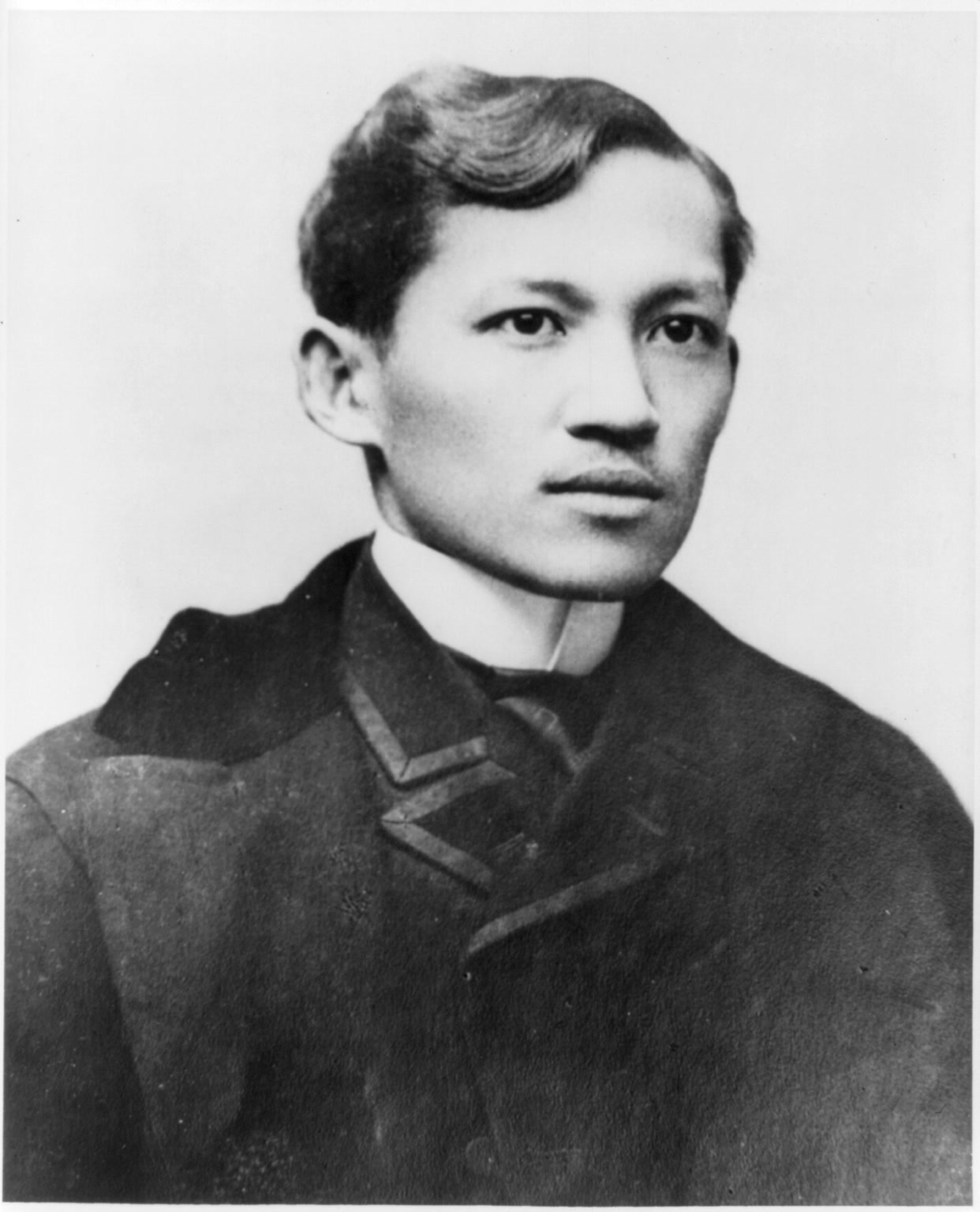
Sisa is often remembered as if she enters Noli Me Tangere already mad: hair loose, singing to herself, searching for sons the town has failed to protect. José Rizal writes a harder sequence. Before Sisa becomes an icon of suffering, she is one of the novel's most exact readers. She knows Basilio and Crispín by the weight of their steps. She remembers which child likes tomatoes and which likes wild duck. She listens at doors, sorts voices, studies a bloodied scrap of cloth, and keeps trying to turn fragments into news.[1]
That order matters. Sisa does not lose contact with reality because she lacks attention. She breaks after attention has given her more evidence than she can survive and after every institution that could act on it—the convento, the Civil Guard, the prosperous town—has refused to hear her. Her character is built around an unequal exchange: she listens closely to everybody, while people with power translate her into whatever is easiest to dismiss.
This reading uses Charles Derbyshire's 1912 English translation, The Social Cancer, and names its limits. Rizal wrote Noli Me Tangere in Spanish and published it in Berlin in 1887; the novel has since passed through many English and Philippine-language versions.[4] Derbyshire's diction is therefore not a transparent substitute for the original. What remains especially visible in his version, however, is Rizal's scene design: food becomes a ledger of care, bells and footfalls become failed messages, official labels replace testimony, and blood returns twice with opposite effects.[1]
Before madness, an economy of attention
Chapter XVI begins far outside Sisa's hut, with wealthy worshippers paying for Masses and indulgences while poor families pray in what the narrator calls the language of misery. The camera then moves inward. Sisa has missed Mass to finish sewing that was urgently ordered, only to receive a promise instead of payment. Still, she has assembled a feast at the scale poverty permits: gleaned white rice, three small fish, tomatoes, greens, dried boar, and a leg of wild duck.[1]
This inventory is characterization. Sisa knows desire in household units. She has matched each scarce food to a child, calculated the walk home, and made waiting material. When her husband arrives first and consumes almost everything, she does not simply go hungry; she cooks again and divides what remains. Her explanation—“the way is long and hungry stomachs have no heart”—is practical, tender, and unsentimental.[1]
Rizal places that meal immediately after Chapter XV's scene in the bell tower, where Crispín is detained over missing money and dragged away while Basilio escapes. The reader therefore knows what Sisa cannot. She waits for children who have already been split apart by the institution whose bells organize the town's time. The cut from tower to table converts public abuse into domestic arithmetic: fewer bodies returning, less food eaten, wages not arriving, one mother listening into the dark.[1]
Her listening is precise enough to function like portraiture. Basilio's footfall will be strong and clear; Crispín's will be light and irregular. Wind shakes rain from banana leaves, a bird calls, a dog drags something along the road, and Sisa tests each sound against the two patterns she wants to hear. The scene grants her an intelligence the later label of “madwoman” can obscure. She is not vaguely maternal. She is a practiced interpreter of a particular household.
The convento accepts the gift and rejects the witness
At daybreak, Sisa walks to the convento carrying vegetables, fern shoots, and flowers chosen for the curate. The gesture is painful because it combines hope with hierarchy. She must approach the very household implicated in Crispín's disappearance as a supplicant, arranging produce beautifully before asking whether she may speak. The servants accept the basket's usefulness without accepting the mother's account.[1]
When a servant claims Crispín stole things and ran away, Sisa covers her ears. Her mouth moves without sound. The cook then orders her to carry grief elsewhere: “Get out in the street and cry!”[1] The command reveals the convento's moral economy in miniature. Her food may enter. Her labor may enter. Her fear may not disturb the house.
The scene also gives the reader a clean boundary between evidence and accusation. We have seen Crispín dragged down the stairway; we have not seen him steal. The convento's version nevertheless travels faster than Sisa can. By the time she reaches home, the allegation has already become a police category. Power does not need to establish what happened to the child. It needs only a story that makes the poor family answerable.
“Mother” becomes a charge
The Civil Guards do not ask Sisa what she knows. They call her the mother of thieves and demand the missing money. She repeats their phrase—“Mother of the thieves!”—as if testing an identity imposed from outside.[1] The grammatical violence is small and complete. A relation that has organized her care is turned into evidence of shared guilt.
Sisa still answers with lucid particulars. Basilio brought no money. Crispín has been missing for days. The guards may search the hut. Her defense ends with a claim the novel keeps proving and its officials keep refusing: “Not all of us poor folks are thieves!”[1] Yet she is marched toward town, forced to negotiate how far ahead of the soldiers she may walk so that public shame will be marginally less visible.
Inside the barracks, bystanders turn her and the confiscated hen into a joke about hens and chicks. Later the alférez dismisses the curate's accusation as a friar's trick and orders Sisa released. That flicker of official skepticism changes nothing. No one investigates Crispín's disappearance, repairs the humiliation, escorts her home, or recognizes that disproving a charge is not the same as restoring the accused. The institution can decide that its own story was flimsy without becoming responsible for what the story did.[1]
Back at the hut, Sisa calls her sons and receives only echo, water, and bamboo leaves. Then she finds a torn piece of Basilio's shirt stained with blood. Rizal does not offer a clinical diagnosis; his narrator moves among physiological description, religious speculation, and uncertainty. It is safer to say what the sequence shows. Sisa's mind gives way after missing wages, a vanished child, an injured child, coerced exposure, official indifference, an empty house, and material evidence of violence converge with no usable explanation.[1]
Her song is an archive, not an escape
Once Sisa wanders, the town treats her speech as nonsense. Rizal gives it another structure. Her refrains keep returning to the same linked objects: the convento tower, lost gold, fruit carried to the curate, her garden, Basilio, and Crispín. Chronology has broken, but causality has not disappeared. Her speech preserves the case the town will not assemble.[1]
This is clearest on All Souls' Day. Sisa points to lights as if they were her sons, asks for prayer, and folds the missing children into a ritual supposedly devoted to the dead. Stephan Lipke's study of Rizal's macabre realism notices the cruelty of this placement: pious people debate indulgences and release from suffering while failing to help a mother suffering in front of them.[2] Sisa's confusion does not interrupt the religious satire. It completes it. The town has fluent rites for souls and no effective procedure for finding Crispín.
Her singing creates an even sharper test. In Chapter XXXIX, soldiers fall silent when Sisa sings a kundiman; the music recalls who they were before corruption. Doña Consolación is moved too, until recognition becomes intolerable. She stops the song, orders Sisa to dance, and uses a whip to force the body to perform.[1] Feeling is present, but it produces no solidarity. The listeners consume Sisa's voice as atmosphere and punish her when she does not supply the spectacle they want.
That distinction keeps the novel from making art automatically redemptive. A song can reach a damaged conscience without changing conduct. Sisa remains audible yet politically unheard.
Blood returns as recognition, too late
The final Sisa sequence on Christmas Eve repeats the earlier pattern with one devastating reversal. Basilio hears his mother's song and follows her. She flees at a soldier's approach, then runs from the son whose voice fear no longer lets her recognize. He pursues her into the Ibarra wood, over roots and thorns, until he reaches her bleeding and collapses.[1]
Only then does she know him. Earlier, a blood-stained fragment of Basilio's shirt had helped shatter her remaining coherence because it offered injury without presence or explanation. Now the blood is attached to the living face. The evidence that once destroyed context restores recognition—but only for an instant. Sisa embraces Basilio and dies before he regains consciousness.[1]
This echo is an interpretive inference, not a claim the narrator states for us. It is nevertheless built from Rizal's careful recurrence of cloth, blood, sight, and delayed knowledge. Sisa spends the novel trying to connect traces to children. At the end, the connection finally becomes undeniable, and there is no time left in which to act on it.
Reading Sisa back out of the monument
Noli Me Tangere did not remain only a nineteenth-century novel. It became a foundational text of Philippine national identity, repeatedly translated, taught, published, and institutionalized.[3][4] Leif Andrew Garinto describes that afterlife as a transformation from subversive book into revered cultural artifact, shaped by colonial publishing and education as well as nationalist memory.[3]
That history helps explain why Sisa can harden into an emblem before readers meet her as a character. Icons are easy to recognize at a distance: the suffering mother, the mad wanderer, the victim of colonial abuse. Rizal's craft asks for closer attention. Before Sisa represents anything, she picks tomatoes, apportions fish, distinguishes footsteps, arranges flowers, answers accusations, and listens for a child who does not come home.[1]
Her tragedy is not that love makes her irrational. It is that every knowledge available to her—domestic memory, sensory evidence, speech, gifts, and song—enters systems designed to value the offering while discounting the woman. Sisa hears almost everything. The social order around her protects itself by calling that knowledge noise.
Sources
- José Rizal, The Social Cancer (Noli Me Tangere), translated by Charles Derbyshire (1912), Project Gutenberg full text—primary text for Chapters XV–XVIII, XXI, XXXIX, and LXIII.
- Stephan Lipke, “Macabre Realism in José Rizal's Novel Noli Me Tangere in the Light of Nikolai Gogol's Poem Dead Souls,” Acta Literaria 61 (2020)—religious satire, grotesque realism, and Sisa's placement within the novel's scenes of suffering.
- Leif Andrew B. Garinto, “José Rizal's Noli me tángere and the Making of a Cultural Artifact,” Philippine Studies: Historical and Ethnographic Viewpoints 72, no. 4 (2024)—publishing, education, canonization, and national afterlife.
- University of Michigan Library, “Rizal's Noli and Fili,” Translation and Memory: The Literary Worlds of the Spanish Philippines—original-language, publication, translation, and collection history.
- Library of Congress Prints and Photographs Division, “Jose Rizal, 1861–1896, bust portrait, facing left”—catalog record and archival source for the article image.