The wrong first question for Nightwood is "what happens?" The question is not useless, but it is too weak for the book. Djuna Barnes gives the reader a plot: Felix Volkbein marries Robin Vote; Robin leaves him, moves through Nora Flood and Jenny Petherbridge, and keeps vanishing into the night; Dr. Matthew O'Connor talks until speech itself seems drunk, devotional, comic, obscene, and broken. New Directions' current page is right to place the novel in Paris, Berlin, Vienna, and the interwar shadows where class, religion, and sexuality become unstable rather than decorative.[1] But a plot summary is only the door.
The better first move is to trust the sentence before the plot. Nightwood is a short novel that behaves like a long fever in language. It does not want to be consumed as a mystery whose answer lies behind Robin. It wants the reader to feel how desire sounds when it cannot become domestic peace, how memory sounds when it has no legal claim, and how comic performance can carry spiritual injury. T. S. Eliot's famous framing, repeated by New Directions, that the book asks for "sensibilities trained on poetry" remains useful because it describes the reading posture more than the prestige level.[1]
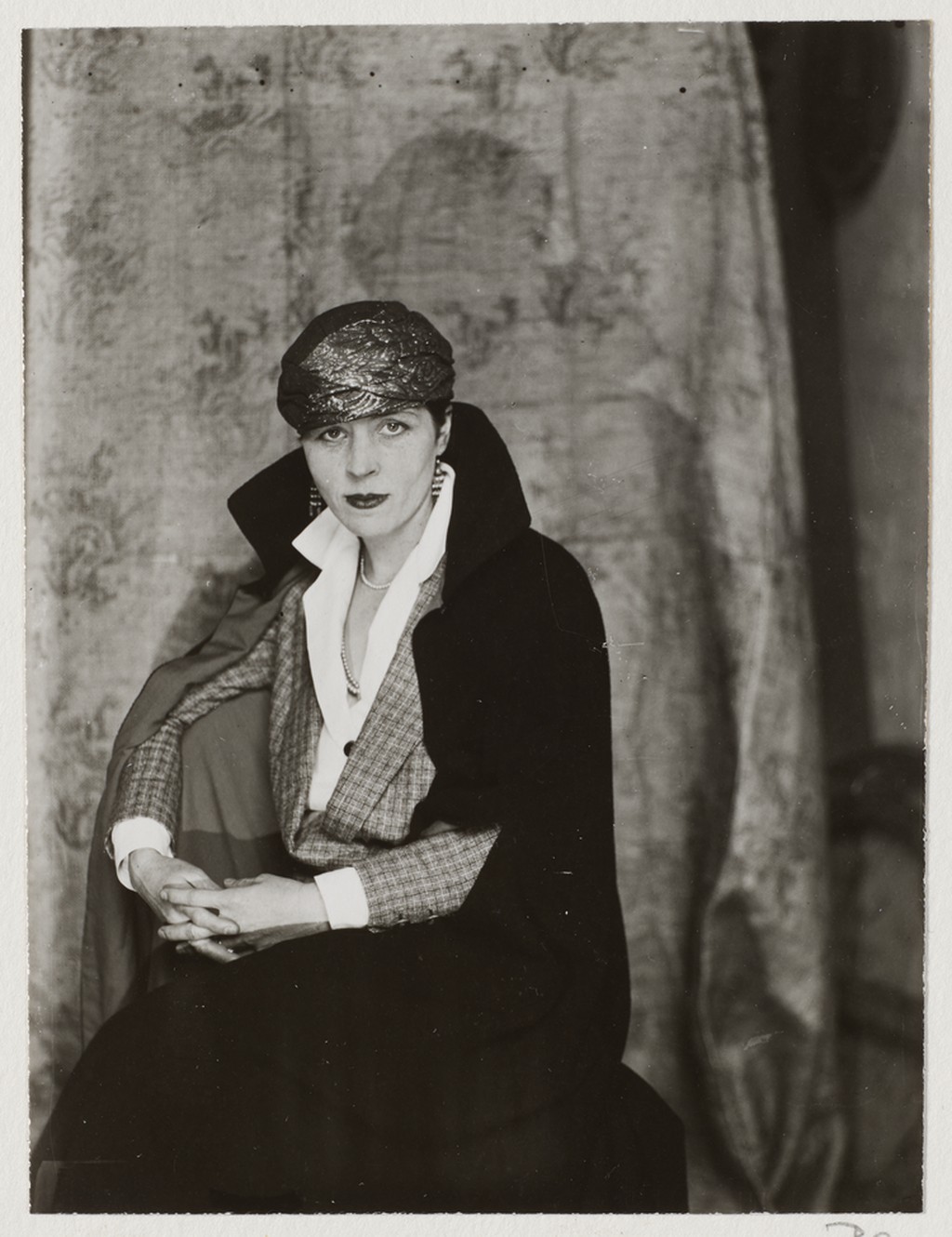
Image context: this is a real photographic portrait by Berenice Abbott, not a generated author image or a generic bookish still life. Abbott's late portrait matters here because Barnes's novel also works by profile and indirection: a face, a pause, a turn away, a person partly visible and partly protected from explanation.[6]
Start With The Rooms, Not The Answers
Read the first chapter as a system of rooms. Felix does not simply enter the novel as a man with a false aristocratic dream. He enters through genealogy, objects, titles, theatrical ancestry, and the wish to give shape to a self that feels historically unstable. The publisher summaries make the social outline clear enough: interwar Europe, Americans and Europeans in Paris, Robin's repeated departures, and a night-time world where identity categories grow porous.[1][3] That is accurate enough as a scaffold, but on the page the damage begins earlier, in the desire to make identity hold still.
Felix wants lineage because lineage would make life legible. Robin resists that kind of legibility almost before she has fully appeared. She is not written as a secret to be decoded; she is written as an event other people cannot stop organizing themselves around. If you read only for her motive, she may seem evasive. If you read for the effects her movement creates, the book becomes clearer. Robin is less a psychological case than a gravitational problem. People build speeches, marriages, grievances, devotions, and humiliations around the fact that she cannot be kept.
That is why the first practical reading habit is simple: stop asking every scene to advance the story in the usual way. Ask what each scene changes in the room. Who gains the right to speak? Who becomes ridiculous? Who is made smaller by desire? Who converts loss into style because no better form of survival is available?
Let Dr. O'Connor Be A Chorus
Many readers either love or flee Dr. Matthew O'Connor. He is too much on purpose: garrulous, theatrical, learned, vulgar, wounded, prophetic, fraudulent, and strangely necessary. New Directions describes his speeches as digressive and furious, full of insight and allusion.[1] The Library of Congress table of contents shows how much room the book gives his night-thinking: the central chapter is called "Watchman, what of the Night?" and the later "Go Down, Matthew" keeps returning the novel to his charged name and voice.[5]
Do not treat those speeches as interruptions. They are the book's pressure chamber. O'Connor says what ordinary narration cannot say cleanly, but he does not solve the novel. He overstates, circles, jokes, performs, confesses, and dodges. His speech is therefore not a key; it is an atmosphere. He gives suffering a baroque public costume because plain confession would be too poor a garment for what the characters are carrying.
This is where Nightwood becomes difficult in a productive way. The sentence often arrives before paraphrase can catch up. Barnes's prose can feel like rhetoric that has swallowed plot, but the rhetoric is not ornamental. It is how the book keeps desire from being flattened into case history. Around O'Connor, the reader learns to hear argument as performance and performance as wound.
Read Robin As Motion, Not Symbol
Robin Vote is the novel's most tempting trap. It is easy to make her stand for wildness, lesbian desire, animal life, night freedom, narcissism, or modernist refusal. Each label catches something, and each label kills something. Barnes gives Robin enormous force by making her hard to summarize without betraying the book's own method.
New Directions quotes Nora's startling formulation: "A man is another person--a woman is yourself."[1] That line helps because it does not reduce the attachment between Nora and Robin to scandal or identity category alone. It makes desire feel like self-recognition under panic. Nora does not merely want Robin as an object. She wants, fears, and mourns the part of herself that Robin makes visible and unavailable at the same time.
So read Robin's wandering carefully. The point is not that night makes her free in any clean or happy way. The night gives her a medium in which ordinary claims weaken. Marriage, address, schedule, household, explanation: all of these lose power after dark. But the loss of power does not produce peace. It produces motion, damage, and a terrible kind of openness. Robin's freedom, if the word can be used at all, is not liberation from consequence. It is the refusal of a form that other people need in order to survive her.
Do Not Smooth The Book Into Representation Alone
Nightwood is rightly central to feminist and lesbian literary afterlives. New Directions calls it a landmark of feminist and lesbian literature, and the Academy of American Poets places Barnes among important modernist figures while listing Nightwood as a major work in her career.[1][4] That context matters. The book gave early modern fiction a language for queer attachment, social exile, and non-normative desire without translating them into punishment plot or reform pamphlet.
But a reader should not stop at representation. Barnes's achievement is not simply that she put forbidden material into a novel. It is that she found a form unstable enough to hold the material without domesticating it. Clifton Fadiman's 1937 New Yorker review saw this early. He warned that the book might be misread as a cult object for the lofty-browed, yet insisted that its obscurities were imposed by its materials rather than by vanity.[2] That remains one of the best defenses of the novel's difficulty. Nightwood is strange because it is trying to make feeling audible at the point where ordinary social language has failed.
This does not mean every passage is ethically frictionless. Barnes writes through the pressures and prejudices of her moment as well as against them. The guide's point is narrower: do not let the word "landmark" turn the prose into a museum label. The book is alive only when its sentences are still allowed to disturb the reader's wish for settled categories.
Use Eliot And Faber As Publication Clues, Not Permission Slips
The publication story is helpful, but it should not become a permission slip from male modernism. Faber's edition page notes that the book was first published by Faber in 1936 after Emily Holmes Coleman persuaded T. S. Eliot to take it on, and that later editions foregrounded Eliot's introduction.[3] The Academy of American Poets gives the American publication context, listing Nightwood with Harcourt, Brace in 1937.[4]
Those facts matter because they place the novel inside modernist networks of advocacy, editing, risk, and gatekeeping. Yet the book's force does not come from Eliot's approval. His introduction helped frame the reception, but Barnes's prose remains more unruly than a canonizing preface can contain. Read the publishing history as a reminder that difficult books often need allies, accidents, and timing. Then return to the sentences, where the real authority sits.
Faber's recent heritage edition is useful in another way: it treats Nightwood as a classic still being materially reintroduced to readers rather than as a curiosity sealed in the 1930s.[3] That afterlife fits the novel. It is a book about people who cannot leave one another alone, and readers keep returning for a related reason. The prose refuses to be finished with us.
A Practical First Reading
First, read quickly enough to feel the current. Do not stop at every allusion. Mark what you cannot understand, but do not let annotation break the rhythm.
Second, follow voice. Felix's anxious formality, Nora's wounded devotion, Jenny's possessive distortion, and O'Connor's flamboyant despair are more reliable guides than event sequence alone. The plot matters, but it matters as pressure placed on speech.
Third, let comedy stay present. The novel is dark, but it is not solemn in a flat way. Its extravagance, grotesquerie, and verbal excess are part of its mercy. People speak too much because silence would not save them either.
Fourth, treat Robin as the book's unsolved motion. Every attempt to explain her tells you something about the explainer. The novel is not asking you to master her. It is asking you to notice the kinds of mastery that desire invents when it is afraid.
Finally, accept that a first reading may be partial. Fadiman admitted in 1937 that he had read the novel twice and still placed its originality ahead of complete mastery.[2] That is a good model. Nightwood is not a book one conquers. It is a book one enters by ear, follows through the dark, and rereads once the first path has stopped pretending to be a map.
Sources
- New Directions Publishing, Nightwood by Djuna Barnes, current publisher page with synopsis, edition data, and reception excerpts.
- Clifton Fadiman, "Djuna Barnes," The New Yorker, March 6, 1937, contemporary review of Nightwood.
- Faber, Nightwood (Members Heritage Edition), publisher page with first-publication context, Emily Holmes Coleman and T. S. Eliot note, and edition history.
- Academy of American Poets, "Djuna Barnes," biographical note and selected works list.
- Library of Congress, "Table of contents for Nightwood / Djuna Barnes," chapter-title record for the 2006 edition.
- Wikimedia Commons, "File:Portrait of Djuna Barnes.jpg," source page for Berenice Abbott's 1982 gelatin silver portrait used as the lead image.