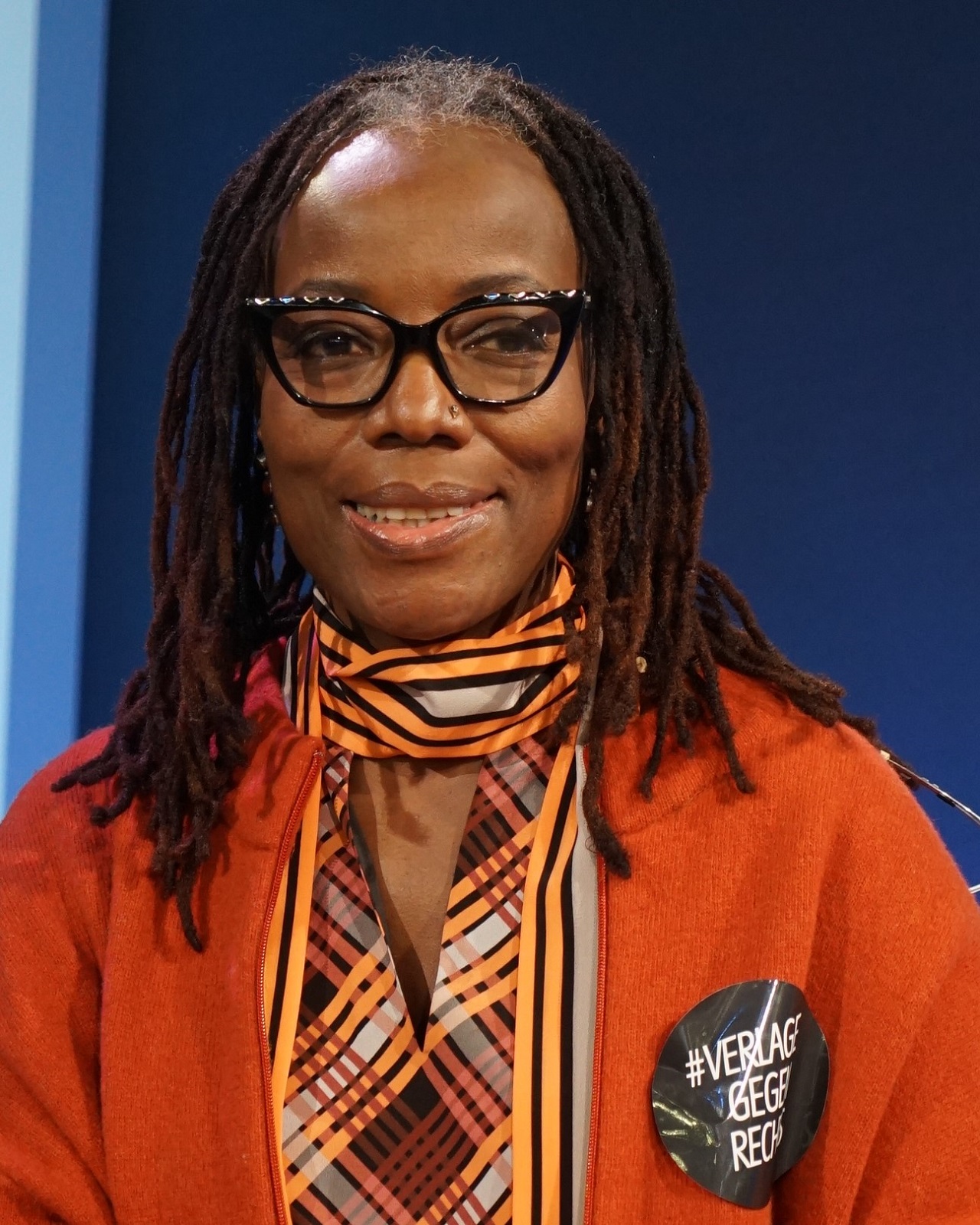
Eight words make freedom arrive as a moral problem: “I was not sorry when my brother died.”[1][3] Nhamo’s death creates the vacancy that lets his sister Tambudzai Sigauke leave her family’s poor rural homestead and study at their uncle’s mission. The route is real. So is the death beneath it.
Tsitsi Dangarembga refuses the consoling answers available to a conventional coming-of-age story. The novel does not say education is a colonial trick Tambu should reject; without school, her choices would be brutally narrower. Nor does it say achievement cancels the structures that rationed learning by gender and made a brother’s death her opening. Instead, Nervous Conditions asks a harder question: when the only road out passes through institutions that rank, discipline, and rename value, what would it mean to travel that road freely?
The question enters the grammar. In the sentences after the opening, Tambu anticipates that “you” may call her callous and contests the charge before the reader can make it.[3] The pronoun might mean the actual reader, an imagined moral judge, people whose rules she has internalized, or all three at once. Her first person is never solitary. Freedom will require more than saying I; it will require discovering who supplies the terms in which that “I” must explain itself.
Freedom begins in an unequal ledger
The opening shocks because it refuses the expected order of feeling. A brother has died; a sister is supposed to mourn; a narrator is supposed to make herself likable. Tambu declines all three instructions at once. Yet she does not simply celebrate Nhamo’s death. She spends the opening chapter reconstructing the distribution of food, school fees, labor, affection, and opportunity that made his absence the condition of her advancement.
Her defensiveness is therefore not an evasion of complexity. It is the instrument that produces complexity. Tambu knows that relief at a sibling’s death is morally ugly in isolation, so she refuses isolation. The narrative rebuilds the system around the feeling: Nhamo’s education is funded while hers is treated as expendable; she raises maize to pay her own fees; his death opens the place at Babamukuru’s mission that gender had closed to her. The first sentence stays harsh, but it no longer stays simple. Freedom begins here as a redistribution of scarce resources, not an abstract state of mind.
Denise Wong’s study of the Tambudzai trilogy notices that Nervous Conditions begins with a defiant first-person voice but already oscillates between I and you. Wong reads that movement as the beginning of a self-estrangement that becomes structurally more severe in the later novels.[3] It would be too neat, however, to treat every you here as proof that Tambu has already lost herself. In the first novel, address is also a form of control. By naming the judgment she expects, Tambu makes the judge answer on her ground.
That is why the reader’s position keeps shifting. We are first placed on the moral jury, then made to inspect the evidence the easy verdict excluded. The voice does not ask us to pardon Tambu. It makes us notice how quickly pardon assumes the authority to define her—and how a philosophy of freedom can become another judgment if it ignores the material ledger of who was allowed to leave.
Education changes the scale of the cage
The girl in the events and the woman telling them are not stylistically identical. Young Tambu tends to convert the future into a clean proposition: education will release her from grinding work, dependence, and the narrow destiny assigned to a daughter. The older narrator has learned to distrust clean propositions. Her sentences qualify, double back, add a parenthesis, concede a point, and then recover their accusation.
The distance is not merely a function of maturity; it records a change in Tambu’s conditions of knowledge. Chekroun Samir and Hamza Reguig Mouro Wassila read her journey as both education and displacement, emphasizing that the move from homestead to mission is a real opportunity achieved inside a colonial system.[6] Tambu can place those incompatible truths—and incompatible stages of knowledge—inside one grammatical frame. The child sees Babamukuru’s house as grandeur; the adult voice remembers the grandeur and quietly measures the education that taught her to curb such wonder. Neither perspective cancels the other.
This double timing keeps Babamukuru from flattening into either savior or tyrant. He has studied abroad, leads the mission, supports a large extended family, and gives Tambu an opportunity her father will not provide. He also expects gratitude to confirm his authority, controls Maiguru’s income despite her own advanced education, and tries to repair Tambu’s parents’ supposed moral disorder by arranging a Christian wedding. When Tambu cannot make herself attend that ceremony, the conflict enters her body before she can state it as a doctrine.
The adult narrator’s irony can praise Babamukuru’s generosity as “oceanic” while letting the scale of the word expose the family’s habit of magnifying him.[1] That is not merely retrospective cleverness. It is an ethical technique. Tambu can acknowledge material help without signing away her judgment, and she can record coercion without pretending that dependence disappears once it has been recognized.
The prose therefore performs the education the plot cannot guarantee. School gives Tambu vocabulary, range, and mobility; narration teaches her to put those acquisitions under suspicion. The cage has grown large enough to include books, travel, and aspiration. The question is whether enlargement alone deserves to be called freedom.
Escape is a category, not a finish line
Dangarembga has recalled that she restarted the manuscript after allowing Tambu to want something for herself: an education. She wanted to write a rural Zimbabwean girl whose desire was neither trivial nor automatically pure.[2] In a later interview with Madeleine Thien, she sharpened the paradox: Tambu treats education as emancipation, while an apparent freedom can bind a person more tightly.[7] The novel protects the desire without making the mission school an uncontaminated outside.
Tambu announces her story through three loaded categories: “escape,” “entrapment,” and “rebellion.”[3][6] Each belongs to a different woman, yet the novel keeps testing the borders between them. Lucia talks her way into paid work and schooling, using the family structure she resists. Maiguru briefly leaves Babamukuru, demonstrating that her obedience is not incapacity, then returns to a marriage whose bargains Tambu cannot reduce to surrender. Nyasha sees colonial and patriarchal contradictions with devastating clarity, but clarity does not protect her body from their pressure. Tambu gains the school place she wants while moving closer to the institutions that have already divided Nyasha from herself.
Elleke Boehmer’s account of reading in the novel sharpens this tension. For Tambu, books are a route to educational and social advancement and an alternative to marriage, but the available reading world is largely bounded by an English metropolitan canon. Nyasha can make reading rebellious; Tambu often reads more compliantly, even as the act of pursuing education defies what her family expects of a girl.[4] The same practice can enlarge a life and train it toward somebody else’s measure of success.
That doubleness is why escape remains a category rather than a finish line. Tambu is not wrong to leave. She is wrong only when she imagines that changing institutions means she has left power behind.
Gratitude and obedience are not synonyms
Tambu’s humor often arrives in the accent of official explanation. She reproduces the logic by which missionaries sacrifice for Africans, educated men rescue poorer relatives, and family decisions become practical necessities. Then one extra clause reveals who owns the land, money, language, or final word.
The effect is not a simple reversal in which every stated virtue becomes secret vice. Babamukuru has sacrificed; education is useful; Tambu is grateful. Her wit works because those facts remain true while proving insufficient. The sentence lets benevolence speak and then audits the terms.
This is where formal command becomes politically ambiguous. The older Tambu’s measured English can sound like evidence that colonial schooling succeeded. It can also turn the school’s habits of classification against the world that taught them. In an early feminist reading, Rosemary Moyana argues that Tambu ends by asserting herself without fear or apology and treats the written account as a form of liberation.[5] But Dangarembga gives that liberation no fantasy of innocence. Tambu’s voice has been shaped by the very institutions it learns to question.
Her irony is consequently different from Nyasha’s open confrontation. Nyasha names the trap and fights at its visible edges. Tambu repeats the trap’s reasoning with such exactness that its internal absurdity begins to show. One method is explosive; the other is corrosive. The novel does not ask us to rank them. It asks why either girl must damage herself to make domination perceptible.
The judge moves inward
Once the opening has installed its second person, even passages without an explicit you can feel addressed. Tambu explains herself to a listener whose standards are never fully named. At times that listener resembles a conventional reader demanding family loyalty. At others it resembles the mission’s language of merit, Babamukuru’s language of duty, or an older Tambu interrogating the child she once was.
The ambiguity should remain unresolved. If you meant only the reader, the device would be rhetorical: an arresting way to create intimacy. If it meant only Tambu herself, it would be psychological: a sign of division. Dangarembga makes it social. The voices of family, church, school, empire, and audience become difficult to separate once they have supplied the terms in which a person accounts for her life.
This is also why the current critical afterlife of Nervous Conditions keeps returning to narration when it asks what freedom means. Wong follows grammatical person across the full trilogy; Boehmer distinguishes the story’s scenes of reading from the wider publics its telling calls into being; Uwakweh treats voice as an action against patriarchal silence.[3][4][5] Together, those approaches clarify what a plot summary misses. Tambu does not merely acquire an education. She acquires addressees.
The novel, first published in 1988 and now the opening volume of an award-winning trilogy, has itself reached a broad international readership.[1] That afterlife gives its “you” fresh occupants, but it does not make the pronoun universal in a frictionless way. Each new reader is invited close and denied neutrality. We have to decide whether we are listening to Tambu or preparing to define her.
Freedom without innocence
Near the end, Tambu describes the growth of her questioning through an adverbial sequence: quietly, unobtrusively, and fitfully.[1] The rhythm matters. Consciousness does not arrive as a single decolonizing revelation. It begins in starts, can be suppressed, and may coexist with the appetite for the next scholarship, the next approval, the next institution.
That ending changes the opening without softening it. “I was not sorry” is not the settled creed of an unfeeling child. It is the adult narrator’s chosen threshold into a history of constrained choices. She can now see that Nhamo was beneficiary, rival, and also a boy being trained into estrangement; that Babamukuru is patron and patriarch; that education is exit and enclosure; that her own ambition is necessary and vulnerable to capture.
Tambu’s achievement is not a pure self finally recovered from outside influence. It is a self capable of hearing its influences argue inside it. Dangarembga’s philosophy of freedom is demanding because it permits no innocent location: not the homestead that limits a daughter, not the mission that enlarges and disciplines her, not rebellion that can destroy the rebel, not gratitude that can become obedience.
Freedom here is neither staying untouched nor escaping alone. It is the continuing ability to recognize a necessary opening, pass through it, and still revise the values waiting on the other side. Tambu’s “I” survives not because it silences the invisible “you,” but because it keeps answering—and keeps changing the terms of the question.
Sources
- Tsitsi Dangarembga, Nervous Conditions. Graywolf Press, 2021 edition—official publisher record, synopsis, prize history, and trilogy context.
- Tsitsi Dangarembga, “‘I wrote it as a fugitive from what my life had become’: Tsitsi Dangarembga on Nervous Conditions.” The Guardian, 27 March 2021—author’s account of the novel’s origins and Tambu’s educational desire.
- Denise Wong, “Disaffection and You-Narration in Tsitsi Dangarembga’s Tambudzai Trilogy (1988–2018).” DIEGESIS 13.1, 2024—open-access narratological study of first- and second-person address.
- Elleke Boehmer, “Differential Publics—Reading (in) the Postcolonial Novel.” Cambridge Journal of Postcolonial Literary Inquiry 4.1, 2017—analysis of reading, education, narration, and addressed publics in Nervous Conditions.
- Rosemary Moyana, “Tsitsi Dangarembga’s Nervous Conditions: An Attempt in the Feminist Tradition.” Zambezia 21.1, 1994—University of Zimbabwe analysis of gender, self-assertion, and liberation through narration, digitized by Michigan State University Libraries.
- Chekroun Samir and Hamza Reguig Mouro Wassila, “‘I Shall Go to School’: Girls’ Education and Displacement in Tsitsi Dangarembga’s Nervous Conditions.” Aleph 9.3, 2022—open-access study of education as gendered opportunity, movement, and colonial displacement.
- Madeleine Thien, “An Interview with Tsitsi Dangarembga.” Brick 91, 2013—author interview on education as apparent emancipation and a possible route into deeper constraint.
- Wikimedia Commons, Rudolf H. Boettcher, “Tsitsi Dangarembga FBM 2021” (22 October 2021)—source record for the photographic portrait used as the article image.