Most detective stories promise that the truth is already present, waiting for the one mind sharp enough to collect it. The Moonstone does something more unsettling. It gives the reader nearly everyone who touched the case, and then makes those witnesses part of the problem.[1][2][4] Wilkie Collins does not build suspense by hiding all the information in one locked drawer. He builds it by distributing information through servants, cousins, zealots, doctors, detectives, and editors, each with a different standard for what counts as a fact. The result is a mystery whose real form is testimonial.
That is why the novel still feels structurally modern. Franklin Blake does not simply narrate events after the fact. He commissions a record. Early on, he asks the participants to "write the story of the Moonstone in turn" and to go only "as far as our own personal experience extends, and no further."[1] That sounds like a rule for fairness. In practice it becomes the source of the book's particular pleasure. Every narrator obeys the instruction only partially, because every narrator brings a temperament, a loyalty, and a preferred moral weather to the page. Collins turns limited perspective into the engine of suspense.
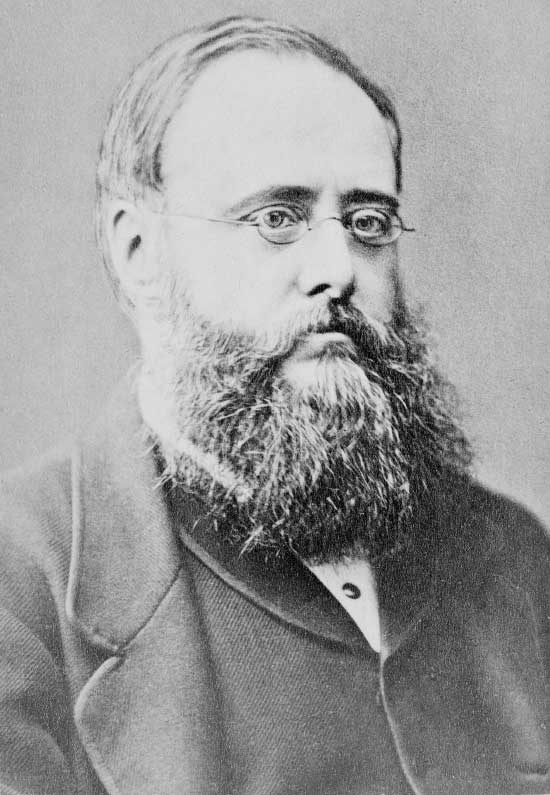
Image context: the cover uses a real archival photograph of Wilkie Collins by Elliott & Fry, likely taken in 1871 and preserved through the Library of Congress source noted on the Wikimedia Commons file page.[5] That choice suits this essay because Collins's real feat in The Moonstone is editorial as much as dramatic. He arranges incompatible voices so carefully that contradiction itself begins to look like evidence.
1) The novel begins by making record-keeping part of the plot
The framing device matters more than the book's reputation as an "early detective novel" sometimes suggests.[2][3] Before Sergeant Cuff arrives, before clues are sorted, before opium and reenactment enter the story, Collins has already chosen his decisive form: the family paper. That means the mystery will not come to us through a neutral omniscient voice. It will come through documents, statements, recollections, and retrospective ordering.[1][4]
This is a powerful choice because the theft itself concerns a sacred Indian diamond stolen into English possession before it disappears again inside a country house.[2] Public crime becomes domestic archive. The case moves through breakfast rooms, letters, memoranda, and recollections. Collins makes the private household into an evidentiary chamber.
Franklin's instruction sounds almost legal in its boundaries, but it also creates a permanent structural irony.[1] No one in the novel merely reports. Everyone selects. Everyone interprets. Even the effort to keep to "plain facts" becomes a style. From the beginning, Collins is telling us that evidence never arrives untouched by the person who carries it.
2) Betteredge and Clack prove that personality is part of the evidence
Gabriel Betteredge, the first main narrator, is perfect for this design because he is both observant and comically partial.[1][4] He knows the house, understands rank, notices habits, and keeps returning to Robinson Crusoe as if one book could stabilize the world. But he is never a transparent window. He tells us what happened in the language of household management, practical affection, and old service. The case enters the reader's mind already filtered through custom.
That is not a flaw in the novel's machinery. It is the machinery. Betteredge himself wonders whether professional writers ever find "their own selves getting in the way of their subjects."[1] The line is funny because Collins knows the answer. In The Moonstone, the self is always in the way, and that is precisely why each narrative matters. Betteredge's biases teach the reader how much social feeling clings to observation.
Miss Clack extends the point by taking it in another direction.[1][4] Where Betteredge domesticates the evidence, Clack moralizes it. Her narrative is full of evangelical vanity, intrusive charity, and self-approval so thick that it becomes a method of distortion. Yet she is not disposable comic relief. She is structurally essential. Collins uses her to show that testimony can be simultaneously revealing and warped. She exposes rooms, gestures, and tensions that another narrator would miss, but she cannot stop turning everyone into material for her own righteousness.
By the time these two voices have finished, the reader has already learned the novel's deepest formal lesson: truth in this book is social before it is deductive. Clues travel through temperament.
3) Sergeant Cuff does not replace the witnesses; he reorganizes them
This is why Sergeant Cuff is so memorable. He is not introduced as a magical intelligence descending from outside the book's voice system. He enters a crowded field of already speaking people and starts reordering their importance.[1][2] His famous strength is not omniscience. It is discrimination. He knows that there is "no such thing as a trifle yet," and with that one principle he changes the scale of the novel.[1]
What matters here is structural, not merely characterological. Cuff does not cancel testimony. He teaches the reader how to read testimony. Details previously treated as clutter become clues. Emotional reactions become patterns. Time gaps start to matter as much as declarations of innocence. Collins is inventing a detective form in which method consists of resifting narrated life rather than leaping outside it.[2][3][4]
That is why the novel's multiple narrators do not dilute suspense. They intensify it. Because the reader is given many perspectives, suspicion keeps migrating. Rachel, Rosanna, Franklin, Godfrey: each can plausibly carry the guilt for a while because the novel is built as a relay of partial access rather than a sovereign overview.[1][2] The structure keeps saying: you have more evidence than you think, but less certainty.
4) The solution depends on missing time, not just hidden objects
The boldest part of Collins's design arrives late, when the mystery turns from stolen jewel to stolen interval.[1] The question is no longer only who handled the diamond. It becomes who can account for a portion of time that the apparent actor cannot remember. That shift is what keeps The Moonstone from becoming a clever but ordinary clue-puzzle.
Ezra Jennings matters because he changes the standard of proof again.[1][4] Betteredge gives us domestic memory. Clack gives us moral self-display. Cuff gives us procedural attention. Jennings gives us reconstruction. His work is not simply to accuse someone new. It is to make the novel experimentally test its own chronology. The result is extraordinary: Franklin Blake must, in effect, become a witness against a version of himself unavailable to consciousness.
That is why the book's form feels so exact. Collins has been preparing for this turn all along by making testimony incomplete, layered, and revisable.[1][4] Once memory fails, the novel does not collapse. It becomes even more itself. The structure can absorb forgotten action because it was never built on the fantasy of total self-knowledge in the first place.
5) Why the book still matters as a form
Britannica is right to call The Moonstone one of the first English detective novels.[2] But that label is only the beginning of its interest. The book does more than introduce conventions like red herrings, multiple suspects, and clue distribution. It imagines detection as a problem of narrative custody. Who saw? Who writes? Who edits? Who confuses sequence with explanation? Who mistakes innocence for transparency?[1][2][4]
That is why later detective fiction owes so much to Collins. He understood that suspense becomes stronger when facts arrive socially damaged. A clue means more when it has passed through affection, vanity, prejudice, embarrassment, class habit, and belated correction before it reaches the reader. The Moonstone is not content to solve a theft. It stages the labor by which a culture decides what kind of statement can count as knowledge.
Read that way, the novel's famous ingenuity feels larger than plot cleverness. Collins turns the English country-house mystery into a dossier of competing consciousnesses. The diamond moves from imperial seizure to household panic to evidentiary reconstruction.[1][2][3] And the reader, instead of standing above the record, has to live inside its fractures. That is the book's enduring formal triumph. It makes testimony thrilling without ever letting testimony become innocent.
Sources
- Wilkie Collins, The Moonstone. Project Gutenberg ebook 155.
- Encyclopaedia Britannica, "The Moonstone."
- Encyclopaedia Britannica, "Wilkie Collins."
- Rachana Sahni, "Collins's 'detective business': The Moonstone as a Detective Novel." The Victorian Web.
- Wikimedia Commons, "File:Wilkie-Collins.jpg" (source page for the lead photograph).