George Eliot's Middlemarch is often praised in the largest possible terms: one of the great English novels, a triumph of realism, a book capacious enough to hold almost everything.[1][2] Those descriptions are true, but they can also blur the more interesting question of how the novel achieves its scale. Eliot does not make Middlemarch feel large by giving it a single dominating plot or a single commanding hero. She makes it large by building a web: several marriages, several ambitions, several institutions, and several time-scales held in active relation until provincial life starts to feel as charged and various as a whole society.[1][3][4]
That is why the most useful way to read Middlemarch is structurally. The novel's greatness does not sit only in its wisdom or in its sympathy. It sits in its architecture. Eliot keeps cutting from Dorothea Brooke to Tertius Lydgate, from Casaubon's dead scholarship to Rosamond's bright self-regard, from Fred Vincy's wastefulness to Mary Garth's steadiness, and then back again until each story ceases to be private. Every life becomes pressure on every other life. The book's formal achievement is to make relation itself feel dramatic.[1][3]
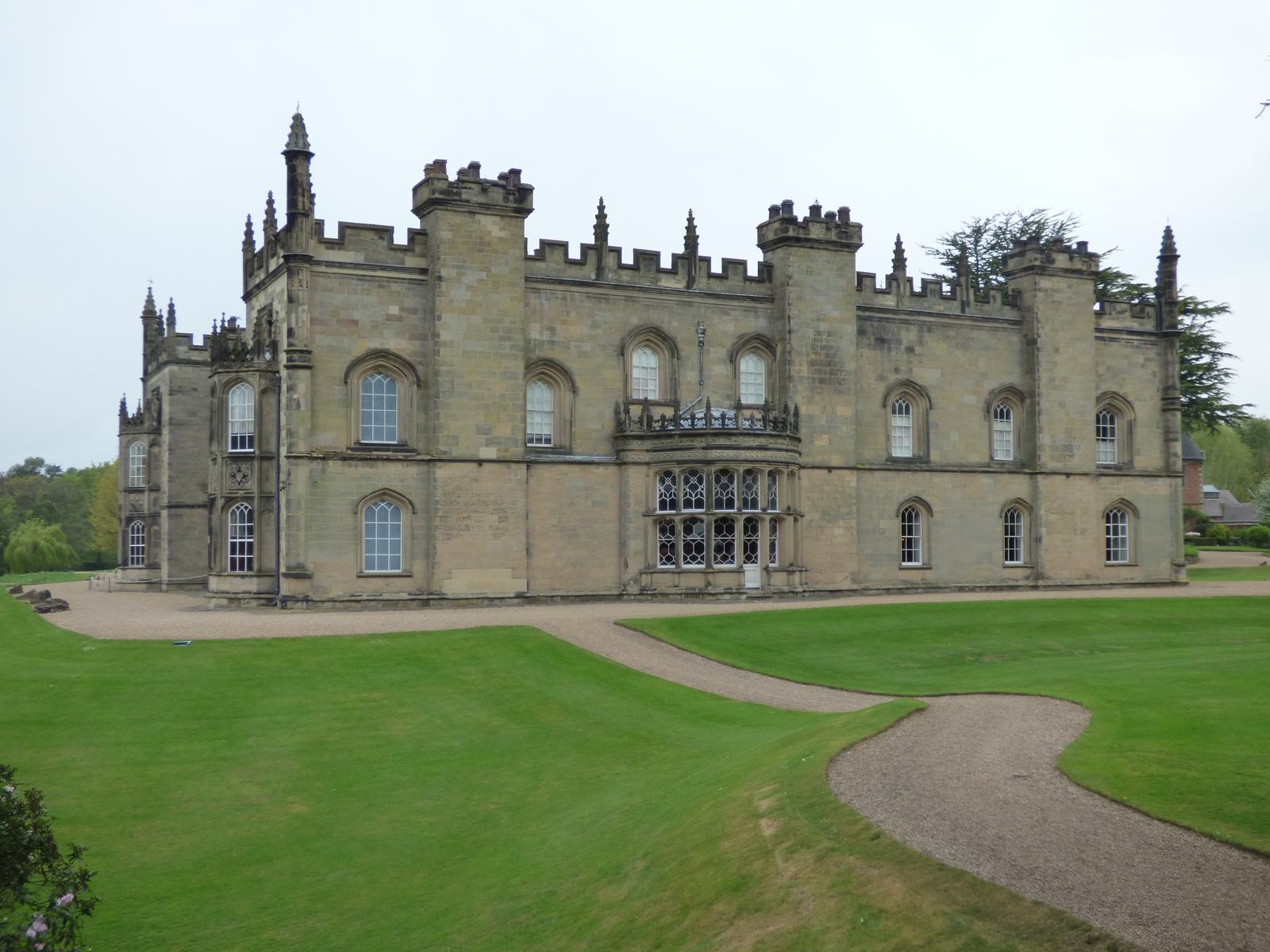
Image context: the cover photograph shows Arbury Hall in Warwickshire, not a direct "Middlemarch site" but a useful visual stand-in for the landed provincial world Eliot anatomizes. The novel works by keeping houses, inheritances, parishes, town opinion, and money in the same frame; a real Midlands estate helps cue that scale of social arrangement.[5]
1) The prelude announces a heroic form, then hands us a provincial one
The novel begins before Dorothea appears. Eliot opens with Saint Theresa, with the dream of a life large enough to justify sacrifice and vocation.[1] That is an audacious structural move because it frames the book against a heroic and almost saintly template before lowering us into a Midlands marriage market. The descent is deliberate. Eliot wants readers to feel the distance between grand aspiration and ordinary social arrangement.
Then comes Dorothea, introduced with that famous opening line: "Miss Brooke had that kind of beauty..."[1] The sentence is not only descriptive. It starts the novel's main formal problem. Dorothea has spiritual energy, but she lives in a world without the institutional forms that could make such energy coherent. Eliot says the modern world has produced "later-born Theresas" who are left with ardor but without a stable order to direct it.[1] Structurally, that means Middlemarch cannot become a saint's life or a straightforward Bildungsroman. Dorothea's force has to be dispersed through a much wider field.
This is the first thing Eliot's structure does brilliantly: it makes disappointment productive. Instead of allowing Dorothea to occupy the whole novel as an exceptional protagonist, Eliot places her inside a design where aspiration continually meets other people's projects, limits, vanities, debts, and needs. The book starts with the promise of a singular destiny and then converts that promise into a social form.[1][2]
2) Eight books turn the novel into a relay system rather than a straight line
The table of contents is already a map of the design. Eliot gives us eight books: "Miss Brooke," "Old and Young," "Waiting for Death," "Three Love Problems," "The Dead Hand," "The Widow and the Wife," "Two Temptations," and "Sunset and Sunrise."[1] Even before the chapters start working on us, the structure declares that no one strand will be enough. The book will move by relay.
That relay system is the key to its scale. Dorothea and Casaubon never stay isolated as one tragic marriage plot. Lydgate and Rosamond enter with a different rhythm: professional ambition, money trouble, taste, vanity, and the failure to imagine that love will acquire administrative costs.[1] Fred and Mary provide a third register, less grand and less destructive, but crucial because they test whether growth can occur without self-dramatization. Bulstrode's later crisis then pulls finance, religion, reputation, and town gossip into the same structure. By the time Eliot reaches the final books, these are no longer parallel stories. They have become a single provincial weather system.[1][4]
This is where Middlemarch differs from novels that merely interleave plotlines. Eliot's cross-cutting is not decorative variety. It is a way of showing that in a town, moral and practical consequences travel through adjacency. One marriage affects another because money circulates. A doctor's reputation affects reform because social trust circulates. An inheritance changes not only one person's choices but the balance of freedom and obligation around an entire cluster of people. The structure keeps insisting that social life is made of crossings, not lanes.[1][3][4]
3) The narrator is the book's hidden infrastructure
No account of Middlemarch's form is complete without the narrator. Eliot does not simply alternate viewpoints and let them accumulate neutrally. She gives the novel a narrator who can move from microscope to panorama, from irony to pity, from one consciousness to the wider pattern in which that consciousness is trapped.[2][3] That mobility is the hidden infrastructure of the whole book.
Manya Lempert's essay on character in Middlemarch is helpful here because it treats Eliot's realism as a problem of form and matter together: character is never sealed inside a private essence but shaped through contact, pressure, and arrangement.[3] The narrator makes that visible. A Rosamond scene is never only Rosamond; it is also a lesson in how delicacy can become self-enclosure. A Casaubon scene is never only one man's dryness; it is also a diagnosis of sterile scholarly form. Eliot keeps translating individual style into social significance.[1][3]
That is why the novel's most quoted generalizations feel structural rather than ornamental. Midway through the book, Eliot imagines what it would mean to hear ordinary life at unbearable intensity, to sense every small creaturely pulse and every hidden pressure at once.[1] The passage is famous because it states the ethical pressure behind the form. The novel wants to enlarge ordinary life without pretending ordinary life is simple. The narrator is what allows Eliot to keep that enlargement intelligible.
4) Marriage is not just a theme here. It is a measuring instrument
Readers sometimes reduce Middlemarch to "several marriage plots," as though marriage were just the Victorian package that carries the real content.[4] Eliot's structure is sharper than that. Marriage is the book's main measuring instrument. It reveals the ratio between inward fantasy and external arrangement.
Dorothea marries Casaubon because she misreads vocation as discipleship; she thinks aridity is depth, and scholarship a road into moral purpose.[1] Lydgate marries Rosamond because he misreads grace as compatibility and assumes private feeling can float above expenditure, family influence, and status performance.[1] Fred and Mary, by contrast, move slowly toward a marriage that has been tested by work, patience, and the abandonment of fantasy. Put structurally, Eliot uses three different marriage designs to test three different forms of self-knowledge.
That comparative design is what keeps the novel from becoming either satire or sermon. No single marriage is asked to stand for the whole human condition. Instead Eliot arranges a set of near-comparisons. Dorothea's mistake clarifies Lydgate's. Rosamond's polished evasions sharpen Casaubon's spiritual cowardice by contrast. Mary Garth's steadiness becomes legible not as an abstract virtue but as a different relation between desire and reality. The architecture teaches through juxtaposition.[1][4]
5) The ending refuses the single great climax and distributes significance
Eliot's finale is one of the clearest signs that Middlemarch is a structural masterpiece rather than merely a crowded one. Many novels of social breadth still converge on a decisive culmination that crowns one character or one plot. Middlemarch does not. It gives us resolution, but in a distributed key. Some lives contract; some widen; some settle into compromise; some are remembered chiefly for what they enabled in others.[1][2]
The final moral weight therefore falls not on heroic exception but on diffused effect. Eliot's famous closing claim about "the growing good of the world" depending partly on "unhistoric acts" is not a decorative coda.[1] It is the structural truth of the whole novel. The book began by invoking Saint Theresa and the possibility of monumental vocation. It ends by relocating value into ordinary, half-seen forms of influence. The architecture closes the argument. Eliot has built a novel large enough to contain disappointed greatness, compromised talent, vanity, reform, affection, failure, and still arrive at a measure of human significance that does not require legend.
That is why Middlemarch keeps feeling modern. Its realism is not only accurate observation. It is a theory of scale. Eliot shows that a society is best understood neither from the altitude of epic heroes nor from the isolation of private psychology alone. You have to see how institutions, money, intimacy, ambition, and moral imagination cross one another. Middlemarch is built to make that crossing visible. Once you notice the web, the novel stops looking like a baggy classic and starts looking like one of the most controlled structures in nineteenth-century fiction.[1][2][3][4]
Sources
- George Eliot, Middlemarch (Project Gutenberg full text).
- Stanford Encyclopedia of Philosophy, "George Eliot" (Fall 2025 Edition).
- Manya Lempert, "Plasticity, Form, and the Matter of Character in Middlemarch," Stanford Humanities Center.
- Victorian Web, "George Eliot's Middlemarch: Genre, Mode, and Style."
- Wikimedia Commons, "File: Arbury Hall (34247599361).jpg".