People often introduce The Master and Margarita through its most portable marvels: the Devil in Moscow, the giant cat, the Pontius Pilate chapters, the love plot, the line about manuscripts not burning.[1][3] That is all real, and none of it explains by itself why the novel's reputation became so unusually charged. Plenty of ambitious twentieth-century novels are strange, funny, and difficult to classify. Bulgakov's book became something more than admired craft because its delayed publication fused with its subject. A persecuted author wrote a novel about literary denunciation, fear, destroyed pages, and the stubborn survival of art; then the author died, the book appeared decades later in censored form, and readers learned to treat the cuts, rumors, and recovered versions as part of the reading experience itself.[1][2][3][4]
That is why a reception dossier suits this book so well. The afterlife is not a decorative appendix to the novel. It is one of the reasons the novel feels alive. Britannica's entry puts the essential facts plainly: Bulgakov wrote the book between 1928 and 1940, it appeared in censored form in the Soviet Union in 1966-67, and the unexpurgated version followed there in 1973.[1] Britannica's biography adds the biographical pressure behind those dates: Bulgakov's works were slow to benefit from the post-Stalin thaw, and his culminating masterpieces were not published in the Soviet Union during his lifetime.[2] Once those facts are in view, the book's aura stops looking accidental. Delay became interpretation.
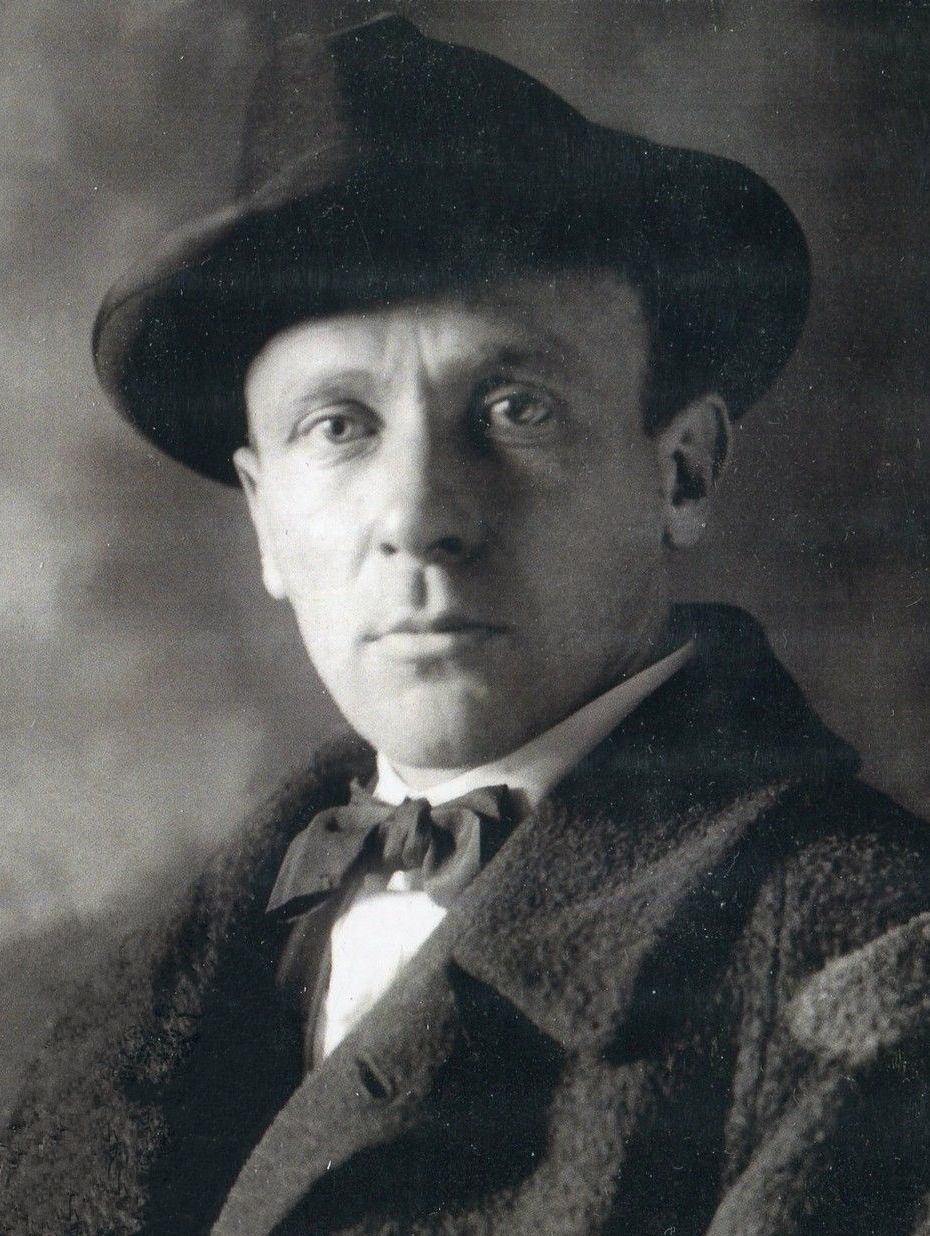
Image context: the cover uses a real photographic portrait of Bulgakov rather than a fantasy illustration of Woland or Behemoth.[7] That choice keeps the article grounded in literary history. The point here is not whimsical devil iconography. It is the unusually tight bond between one author's blocked career and one novel's eventual public force.
1. The novel's political weather matters because suppression was built into its first life
Penguin Random House's reader's guide gives the cleanest compact statement of the basic paradox: Bulgakov completed the novel shortly before his death in 1940, but it remained officially unpublished until 1966, at which point it took on the status of an "underground masterpiece."[3] That phrase matters. It tells you the reception was never only about plot or style. Readers were meeting the book as an event already shadowed by nonappearance, hearsay, partial access, and the prestige that comes from surviving a hostile state.
Bulgakov's own career helps explain why that mattered so much. Britannica notes that his adult life moved from medicine into literature and drama, that official criticism closed in on him, and that several of his major works were blocked or delayed.[2] The novel therefore did not emerge from a neutral professional environment in which publication was merely a matter of editorial timing. It emerged from a system in which an author's relation to print could itself become a test of obedience.
That pressure is one reason the Master inside the novel never feels like a generic suffering artist. Encyclopedia.com's overview is useful here because it emphasizes the rejected manuscript, the hostile press, and the collapse that follows when the Master's work is denounced before it can fully live in public.[4] Readers do not need a one-to-one allegorical key to feel the charge. Bulgakov had written a book about what it means for literature to be attacked at the threshold of visibility. The threshold then became his own.
2. The censored debut made the reading culture part of the meaning
The publication sequence mattered because Soviet readers already knew that official print could be incomplete. Britannica's general entry on samizdat describes a culture in which texts were secretly copied and circulated by hand in response to state control over presses and duplicating machines.[5] The Master and Margarita was not identical with every dissident text that moved through those channels, but it entered a world trained to read around absences. A censored magazine publication was therefore never just a publication. It was an invitation to ask what had been omitted, what had survived elsewhere, and whether the official version could be treated as a whole.[1][3][5]
That helps explain why the novel's most famous line about manuscripts achieved more than epigram status.[1] It became a social feeling. Readers were not only admiring a clever metafictional flourish about artistic endurance. They were meeting a book that seemed to prove its own argument by arriving late, wounded, and still powerful. The cuts did not neutralize the work; they intensified the sense that literature and authority were locked in a struggle larger than one edition.
This is also why the book's mixed form mattered to reception. Britannica stresses the novel's double plane of action, with 1930s Moscow and ancient Jerusalem held in one structure.[1] Penguin's guide adds the unstable moral logic of Woland, whose presence scrambles simple categories of evil, justice, art, and power.[3] For a reading public accustomed to official simplification, that formal unruliness itself had value. The novel did not merely criticize a regime in code. It restored ambiguity, laughter, theology, and aesthetic excess to a public space that preferred manageable meanings.[1][3]
3. The Western canonization did not erase the Soviet story; it widened it
Once the novel reached wider audiences, the delayed Soviet publication remained central to how critics framed it. Encyclopedia.com preserves that early critical pattern clearly: commentators returned again and again to the book's status as a major Soviet-era work that had surfaced late, and they linked its imaginative extravagance to the artist's struggle under oppression.[4] In other words, the reception did not move neatly from politics to pure aesthetics. The politics of suppression stayed inside the aesthetics.
That persistence matters because The Master and Margarita can tempt readers into a false choice. Either it is a topical satire of Stalinist literary bureaucracy, or it is a timeless metaphysical comedy about good and evil. The book's afterlife suggests a better answer. It lasted because it could be both at once.[1][3][4] The Moscow chapters are culturally specific enough to bite; the Pilate chapters and the Woland machinery widen the scale until cowardice, compromise, judgment, mercy, and artistic vocation stop belonging to one decade only.[1][4]
The publishing afterlife reinforced that doubleness. Penguin's current edition page still sells the book partly through completion and restoration: a revised translation from the complete, unabridged Russian text.[3] That tells you something important about canon formation. The book did not become a classic by shedding its textual history. It became a classic while carrying that history forward, edition after edition, as part of the promise made to new readers.
4. The present-tense afterlife still runs on censorship, authority, and literary nerve
The clearest recent proof is the 2024 Russian film adaptation. The Guardian's report on the film's success notes the irony without overstating it: a story long associated with censorship, state pressure, and artistic endurance became a modern box-office hit while again provoking political outrage, nationalist attack, and debate over whether it should be suppressed.[6] That does not mean every new adaptation simply repeats Stalinist conditions. It means the novel still attracts the same kinds of conflict because its core pressures remain legible.
This is where the reception history becomes more than a museum label. The book's survival was never just about rescue from the past. It keeps returning whenever a state, a bureaucracy, or a moral consensus tries to flatten what literature is allowed to imagine. Bulgakov's novel laughs, terrifies, theologizes, and destabilizes at the same time.[1][3] That mixed energy is hard to absorb into any tidy official story, which is one reason the book continues to look dangerous in environments that claim to have mastered danger.
So the strongest way to describe The Master and Margarita is not that it was censored and later vindicated. That sequence is too neat. A better description is that delayed publication became part of the work's meaning.[1][2][3][5] Readers learned to approach the novel as both text and survival record: a satire of literary fear, a romance of artistic loyalty, a philosophical grotesque, and a material proof that incomplete publication does not guarantee incomplete life.
That is why the book still arrives with such force. Its legend is not detachable from its sentences, yet the sentences would not carry the same voltage without the legend. Bulgakov wrote a novel in which attacked art refuses disappearance. The public history that followed made readers feel that refusal in real time. Reception, here, was never secondary. It was the final chamber of the novel's design.[1][3][4][6]
Sources
- Encyclopaedia Britannica, "The Master and Margarita" (plot, publication history, and later cultural resonance).
- Encyclopaedia Britannica, "Mikhail Bulgakov" (biographical context, censorship pressure, and delayed rehabilitation).
- Penguin Random House, "The Master and Margarita Reader's Guide" (publication delay, moral structure, and edition context).
- Encyclopedia.com, "The Master and Margarita" (historical context, critical overview, and reception framing).
- Encyclopaedia Britannica, "samizdat" (general Soviet context for unofficial circulation and distrust of official completeness).
- The Guardian, "‘It was a very hard journey’: Master and Margarita director on its unlikely Russian success" (2024 adaptation afterlife and renewed censorship conflict).
- Wikimedia Commons, "File:Михаил-Булгаков.jpg" (source page for the lead photograph).