Flannery O'Connor's sentences are rarely polite for long. They may begin in social comedy, with somebody fussing over manners, bragging about intelligence, or speaking in the flat self-confidence of ordinary reason. Then the line tightens. A phrase turns cruelly exact. A joke stops being social decoration and starts sounding like judgment. By the time violence arrives, it often feels less like an imported shock than like the hidden grammar of the prose finally becoming visible.[1][2][4]
That is why O'Connor still resists summary. She is often introduced through themes that are real but too static on their own: Southern Gothic grotesquerie, Roman Catholic grace, freaks, prophets, rural Georgia, shocking endings.[1][4] Those categories describe her territory, but they do not explain her pressure system. Her real technical distinction lies in how she mixes tones that ought to cancel one another out. Cartoon comedy, local speech, scriptural intensity, and bodily menace all occupy the same sentence. The result is a voice that can sound funny, mean, exact, and theologically alert at once.[2][3][4]
Britannica preserves O'Connor's own explanation that violence is "strangely capable of returning my characters to reality."[1] That remark matters, but it can be misread if taken only as doctrine. The deeper point is stylistic. O'Connor does not tack violence onto otherwise quiet fiction in order to deliver a lesson. She builds sentences and scenes whose comic evasions, verbal habits, and false poises are already unstable. When the blow falls, it reveals a structure that language has been preparing all along.[1][3][5][6]
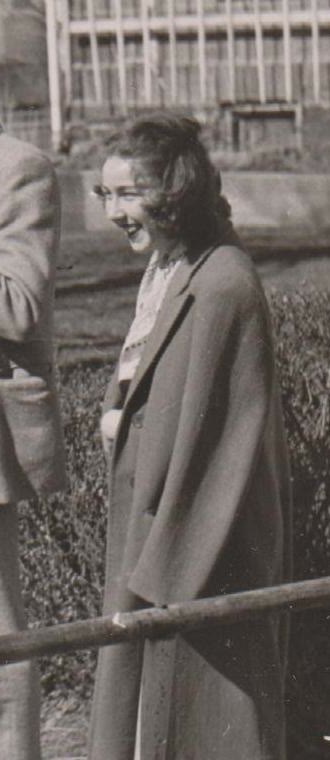
Image context: the cover uses a real 1947 archival photograph of O'Connor, taken in Iowa before the Andalusia years that later fixed her public image.[7][8] That choice fits a voice-and-style essay better than a peacock or farmhouse view. O'Connor's art was rooted in place, but her singularity lies in what she does to tone: she crops vanity, piety, and everyday speech until each one starts to expose the others.
1) O'Connor begins with hard comedy because comedy lets false confidence talk too much
One reason O'Connor feels so alive on the page is that she trusts comic exposure more than solemn announcement. The Library of America describes her fictional world as one of "comic and horrendous incongruity" in the "Christ-haunted" Protestant South.[2] That phrase is useful because the comedy is not relief from the horror, and the horror is not an interruption of the comedy. They are concurrent conditions. O'Connor lets people talk themselves into self-revelation long before a plot twist forces the issue.
This is where her background as a visual satirist still matters. Library of America's centenary essay on "A Good Man Is Hard to Find" notes that, as an undergraduate, she was a serious cartoonist who once imagined a career in that form.[3] You can feel that training in the fiction's line control. Her characters are often introduced through one defining verbal tic, posture, vanity, or rhythm, as though the sentence first sketches a caricature and then refuses to let the caricature stay shallow.[3][4]
The effect is not mere mockery. A weaker comic writer would let superiority do the work. O'Connor's gift is nastier and deeper. She allows foolishness to remain recognizably human. The grandmother in "A Good Man Is Hard to Find" is absurd, controlling, sentimental, and funny almost every time she opens her mouth.[2][3] Yet the story would collapse if she were only a target. O'Connor gives her enough verbal life that her cliches become more than local color. They become a whole moral weather of self-deception, nostalgia, and need.[3]
That is the first rule of O'Connor's style. She does not write comedy to flatten people. She writes comedy to keep speech active until it betrays the speaker's deepest arrangement with reality.
2) Vernacular in O'Connor is not scenic garnish; it is a moral instrument
The easiest way to sentimentalize O'Connor is to imagine that her regional language mainly supplies flavor. It does far more than that. The Library of America overview stresses the "strong vernacular" that gives figures like Hazel Motes their discomforting next-door reality.[2] In O'Connor, spoken language is where delusion takes operational form. People do not simply have beliefs and then express them. Their syntax is already part of the belief.
Wise Blood shows this with exceptional clarity. Macmillan's edition page calls it a novel of faith, false prophets, and "redemptive wisdom," organized around Hazel Motes's struggle to outrun his inborn fate.[5] What matters stylistically is how Hazel tries to found a verbal system sturdy enough to keep transcendence away. Even the phrase "Church Without Christ" sounds like a piece of language built in resentment: half slogan, half parody, half sermon stolen from the world it wants to refuse.[2][5]
O'Connor is brilliant at making such speech both comic and dangerous. Hazel's declarations are absurd, but they are never merely decorative absurdity. They are a man trying to build reality by talking over it. Because O'Connor hears the evangelical and revivalist energies inside Southern public speech so well, she can make denial sound structurally close to belief. Hazel's anti-creed still keeps the shape of creed.[2][5]
This is why so many O'Connor characters sound like failed rhetoricians of the self. They explain, posture, justify, classify, and narrate themselves with great energy. The pressure comes from the gap between the fluency of those performances and the poverty of what they can finally control. Vernacular in her work is therefore not authenticity paste. It is a machine for showing how ordinary speech habits carry metaphysical panic.
3) O'Connor's greatest tonal trick is the sudden handoff from social satire to contemporary Gothic
The title of Library of America's recent essay on "A Good Man Is Hard to Find" is exact: "Rewriting the Rules."[3] The essay shows how O'Connor starts in a recognizable mode of family comedy and then quietly refuses to stay there. The grandmother frets, the grandchildren sneer, the roadside details glow, and readers may think they know the scale of the story. Then the road darkens. The same comic intelligence that had been making Southern pretension look silly begins making it look exposed.[3]
That handoff is one of O'Connor's central voice-and-style achievements. She does not switch from one genre to another with a theatrical signal. She lets lyric landscape, satiric family observation, and mortal threat seep into one another. The old house rumor, the dirt road, the accident, the criminal car appearing in the distance: these do not feel like arbitrary suspense devices because the prose has already been tightening the emotional aperture.[2][3]
A line from the LOA essay captures the move well when it says the dirt road yields not an antiquated Gothic but "a contemporary gothic scene."[3] That phrase clarifies what O'Connor does better than many admirers do. Her terror is modern not because she abandons region, but because she makes regional habits current enough to kill with them. Sentimental memory, good breeding, racial fantasy, and ordinary family chatter are not quaint leftovers in her fiction. They are live conductors.
The same tonal intelligence explains why O'Connor can sound so exact about cruelty without becoming lush. She is not a purple stylist of doom. Her prose tends to stay clean, brisk, and audibly spoken. The shock comes from arrangement: how long she lets comedy run, how sparingly she shifts the atmosphere, and how suddenly the old social language proves unable to protect anyone.
4) Violence in O'Connor lands hardest when a sentence has already made "reason" look flimsy
Readers sometimes describe O'Connor's brutality as though it were the primary event. Often it is the secondary event. The primary event is the weakening of the conceptual shelter a character lives inside. By the time force appears, the sentence has already undermined the person's explanatory world.
That is why The Violent Bear It Away matters so much to understanding her later style. Macmillan describes the novel as a work in which Gothic force and satirical voice are united, with Tarwater caught between prophetic inheritance and his uncle Rayber's more "reasonable" modern world.[6] What makes the book unforgettable is not simply that prophecy defeats rationalism, or vice versa. It is that O'Connor refuses to let reason occupy a linguistically superior position. Rayber's secular clarity is not treated as transparent truth. It is another diction under pressure.[6]
Here O'Connor becomes especially hard to imitate. She can let irony and compassion share a page without softening either one. Macmillan's summary of The Violent Bear It Away calls attention to the mixture of irony, compassion, humor, and pathos.[6] That combination is not a blur of tones. It is a sequence of exact handoffs. A grotesque action may remain funny for a beat too long. A doctrinal argument may suddenly sound wounded. A joke may leave a bruise after it has passed.
This is where her religious fiction escapes piety in the bad literary sense. She does not write as if grace were a warm glow descending on the page. She writes as if grace had to tear through the crust of self-made language first. The sentence, not just the plot, has to undergo that abrasion.
5) Why O'Connor's style still feels contemporary
O'Connor wrote much of her mature work from Andalusia after lupus forced her back to Georgia at twenty-five; Georgia College notes that during those years she completed both novels and all thirty-two short stories.[7] That biographical compression matters because her prose has almost no slack in it. There is very little in O'Connor that feels provisional or gently exploratory. The line arrives with pressure, as though it already knows how much foolishness, vanity, and terror can fit inside one exchange.[2][4][7]
She also remains contemporary because she understood that modern people speak in ready-made explanations long before crisis reveals what those explanations are worth. Good manners, liberal civility, rational superiority, anti-religious swagger, regional nostalgia, parental authority, and intellectual coolness all become dialects in her fiction. She listens to each one closely enough to make it persuasive for a moment and then exposes its limit.[1][3][5][6]
That is the lasting charge of her style. O'Connor does not ask readers to admire violence, or even primarily to interpret it. She asks them to hear the verbal world that makes violence legible as revelation, punishment, stripping, farce, or grace depending on who is speaking and how long their voice can keep control. Her fiction stays alive because the sentence is always doing two jobs at once: recording a social performance and measuring how near that performance is to collapse.
So the cleanest way to read her is not to separate the Southern comic writer from the Catholic writer, or the satirist from the prophet. O'Connor's greatness lies in the sentence that can carry all of them together. She makes hard comedy bear theological weight. Very few writers can do that without sounding either smug or inflated. O'Connor does it by sounding exact.
Sources
- Encyclopaedia Britannica, "Flannery O'Connor."
- Library of America, Flannery O'Connor: Collected Works (overview and table of contents).
- James Gibbons, "Rewriting the Rules: Flannery O'Connor's 'A Good Man Is Hard to Find'." Library of America, May 30, 2025.
- Macmillan, "Flannery O'Connor" (author page).
- Macmillan, Wise Blood by Flannery O'Connor.
- Macmillan, The Violent Bear It Away by Flannery O'Connor.
- Georgia College & State University, "About Andalusia."
- Wikimedia Commons, "File: Flannery-O'Connor 1947.jpg" (derived from Robie with Flannery 1947.jpg).