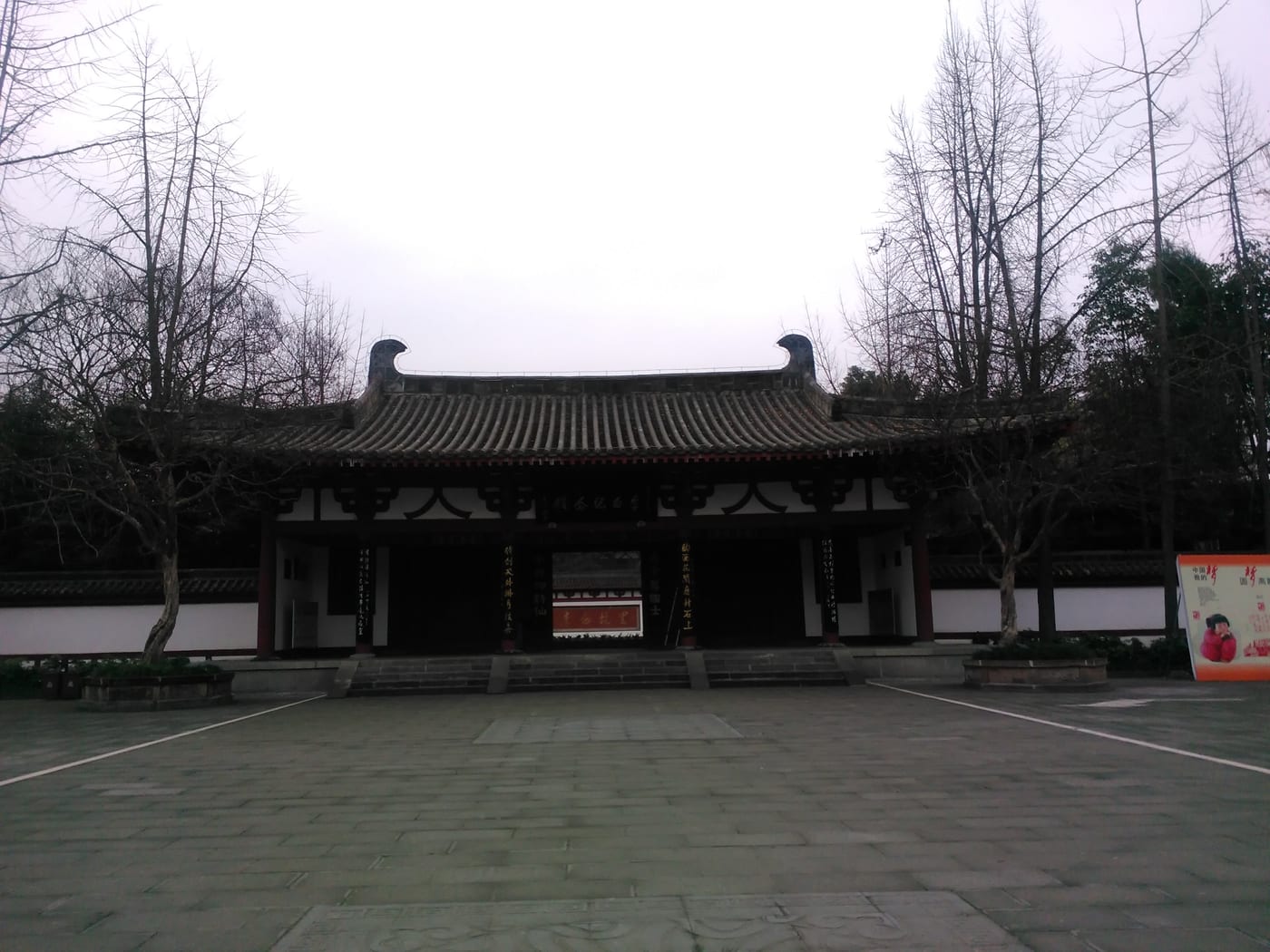
Li Bai's "Quiet Night Thought" looks like the easiest poem in the world to translate until the translator actually touches it. Four lines. Five characters per line. A bed or couch, moonlight, possible frost, a lifted head, a lowered head, and home. The poem's global familiarity can make it feel already solved, as if English merely needs to arrange the furniture and let the moon shine through.
That is the trap. The poem is not difficult because it is obscure. It is difficult because it is almost too plain. Classical Chinese leaves out pronouns, articles, tense, and much of the grammatical padding that English normally uses to tell a reader who is seeing, what is acting, and how much feeling should be named. A translation can become sentimental by adding too much, wooden by adding too little, or falsely scenic by making moonlight into decoration. The task is to keep the poem small without making it thin.
The Chinese Text Project preserves a Complete Tang Poems text that reads "before the bed, seeing moonlight" and later "raising the head, gazing at the mountain moon."[1] East Asia Student presents the widely memorized classroom version: bright moonlight before the bed, frost suspected on the ground, head raised toward the bright moon, head lowered toward the old home village.[2] That variant difference is not a specialist footnote. It changes the first gesture of the poem. Is moonlight simply there before the bed, or does the speaker actively see it? Is the moon bright in itself, or a mountain moon with a more specific horizon? Translation begins before line one is stable.
The first line should not become interior design
The common opening, chuang qian ming yue guang, is often rendered as moonlight before the bed.[2] Favorite Poem Project's version says "before my couch," which brings the line into English with a slightly old-fashioned domestic stillness.[3] "Bed" is plainer and more direct. "Couch" has the advantage of not overcommitting to a modern bedroom. Neither solves the deeper issue: English wants the line to be a sentence, while the Chinese can remain a placed perception.
That matters because the poem does not begin with "I." English translations often add "my" or "I saw" because English needs a subject to move naturally. But every added pronoun tightens the poem around autobiography. The Chinese lets the first line hover between scene and perception: moonlight is before the bed; someone is there to register it; the room has become visible because light has entered it. A good translation should not make the speaker too psychologically loud too soon.
I would also resist making the line lush. "Silver moonbeams" or "pale radiance" may sound poetic in English, but they spend emotion early. Li Bai's line is strong because it is bare. The light has not yet become memory. It is simply light, placed low enough and near enough to be mistaken for something else.
Frost is not a metaphor yet
The second line turns on yi: to suspect, doubt, or take one thing for another.[2] The speaker does not say, "the moonlight is like frost" in a neatly decorative way. The line is closer to a momentary misrecognition: perhaps this is frost on the ground. That uncertainty is the poem's hinge.
If English says "it seemed like frost," the line becomes smooth and literary. If it says "I suspected frost," it keeps the strangeness but risks sounding formal. "I almost took it for frost" may be the best compromise, because it lets the mistake happen before interpretation arrives. The poem's moonlight is visual, but frost carries temperature. In a few characters, the room becomes both bright and cold.
This is why the poem should not be translated as a simple postcard of longing. Homesickness is there, but it arrives through a sensory correction. The speaker first misreads light as frost, then adjusts. That act of adjustment prepares the final turn toward home. Memory is not announced as an emotion; it is released by a small failure of perception.
Raising and lowering are the poem's engine
The third and fourth lines are built on a bodily hinge: raise the head, lower the head.[2] English should preserve that symmetry. If a translation turns the movement into "I looked up" and "then I remembered," it may carry the meaning, but it loses the choreography. The poem works because thought moves through the neck.
The raised head looks toward the moon. The lowered head turns inward and downward toward guxiang, the old home, native place, or home village.[2] "Home" is clean and powerful, but it can be too general. "Hometown" is useful but modern. "Old home" keeps a little of the word's backward pull. "Home village" keeps locality but can sound too quaint. No single English choice is perfect, which is exactly why the line remains alive in translation.
The important thing is not to overexplain the cultural association of moon and reunion inside the line itself. NASA's brief page on "A Quiet Night Thought," attached to the lunar crater Li Po, reproduces the poem and identifies Li Po/Li Bai as the Tang poet famous for friendship, nature, and wine.[5] That modern afterlife is telling: the poem can travel all the way to lunar nomenclature because it lets the moon remain simple enough to be shared. The translator should not bury that simplicity under commentary.
Why the easy poem keeps returning
Li Bai's biography encourages large myths: the Tang poet born around 701, associated with wandering, court appointment, exile from courtly favor, wine, moonlight, friendship, and a legendary death story.[4] "Quiet Night Thought" is smaller than that legend. It contains none of the swagger often attached to Li Bai. No banquet, no immortal flourish, no mountain ascent, no drunk cosmic leap. Just a quiet room and a correction of the gaze.
That modesty is one reason the poem survives so well in classrooms and memory. East Asia Student notes the poem's place in Three Hundred Tang Poems and gives the familiar pinyin, character glosses, and AABA rhyme note.[2] Favorite Poem Project presents it as a poem a reader can speak across language and childhood memory.[3] The poem's fame does not come from complexity of plot. It comes from the way a tiny structure makes displacement repeatable: light below, moon above, head down, home elsewhere.
Still, popularity can flatten it. A reader who knows only the slogan version may treat it as pure homesickness. The variant record pushes back against that. The Complete Tang Poems version's "seeing moonlight" and "mountain moon" make the poem slightly more active and situated than the polished classroom version.[1] The received version's repeated bright moon makes it more symmetrical and mnemonic.[2] A translator should decide which text is being translated and, if necessary, say so. Otherwise the English may pretend to be transparent while quietly merging variants.
A translation should keep the door half open
My working version would be deliberately plain:
Before the bed, bright moonlight;
I almost take it for frost on the ground.
I raise my head and look toward the bright moon;
I lower my head and think of old home.
That version is not meant to be final. It chooses the common classroom text rather than the Complete Tang Poems variant. It keeps "bed" instead of "couch." It adds "I" only where English needs a moving body. It chooses "old home" for guxiang because the poem's last word should feel backward-facing without becoming antique. It keeps "bright moon" twice, even though English style normally dislikes repetition, because the repetition is part of the poem's memory device.
The larger principle is simple: do not improve the poem away from itself. Do not make the moon too beautiful, the frost too symbolic, the speaker too confessional, or home too abstract. The poem's power lies in the smallness of its sequence. A room becomes visible. A patch of light almost becomes frost. The head rises to the moon. The head falls toward home.
In twenty characters, Li Bai gives translation a severe test: how much can English add before clarity becomes damage? The best answer is not minimalism for its own sake. It is disciplined hospitality. Let English provide enough grammar for the poem to move, but not so much that the quiet night turns into an explanation of itself.
Sources
- Chinese Text Project, Complete Tang Poems, volume 165, "Jing Ye Si" by Li Bai, source text with the "seeing moonlight" and "mountain moon" variant.
- East Asia Student, "233 李白 靜夜思 Translation: Quiet Night Thoughts, by Li Bai," character glosses, pinyin, translation, rhyme note, and variant note.
- Favorite Poem Project, "靜夜思 (On a Quiet Night)," Li Po poem page with Lewis S. Robinson translation and reader context.
- Academy of American Poets, "Li Bai," biographical overview of Li Bai / Li Po and his Tang-era literary reputation.
- NASA Science Photojournal, "A Quiet Night Thought," Li Po crater page with brief Li Bai context and the poem's modern lunar afterlife.
- Wikimedia Commons, "File:LiBaimemorialhall000.jpg," source page for the real photographic cover image of Li Bai Memorial Hall.