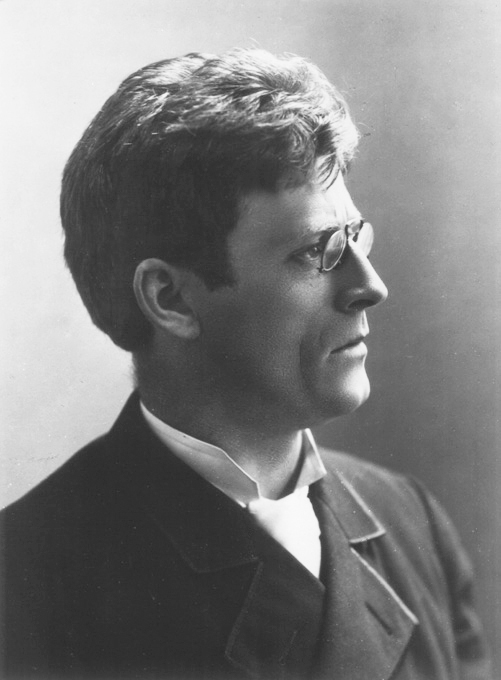
Knut Hamsun's Hunger begins with a city and immediately makes the city sound like a nervous condition. The narrator remembers the time he "starved in Christiania," and the place is not simply a setting. It is "this singular city," a machine that leaves marks on whoever survives it.[1] From the first page, the novel's real subject is not whether a poor writer will find food, lodging, or publication. It is how deprivation changes the very tempo of consciousness.
That is why Hunger still feels modern rather than merely bleak. Published as Sult in 1890, it became Hamsun's breakthrough and is treated by Bokselskap as a modern classic in European and Norwegian literary history.[2] The Hamsun Centre likewise frames the book as the work that made Hamsun's reputation and ties his modernity to the unstable movement of thought and feeling.[3] The plot can be summarized quickly: an unnamed writer wanders Christiania, pawns belongings, tries to sell articles, invents scenes, meets strangers, humiliates himself, and keeps going. The style is harder to summarize because it refuses to let hunger stay in the body. Hunger becomes a grammar.
The Sentence Is Always Recovering
The narrator's voice keeps lifting itself into dignity, then falling through the floor. One moment he is an intellectual with a theory, a phrase, a possible article, a moral claim. The next, he is calculating bread, rent, pencil stubs, editorials, and shame. Hamsun does not write this as a smooth descent. He writes it as a sequence of recoveries that fail almost as soon as they begin.
The result is a prose rhythm of self-correction. The narrator is forever revising his own importance. He can feel chosen by talent, persecuted by circumstance, watched by God, judged by shopkeepers, or exalted by a phrase. Then a small physical fact interrupts: dizziness, cold, an empty stomach, a missed payment, a refusal at an office door.[1] The voice is not unreliable because it deliberately lies to the reader. It is unreliable because it cannot hold one register long enough for certainty to settle.
This is the novel's sharpest formal move. Hamsun makes the mind too active to be trustworthy. Starvation does not make the narrator mute; it makes him overproductive. He invents explanations, names, gestures, and ethical tests. He turns every encounter into theater because theater gives him a temporary shape. The more precarious the body becomes, the more the voice tries to compensate with style.
Pride Speaks Before Need Can
The narrator is not simply hungry. He is hungry and proud, which means need rarely arrives in plain language. He would rather turn poverty into a moral performance than ask cleanly for help. That is why his acts of generosity can feel both moving and absurd. He gives away money he cannot spare, refuses advantages, or punishes himself for compromised motives. The point is not that he is noble. The point is that pride gives him a script when reality gives him no position.
Hamsun's style keeps exposing the cost of that script. The narrator can be scrupulous and ridiculous in the same paragraph. At one point the book condenses the problem with pitiless economy: he is "too poor to support a conscience."[1] The phrase matters because conscience usually sounds like a higher faculty, something above material need. Hunger drags it back into economics. Even moral refinement needs calories, shelter, and a margin of safety.
This does not make the book a neat social-reform argument. It is too volatile for that. The narrator's suffering is real, but he is also vain, evasive, theatrical, and sometimes cruel. Hamsun gives poverty psychological texture without turning the poor writer into an emblem of innocent victimhood. The voice keeps asking for sympathy and then sabotaging the terms on which sympathy might arrive.
Names Become Temporary Rooms
One of the strangest pleasures of Hunger is watching the narrator manufacture identity out of sound. "Ylajali" is the most famous invention: a name he gives to a woman he follows, desires, and half-fantasizes into being.[1] The word is not a stable person; it is a chamber the narrator can enter when ordinary life becomes too bare. He also plays with borrowed titles and invented social roles, including the comic inflation around "Tangen."[1]
These names do not merely decorate the plot. They show how the narrator uses language as shelter. A made-up name gives him a scene in which he can appear interesting, seductive, mysterious, wronged, or powerful. A false professional identity gives him a momentary social body. In a city where he cannot reliably buy food, keep a room, or secure work, language becomes the cheapest architecture available.
The danger is that language also cuts him off from other people. Ylajali is less a woman than a projection field; Tangen is less a name than a prop. Hamsun's voice is intoxicating because it is always making, but its making is also a form of isolation. The narrator turns reality into private drama and then suffers because reality refuses to obey the drama.
Starvation Distorts Perception, Not Just Appetite
The book's most direct bodily sentence may be the narrator's admission that he is "drunk with starvation."[1] It is a precise paradox. Hunger sharpens and blurs at once. It makes details flare up, while proportion collapses. A street, a shop, an editor's delay, a woman's look, a word on a page: each can become enormous because the mind has lost its ordinary ballast.
That is why Hamsun's Christiania is not naturalistic in the usual sense. It is recognizable, but it is filtered through a nervous system that keeps changing exposure. The narrator's poverty is urban and material, yet the prose often behaves as if the city were passing through fever, theology, comedy, and nightmare in rapid succession. Hamsun does not need a gothic castle or a symbolic wasteland. A newspaper office, pawnshop, bench, attic, or stairwell can become uncanny once the narrator's attention begins to tremble.
The Nobel biography places Hamsun's later official recognition around the 1920 prize, awarded for Growth of the Soil, not for Hunger.[4] That historical fact is useful because it prevents a simple career story. The book that now often reads as Hamsun's modern breakthrough was not the work for which the Nobel committee honored him. Hunger belongs to an earlier, more exposed Hamsun: the writer of restless inwardness, abrupt reversals, humiliating comedy, and consciousness without guardrails.
The Afterlife Cannot Be Innocent
No reading of Hamsun can remain untouched by the later public record. The Hamsun Centre's biography explicitly notes his sympathy with Germany and Norwegian national socialism during the Second World War, his postwar penalty, and the continuing debate over the relation between art and the artist.[3] That does not cancel Hunger as a literary event, but it does change the tone in which influence should be discussed. The novel's technical brilliance is not a certificate of moral authority.
In fact, Hunger is strongest when read without moral hero worship. Its narrator is fascinating because the prose reveals how quickly intelligence can become evasion, how easily pride can dress itself as principle, and how language can both rescue and falsify experience. The style is not admirable because it purifies suffering. It is powerful because it lets suffering speak in unstable forms: prayer, joke, insult, hallucination, editorial pitch, erotic fantasy, and self-accusation.
The book's lasting lesson is therefore not that starvation makes a writer profound. It is that pressure changes the instrument of thought. Hamsun makes deprivation audible at the level of cadence, role-play, perception, and moral timing. Plot keeps offering the narrator ordinary exits: work, food, money, publication, assistance, departure. Voice keeps showing why those exits cannot simply be walked through. In Hunger, the mind is not the private space left over after social facts have done their work. It is where those facts continue to speak, badly and brilliantly, long after the body has begun to fail.
Sources
- Knut Hamsun, Hunger, Project Gutenberg ebook 76692 - English text used for close reading and cited phrases.
- Bokselskap, Sult by Knut Hamsun - Norwegian text, 1890 publication context, reception notes, and literary-historical framing.
- Hamsunsenteret / Hamsun Centre, "Knut Hamsun" - biography, Hunger breakthrough context, modernist framing, and later political controversy.
- Nobel Prize, "Knut Hamsun - Biographical" - Nobel context and career framing around the 1920 literature prize.
- Wikimedia Commons, "File:Knut hamsun 1890.jpg" - source page for the archival photographic portrait used as the article image.