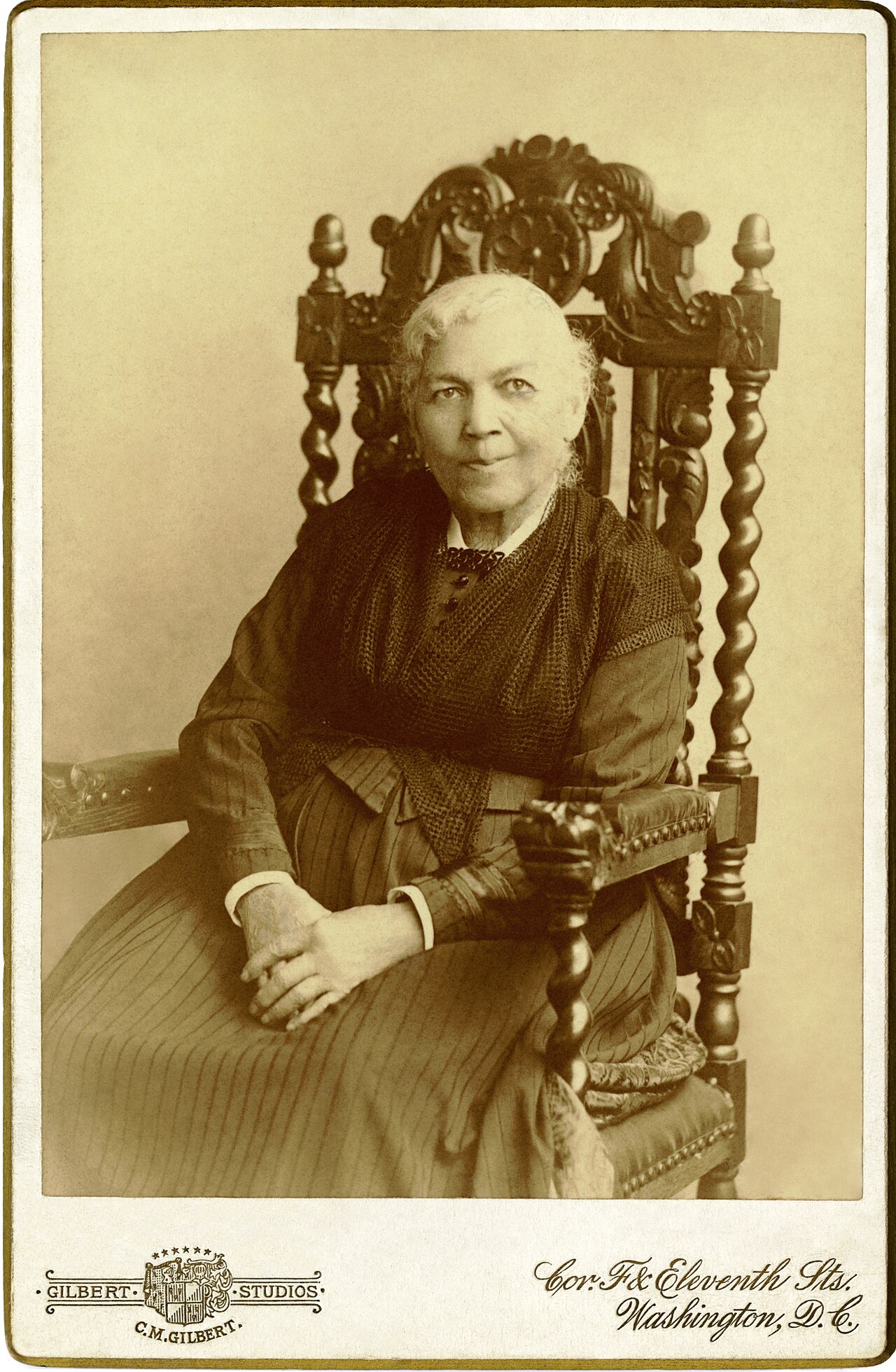
The first surprise of Incidents in the Life of a Slave Girl is not that Harriet Jacobs hides. It is how many forms hiding takes before the reader reaches the famous crawl space above her grandmother's storeroom. The book hides names under pseudonyms, hides publication history behind the signature "Linda Brent," hides dangerous facts for the safety of people still living, and then makes that pattern visible enough that concealment becomes part of the testimony.[1]
That is why the narrative should not be read as a weakened autobiography because it withholds. Its secrecy is one of its formal achievements. Jacobs was writing about sexual coercion, family separation, anti-Black law, and fugitivity for a Northern readership whose sympathy could be both necessary and judgmental. The book therefore moves with two pressures at once: it must reveal enough to make slavery's domestic violence undeniable, while also protecting the people and moral choices that a hostile public might punish or sensationalize.[1][2]
The reception history makes that pressure sharper. Britannica's Jacobs biography notes that she self-published Incidents in 1861 under the name Linda Brent, and that later scholarship had to verify a book often misattributed to Lydia Maria Child or treated as fiction.[2] Harvard's account of Jean Fagan Yellin's later research emphasizes how much detective work was needed to recover Jacobs as author, activist, and organizer beyond the boundaries of the 1861 book.[3] In other words, Incidents has always had an afterlife shaped by proof: proof of authorship, proof of experience, proof that what had been treated as private shame was public evidence.
Publication Was Already A Risk
Jacobs's authorial preface tells readers how to handle the book's delicate contract. She insists that "this narrative is no fiction," but she also explains that she has concealed names and places for others' sake.[1] Those two statements belong together. The truth claim is not injured by disguise; disguise is what lets the testimony survive.
That distinction matters because nineteenth-century readers often demanded impossible credentials from formerly enslaved writers. Lydia Maria Child's introduction performs part of that credentialing work, telling readers she knows the author personally, has confidence in her truthfulness, and has revised mainly for order and condensation.[1] Modern readers can find that mediation uncomfortable, and they should. But it also shows the publication market Jacobs had to enter. A Black woman's own witness needed a white editor's public guarantee before many readers would grant it authority.
The result is a book that keeps turning form into self-defense. Jacobs writes as Linda Brent, but the mask does not empty the voice. It gives the voice a tactical distance from which to describe experiences that polite abolitionist rhetoric often softened. The book's subject is not slavery in the abstract. It is slavery inside bedrooms, nurseries, doorways, letters, threats, and bargains. It is a system that enters family life so deeply that privacy itself becomes unsafe.
The Domestic Interior Becomes Evidence
The narrative's most important literary move is to make domestic space legible as a political record. Jacobs does not need a battlefield or a legislative chamber to prove the violence of slavery. She shows a household where power circulates through surveillance, forced intimacy, jealousy, law, and money.[1][4] The home, supposedly the nineteenth-century site of protection and moral feeling, becomes the place where enslaved women are most exposed.
That is why the book's chapters about girlhood and motherhood do more than add emotional force. They alter the genre. Earlier slave narratives had already made literacy, labor, escape, and bodily violence central. Jacobs adds sustained attention to sexual vulnerability and maternal calculation. Britannica describes the book as arguably the most comprehensive slave narrative written by a woman, stressing its account of sexual abuse and enslaved mothers' anguish over children who could be taken from them.[2]
Jacobs's craft is especially clear in the way she lets ordinary rooms become charged. A conversation is never only a conversation if an enslaver can turn it into threat. A letter is never only a letter if it may misdirect pursuit. A family tie is never only private if the law can convert children into property. The book's realism comes from that compression: no scene is small when the system can enter it.
This is also why direct confession is not the book's only mode of truth. Jacobs often stages what cannot be said openly. She shows evasions, partial disclosures, coded exchanges, and carefully managed appearances. A reader who expects testimony to look like total transparency may miss the point. Under slavery, transparency could be another form of danger. The narrative's intelligence lies in showing how a person preserves moral agency inside conditions designed to make frank speech unsafe.
The Crawl Space Is Not A Symbol First
The chapter title "The Loophole of Retreat" has become the book's most memorable phrase, partly because it sounds almost allegorical.[1] Yet Jacobs makes the crawl space powerful by refusing to let it remain only a symbol. It is a physical arrangement, a family strategy, a punishment, a vantage point, and a suspended life. For nearly seven years, her concealment above the storeroom keeps her near her children while denying her almost every ordinary feature of motherhood.[3]
The space matters because it reverses the sentimental expectation that home means shelter. Jacobs's grandmother's house is shelter, but shelter under slavery is not peace. It is a cramped technology of survival. The hiding place protects Jacobs from capture while making her body pay for every inch of protection. It also sharpens one of the book's hardest insights: resistance may be heroic without feeling liberating while it is being endured.
That is where the narrative becomes more than a tale of escape. The crawl space lets Jacobs look without being seen, hear without being publicly present, and remain a mother through absence. The formal structure mirrors that condition. The narrator gives readers access to hidden knowledge while reminding them that the conditions that produced such knowledge were unbearable. Secrecy becomes a record of coercion.
Reception Had To Catch Up With The Book
One reason Incidents feels modern is that it anticipates questions later critics would bring to archives, gender, and testimony. Whose stories are considered proper evidence? Which experiences are dismissed because they are too intimate? What happens when a writer must use pseudonym, indirection, and editorial sponsorship to tell the truth at all?
Its later recovery required a different kind of reading culture. Yellin's work, summarized in Harvard's report, helped establish Jacobs not only as the author behind Linda Brent but as a figure whose life after escape included abolitionist organizing, work with fugitives, and freedpeople's aid.[3] DocSouth's Jacobs menu now places Incidents alongside contemporary reviews, reports, letters, and postwar materials, making the book part of a broader documentary field rather than a single isolated confession.[4]
That broader field changes the way the narrative reads. If the book once had to prove Jacobs's respectability to skeptical readers, its modern force lies in the opposite direction: it asks readers to distrust the standards that made such proof necessary. Jacobs does not write to become an acceptable sufferer. She writes to expose a system in which women's vulnerability was both known and publicly denied.
Why The Book Still Feels Unsettling
The temptation with recovered classics is to make recovery itself the happy ending. Incidents resists that comfort. Its literary power depends on a mismatch between survival and repair. Jacobs escapes, writes, and eventually becomes visible in the historical record, but the book never lets survival cancel the damage that made such strategy necessary.[1][3]
That is why its secrecy remains so important. Secrecy is not a flaw to be corrected by later scholarship, even though scholarship has clarified the record. It is part of the book's thinking. Jacobs shows that under slavery, truth often had to travel under cover before it could become public. Pseudonyms, hidden rooms, guarded names, and edited testimony are not signs of weak evidence. They are evidence of the world that forced truth to protect itself.
Read this way, Incidents in the Life of a Slave Girl becomes one of the essential American books about voice under constraint. It is a narrative of enslavement and escape, but also a study of how literary form changes when direct speech is dangerous. Jacobs made concealment carry witness. The afterlife of the book has been the long work of learning how to read that concealment not as absence, but as design.
Sources
- Harriet A. Jacobs, Incidents in the Life of a Slave Girl. Written by Herself (Documenting the American South full-text electronic edition, UNC-Chapel Hill, based on the 1861 Boston edition).
- Encyclopaedia Britannica, "Harriet Jacobs" (biographical overview, 1861 self-publication, Linda Brent pseudonym, and later verification by Jean Fagan Yellin).
- Harvard Gazette, "Up from slavery" (2004 report on Jean Fagan Yellin's Jacobs research and Jacobs's life before, during, and after slavery).
- Documenting the American South, Harriet Jacobs document menu (related reviews, reports, letters, and postwar freedpeople's work materials).
- Wikimedia Commons, "File:Gilbert Studios photograph of Harriet Jacobs.jpg" (1894 public-domain formal portrait used as the article image).