Henry James is still too often reduced to "manners," as if his novels existed mainly to preserve the etiquette of drawing rooms, inheritances, and long European afternoons.[5][6] The rooms matter, and so do the manners, but they are not the destination. James's real subject is what it costs to know too little, to know too late, or to mistake a social impression for understanding. Again and again he builds a scene around a watcher who thinks perception is mastery, then shows how expensive that confidence can become.[1][2][3][4]
That is why the work-centered route into James remains the best one. Britannica and Library of America both place him where he belongs: as a major transatlantic novelist whose fiction made consciousness, social pressure, and moral ambiguity into durable narrative material.[5][6] But that description becomes fully legible only once one looks at the recurring machinery inside the books themselves. Daisy Miller, The Portrait of a Lady, and The Ambassadors are very different in scale and temperature, yet they keep returning to the same arrangement: a perceiver, a room or social stage, and a truth that arrives with a bill attached.
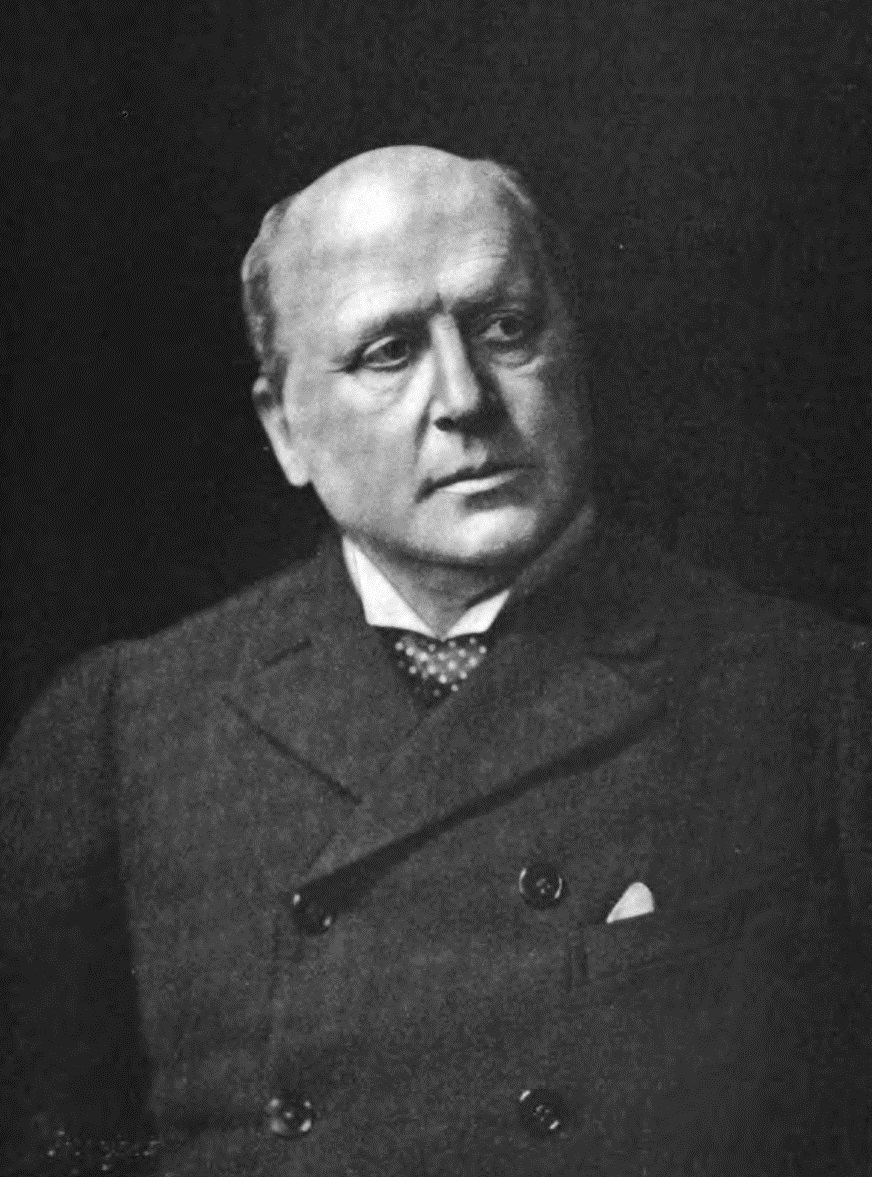
Image context: the cover uses a real archival photograph of Henry James rather than a stock library interior or a decorative old-book still life. That choice keeps the emphasis on the human face behind James's great technical gift: he writes novels in which looking is never innocent, and where a social glance can harden into judgment long before it matures into knowledge.[7]
1) James begins with watchers, not heroes
One reason James still feels modern is that he distrusts the heroic center. His fiction often begins not with a conquering will, but with an observer trying to read a scene. In Daisy Miller, Winterbourne reaches the Colosseum as "a lover of the picturesque" and almost immediately mistakes aesthetic and social impression for certainty.[1] What feels to him like a "sudden illumination" becomes one of James's cruelest little reversals: the supposed clarification tells us less about Daisy than about Winterbourne's eagerness to stop interpreting.[1] He wants a stable category more than he wants a difficult person.
That pattern persists in larger form in The Portrait of a Lady. Isabel Archer is introduced as having "an immense curiosity about life," which is one of James's great opening compliments because it joins freedom to receptivity.[2] She does not initially dominate a social field; she studies it, tests it, moves through it with appetite. James gives her the glamour of attention itself. Yet curiosity in James is never self-securing. To see more is also to risk entering arrangements whose meanings are clearer only after commitment has been made. Perception is an opening, not a shield.
This is what separates James from simpler novelists of social ascent or romantic choice. His central figures are rarely the most forceful people in the room. They are the people through whom force becomes legible. Lambert Strether in The Ambassadors is another version of the same design: a late, intelligent perceiver who arrives in Europe believing he has come to correct another life and gradually discovers that his own has been the narrower one.[4] James does not flatter such characters with omniscience. He makes them vivid by exposing the lag between what they notice and what they can finally bear to know.
2) His rooms are not décor; they are moral instruments
Readers who complain about James's interiors usually notice the furniture and miss the function. Houses, drawing rooms, hotels, gardens, staircases, and tea tables in James are not ornamental delays. They are devices for measuring what social forms permit people to say, hide, perform, or misunderstand.[2][3][4] A James room is often a chamber in which freedom first appears as comfort, then slowly reveals its dependencies.
No image in his fiction makes that clearer than Isabel Archer's retrospective understanding of Gilbert Osmond's world. She comes to imagine it as "the house of darkness, the house of dumbness, the house of suffocation."[3] The force of that sequence is architectural before it is psychological. Marriage is not described here as an abstract error. It has become a habitable structure, a place whose air, silence, and boundaries are now part of her consciousness. James's genius is that he makes entrapment feel spatial. A reader remembers not only what happened to Isabel, but the kind of room in which her freedom was slowly taught its limits.[2][3]
The same principle governs the less tragic books too. Winterbourne reads Daisy through hotels, promenades, Roman ruins, and the codes that cling to those spaces.[1] Strether reads Paris through salons, apartments, and cultivated arrangements that first seem merely tasteful, then morally enlarging, then destabilizing.[4] James understood that social life is not simply enacted in rooms; it is organized by them. A doorway controls who overhears. A garden walk alters the tempo of confidence. A dinner table distributes authority before anyone speaks. His fiction keeps turning space into an argument about relation.
This is why James can look so refined on the surface while remaining structurally severe underneath. He knows that civilization does not abolish conflict. It upholsters it. Rooms in his novels are where pressure learns how to sit down gracefully.
3) The recognitions arrive late enough to hurt
James's deepest continuity lies in timing. His great recognitions do not usually arrive at the moment of action. They arrive after action has already narrowed the available future. That delay is what gives the work its peculiar ache. The characters are not merely mistaken; they are forced to understand at the price of having less time left in which understanding can matter.[1][3][4]
Isabel's case is the starkest because The Portrait of a Lady grants her genuine amplitude early on. She even proposes a definition of richness that feels like a covert Jamesian manifesto: "I call people rich when they're able to meet the requirements of their imagination."[2] The line is exhilarating because it turns wealth away from money alone and toward inner scope. But the novel refuses to leave it as a slogan of self-fashioning. James asks what happens when imagination encounters other people's schemes, vanities, and coercive tastes. By the time Isabel sees enough, the knowledge is morally enlarging and practically narrowing at once.[2][3]
In The Ambassadors, Strether's late wisdom becomes almost aphoristic. "Live all you can; it's a mistake not to" is among the most quoted lines in James because it sounds like advice one might borrow cleanly.[4] In the novel, however, the sentence is shadowed by lateness. Strether can formulate the principle precisely because he has become aware of how much of his own life has already been organized by caution, duty, and secondhand priorities. The grandeur of the line is inseparable from regret.[4] James gives revelation force by refusing to make it cheap.
Even Winterbourne's smaller-scale recognition follows the same rule. He believes he has judged Daisy accurately in Rome; only after her death does he begin to suspect how partial and self-protective his reading was.[1] James does not reward him with a purifying epiphany. He leaves him with diminished certainty and belated shame. That is enough. In James, knowledge does not arrive to close the case. It arrives to show what closure has already destroyed.
4) Why James still feels close
James remains current because he writes the instability between appearance and interpretation without pretending that better technique can eliminate it.[1][2][3][4] His world is full of reading: faces, rooms, gestures, invitations, pauses, marriages, inheritances, cultivated tastes. Yet the more accomplished the reading becomes, the easier it is for pride to mistake itself for discernment. That problem has not aged out. If anything, it has spread.
One can see the durability of James's method in how little he relies on sensational plot compared with the density of his aftereffects. Readers remember Daisy in the Colosseum, Isabel before the terms of her marriage, Strether in Paris, not because these are merely elegant situations, but because each scene binds judgment to self-exposure.[1][2][3][4] To read another person is also to reveal the limits and appetite of one's own mind. James never stops making that exchange visible.
So the cleanest way to describe his achievement is not that he wrote beautifully about manners. It is that he turned manners into a testing apparatus for consciousness. He built fiction in which looking becomes risk, rooms become pressure vessels, and late knowledge becomes a form of payment. That is why Henry James still reads less like a curator of lost civility than like a novelist of expensive perception.[5][6]
Sources
- Henry James, Daisy Miller: A Study (Project Gutenberg HTML text).
- Henry James, The Portrait of a Lady, volume 1 of 2 (Project Gutenberg HTML text).
- Henry James, The Portrait of a Lady, volume 2 of 2 (Project Gutenberg HTML text).
- Henry James, The Ambassadors (Project Gutenberg HTML text).
- Library of America, "Henry James" (career overview and major-works context).
- Encyclopaedia Britannica, "Henry James" (biographical and literary overview).
- Wikimedia Commons, "File:Photo of Henry James.jpg" (source page for the archival photograph used as the article image).