Frances E.W. Harper's Iola Leroy and Pauline Hopkins's Contending Forces both ask a hard literary question: what kind of novel can answer a society that treats Black family history as something to be hidden, broken, or argued over by hostile witnesses? Harper publishes in 1892, Hopkins in 1900. The eight-year gap matters, but the deeper kinship lies in their shared refusal to let race appear as an abstract social problem. Both novels turn race into paper, rooms, bodies, inheritance, rumor, courtship, profession, and public speech.[1][2]
Read quickly, the books can look like melodramas of disclosure. Iola is raised away from the full truth of her ancestry, sold into slavery after her white father's death, released during the Civil War, and drawn toward Reconstruction-era questions of work, marriage, education, and racial loyalty.[1][3] Hopkins's novel opens with slavery, abolitionist pressure, and the Montfort family history, then carries the force of that past into Boston domestic and club life, where Sappho Clark's hidden wound and public respectability test one another.[2][5] But the melodrama is not a weakness. It is the form both writers use to make evidence feel social.
The comparative point is not that Harper and Hopkins write the same book. Harper's line is clearer, more reformist, and more openly pedagogical. Hopkins writes with denser historical layering, sharper gothic pressure, and a stronger sense that the past keeps returning in altered disguises. Yet both novels understand that Black self-authorship has to fight on two fronts at once. It must correct false public stories, and it must rebuild private histories damaged by slavery's power to separate people from names, kin, memory, and legal personhood.
Iola Leroy Turns Recognition Into Work
In Iola Leroy, the discovery plot begins as violence. Iola's ancestry does not become socially dangerous because it changes her character. It becomes dangerous because law and custom decide that hidden classification can override her lived identity. The novel's moral outrage depends on that gap. Nothing inside Iola has changed, but the world suddenly claims a new right to her body.[1]
That is why Harper's most important scenes are not only rescue scenes. They are scenes of reclassification. The novel keeps asking who has the authority to name someone: a slave system, a father, a mother, a doctor, a suitor, a community, a school, a writer, or the person herself. When Dr. Latimer asks, "Who tainted it?", the bitterness falls on the logic of racial purity itself.[1] The line is short, but it cuts through the polite fiction that mixed ancestry is a problem created by the Black family rather than by the white power that violated it.
Harper's solution is not simple private romance. The late novel turns repeatedly toward education, professional service, women's work, and racial authorship. Its famous insistence that "out of the race" must come writers and thinkers is not decorative uplift.[1] It is a theory of literary jurisdiction. If white authors can sympathize but cannot fully feel "the iron" entering another soul, then Black writing is not a supplement to public truth. It is a necessary instrument for making public truth less false.[1]
This is where Harper's broader career matters. The National Park Service describes her as an African American writer and reformer active in abolition, women's rights, temperance, and civil rights, while the Smithsonian Libraries account stresses how thoroughly her literary work was tied to social and political belief.[3][4] Iola Leroy carries that double vocation into fiction. It wants to move the reader, but it also wants to train the reader in what evidence should count: a mother's story, a daughter's choice, a doctor's refusal of racial shame, a classroom's future, a writer's obligation.
Hopkins Makes The Archive More Uneasy
Hopkins begins Contending Forces with a different pressure. Her preface says she writes not for profit or notoriety but to "raise the stigma" from her race, and immediately gives fiction a public task: preserving manners, customs, and social memory.[2] That preface could sound like a manifesto attached to a conventional romance. The novel that follows is stranger than that. It keeps making the past arrive in documents of feeling: family descent, slavery's sexual violence, antislavery history, respectability politics, club discussion, courtship anxiety, and Sappho Clark's guarded self.
Hopkins's opening historical sweep matters because it prevents Boston from seeming cleanly modern. The novel moves from British abolitionist agitation and the West Indian slave trade into Bermuda, North Carolina, and later Northern Black social life.[2] That scale changes the domestic plot. A parlor is not just a parlor. It is a room where historical forces have arrived wearing manners.
Sappho's reserve is the novel's great emotional technology. She is not mysterious because Hopkins wants a cheap revelation. She is mysterious because the world has made certain kinds of truth dangerous to narrate. The question is not merely what happened to her. It is what social form could receive what happened without turning her again into spectacle, warning, or stain. In that sense, Hopkins writes a more suspicious novel than Harper. She believes in fiction's public use, but she also knows that public use can become another way of consuming another person's pain.[2][5]
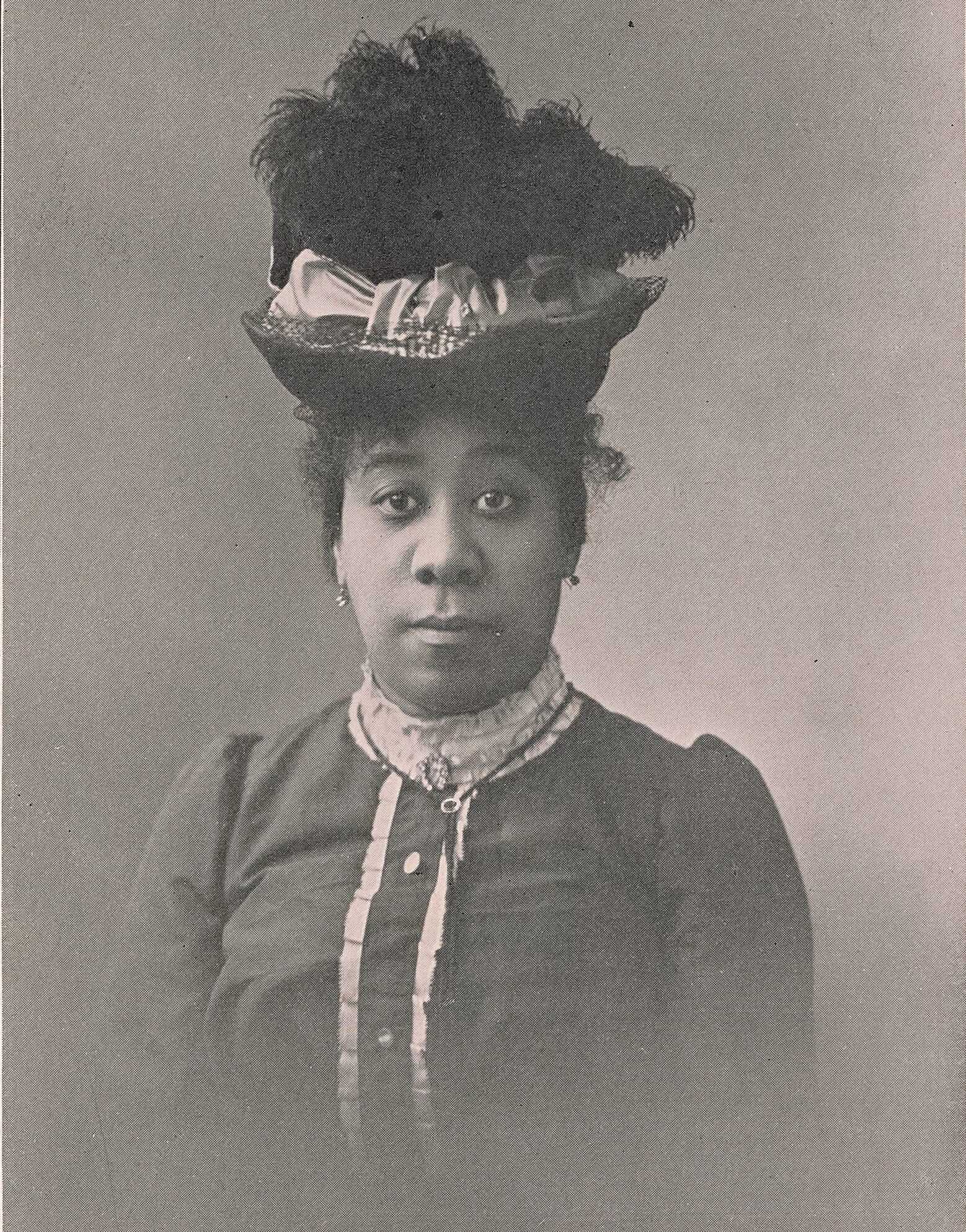
The National Museum of African American History and Culture frames Hopkins as a literary author and editor who used the press to challenge assumptions about Black women.[5] That editorial identity is visible in the novel's structure. Contending Forces behaves like a composite public sphere: romance, debate, historical retrospect, women's conversation, racial defense, and sentimental recovery. It does not merely tell a hidden story. It builds the conditions under which hidden stories might be heard differently.
Two Kinds Of Family Evidence
Harper and Hopkins both use family history, but they make it do different work. In Iola Leroy, family recognition is restorative. The scattered family can be found, named, mourned, and partly repaired. The lost history is terrible, but the novel presses toward coherence. Kinship becomes one of the grounds from which Iola can choose work, love, and racial allegiance with more knowledge than she had at the start.[1]
In Contending Forces, family history is less easily cured. Descent carries violence forward. Respectable surfaces do not erase the older traffic in bodies and names. The novel's title is exact: the forces do not settle into one clean moral alignment. Love, ambition, shame, historical injury, public duty, and gendered vulnerability keep contending inside the same social spaces.[2]
That difference changes the texture of each book. Harper often trusts the declarative sentence. Her characters can speak reform arguments directly because the novel wants moral clarity to become usable. Hopkins is more crowded. She writes a world of talk, but much of the most important truth arrives obliquely, through hesitation, displacement, or belated disclosure. Harper's family archive wants to prove personhood against racist classification. Hopkins's family archive wants to show how classification has already entered desire, memory, and self-protection.
Why The Comparison Still Reads
The strongest reason to read these novels together is that neither treats representation as a luxury. Both writers make fiction answer a practical injury: a dominant culture has misdescribed Black life and then used the misdescription as proof. Harper answers by making the novel a school of recognition. Hopkins answers by making the novel a pressure chamber where hidden histories force social language to become less innocent.
They also correct a lazy account of sentimental fiction. Tears, reunions, courtship obstacles, hidden identities, and climactic disclosures are not automatically evasions of politics. In these books, such devices carry politics because slavery and racial hierarchy were intimate systems. They entered birth records, marriage prospects, nursing work, church life, household labor, friendship, complexion, inheritance, and the right to speak without being translated by someone else.[1][2]
The final lesson is formal. Harper makes family history testify by moving from violated classification toward chosen service and Black authorship. Hopkins makes family history testify by showing how hard testimony becomes when the archive is lodged in vulnerable bodies and guarded rooms. Both novels insist that Black women's fiction at the turn of the twentieth century was not merely asking to be included in the literary record. It was asking who had been allowed to make records in the first place, and what kind of truth a novel could restore when official evidence had been built to wound.
Sources
- Frances E.W. Harper, Iola Leroy; Or, Shadows Uplifted, Project Gutenberg ebook 12352 - public-domain text used for close reading, publication context, and cited passages.
- Pauline E. Hopkins, Contending Forces: A Romance Illustrative of Negro Life North and South, New York Public Library/Schomburg Center PDF - full primary text used for close reading and cited passages.
- Smithsonian Libraries and Archives, "Poetry towards Progress: Frances E.W. Harper" - Harper biography, literary legacy, and Iola Leroy context.
- National Park Service, "Frances Ellen Watkins Harper House" - Harper's Philadelphia home, reform work, and writerly public life.
- National Museum of African American History and Culture Searchable Museum, "Pauline Elizabeth Hopkins" - Hopkins biography, press work, Contending Forces context, and source page for the archival portrait used as the article image.