Grace Paley's November 29, 1971 reading at the 92nd Street Y survives as a brief YouTube archival excerpt, but it carries more than the pleasure of hearing a beloved writer read one of her stories. The recording catches Paley at a hinge in her public life. The Little Disturbances of Man had appeared in 1959; Enormous Changes at the Last Minute was still ahead in 1974; the compact career that later looked inevitable was, in 1971, still strangely underexplained to many readers.[2][3][4] The 92NY archive page notes that this was Paley's first reading at the venue and that she shared the stage with Donald Barthelme.[2] That pairing almost overstates the period contrast: Barthelme as postmodern surface and arrangement; Paley as city talk, family pressure, and political weather carried in the mouth.
The excerpt centers on "The Used-Boy Raisers," one of Paley's Faith stories, and it shows why Paley's fiction resists tidy summary. The plot is not the point in the usual sense. Her stories move by talk, self-correction, domestic interruption, sudden moral exposure, and the unstable authority of whoever happens to be speaking. Penguin Random House's author page gives the plain biographical frame: Paley was a short story writer, poet, pacifist, activist, and teacher, with major recognition from the Guggenheim, Rea, PEN/Malamud, and other literary institutions.[3] But the recording is useful because it does not separate those identities. In Paley, speech is already social action. A woman tells a story, and the room becomes a map of children, former husbands, lovers, neighbors, politics, embarrassment, stubborn tenderness, and comic survival.
That is why this archival footage belongs inside literature rather than only literary history. Paley's sentences were built to be heard, even when they sit quietly on the page. The National Book Foundation's record fixes the larger publication frame: Paley's Collected Stories became a 1994 finalist for both the Pulitzer Prize and the National Book Award, while Enormous Changes at the Last Minute had already been a 1975 National Book Award finalist.[4] Library of America similarly stresses how large Paley's apparently small body of work becomes when one reads it across motherhood, poetry, activism, short fiction, feminism, neighborhood organizing, and friendship.[5] The 92Y clip makes that scale audible. A small story does not remain small if every sentence opens onto a crowd.
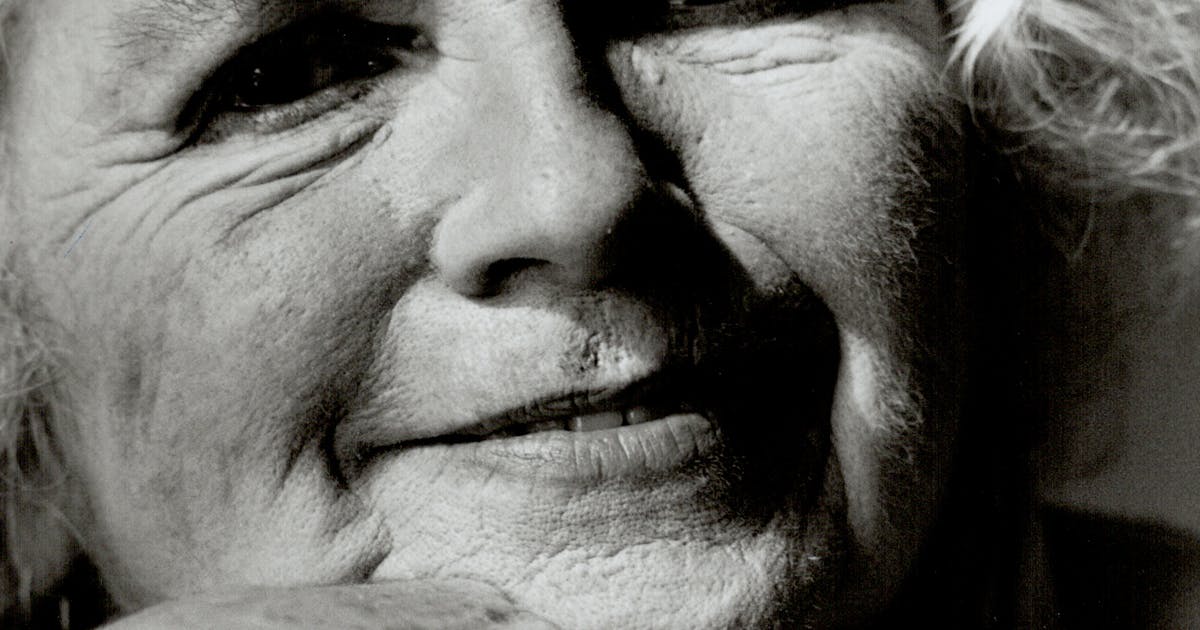
Image context: the cover photograph is not used as decoration or as a substitute for the recording. It gives the article a real photographic anchor for a writer whose public presence mattered to how her prose was received. Paley's fiction often feels spoken across a kitchen table, a playground bench, or a neighborhood argument; the portrait's closeness reinforces the article's focus on voice and address.[6]
Historical context: before the second book changed the frame
The date is easy to miss. In late 1971, Paley was not yet the writer later canonized through The Collected Stories in 1994 and retrospective accounts of her fiction and activism.[3][4][5] She was already admired by serious readers, but her bibliography looked almost perversely narrow: one story collection, a long gap, a life of teaching, parenting, protest, and local commitments. The 92NY page records an introducer explaining that audiences might still ask who Grace Paley was, despite her reputation among those who knew the work.[2] The comment sounds odd now, but it helps restore the moment. Paley had not yet become an easy syllabus name.
That gap matters because Paley's later reputation can make her method look settled from the start. It was not. Her refusal to produce the expected large novel, the expected regular output, or the expected clean border between private life and public conscience put pressure on standard ideas of literary productivity. Library of America's centennial note is helpful here because it refuses to make the "small oeuvre" story small. It places Paley's fiction among many overlapping lives: family member, poet, short story writer, antiwar activist, environmentalist, teacher, neighborhood organizer, feminist, and friend.[5] The reading lets us hear that overlap before later career summaries smoothed it into legacy.
The 1971 setting also places Paley in a specific New York literary institution. 92NY's Unterberg Poetry Center archive frames the clip as part of a long performance history in which writers are not only printed names but voices in rooms.[2] That distinction is crucial for Paley. She is often read through the printed page's quick turns, but the page itself keeps imitating civic proximity. People overhear one another. Children interrupt. The narrator answers an implied listener. A sentence bends because another person has entered its airspace.
The archival recording
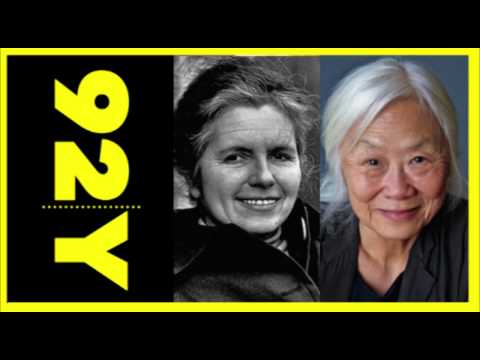
The video below is 92NY Plus's public YouTube upload from its "75 at 75" archive project. The 92NY archive page identifies the underlying recording as a live Grace Paley reading from November 29, 1971; it also supplies Maxine Hong Kingston's later reflection on hearing Paley's voice again and recognizing how much of the fiction lives in performance.[1][2]
What the recording clarifies
The first thing to notice is Paley's handling of address. She does not read as if fiction were sealed inside a book and then delivered outward. She reads as if the story were already happening among people who might interrupt, misunderstand, object, or laugh at the wrong time. That matters because Paley's fiction often begins from social pressure rather than from plot machinery. A character speaks because something in the world has pressed too close: a child, an ex-husband, a school, a lover, a war, a rent problem, a friend, a moral demand. Conversation is not decorative realism. It is the engine by which private feeling becomes public.
The second preserved detail is the speed of compression. Paley's great trick is to make a small domestic scene carry more kinds of weather than it should logically hold. "The Used-Boy Raisers" is funny, but its comedy keeps leaning into fatigue, desire, responsibility, and the claims adults make on one another while children keep existing in the room.[1][2][4] The title itself is a social miniature: comic, affectionate, and faintly brutal at once. A boy is not used in the way a coat or toy is used, yet the phrase tells the truth about second families, former attachments, and the practical recycling of care.
The third detail is theatrical. Kingston's 92NY reflection observes that Paley's stories can feel like plays because so much depends on voices.[2] That is a strong reading, provided we do not make it too neat. Paley is theatrical without becoming stagey. Her voices do not line up as cleanly assigned parts. They collide, overlap, and carry histories that the story may never fully explain. The effect is closer to overheard community than to formal dialogue. A Paley paragraph can feel as if several people have equal claim on the sentence.
That makes the 1971 recording valuable as craft evidence. On the page, readers can mistake Paley's looseness for casualness. In performance, the looseness reveals discipline. The pauses, emphases, and tonal pivots show how carefully the prose balances momentum against interruption. Paley's narrators often seem to be digressing, but the digression is the form. It is how the story admits that life does not arrive in a single file.
Why this is a literary document
The clip also helps correct a lazy version of the Paley myth: the idea that activism and art competed for the same limited space and that art lost. The better reading is that Paley made their conflict part of her form. Her fiction does not become a political pamphlet, but it also refuses the fantasy that domestic life can be isolated from public structures. Parenting, poverty, school, gender, neighborhood, war, race, and state power are not separate themes waiting to be imported. They are the air through which Paley's speakers breathe.[3][4][5]
That is why a Paley story can feel both slight and inexhaustible. It does not overbuild. It trusts the speaking situation. It lets a mother be funny without making motherhood charming; lets a political conscience enter without turning the story into a speech; lets ordinary city talk carry more historical density than polished exposition could manage. In the recording, Paley's voice becomes proof of method. She does not explain that fiction can be made from neighborhood rhythm, mixed languages, family obligation, and civic disobedience. She demonstrates it by making the story move.
The archive matters now because it preserves a literary standard that still feels demanding: compression without thinness, humor without evasion, politics without sermonizing, intimacy without privacy as retreat. Paley's work asks readers to listen at the scale where lives are actually negotiated. Not the abstract citizen, not the symbolic mother, not the representative activist, not the tidy short-story protagonist, but the person talking while someone else needs dinner, justice, attention, money, mercy, or sleep.
The 92Y clip is short, and that is almost appropriate. Paley's fiction has always made duration feel elastic. A few minutes of voice can disclose a whole social grammar. A short story can hold decades of habit. A comic phrase can reveal care and injury at the same time. What the recording gives us is not a substitute for reading her. It is a reminder of how to read her: with an ear for interruption, for jokes that do not cancel pain, and for sentences that keep widening until a neighborhood, a politics, and a life have all entered the room.[1][2][4][5]
Sources
- 92NY Plus, "75 at 75: Grace Paley Reads From 'The Used-Boy Raisers,'" YouTube video.
- 92NY, "75 at 75: Maxine Hong Kingston on Grace Paley" (archive page identifying the November 29, 1971 reading and Kingston's response).
- Penguin Random House, "Grace Paley" (author page and career overview).
- National Book Foundation, "Grace Paley" (author page and National Book Award finalist records).
- Library of America, "Grace Paley, 'The Loudest Voice'" (centennial context and story note).
- The New Republic, "The Secret Lives of Grace Paley's Women" (source page for the lead photograph used here).