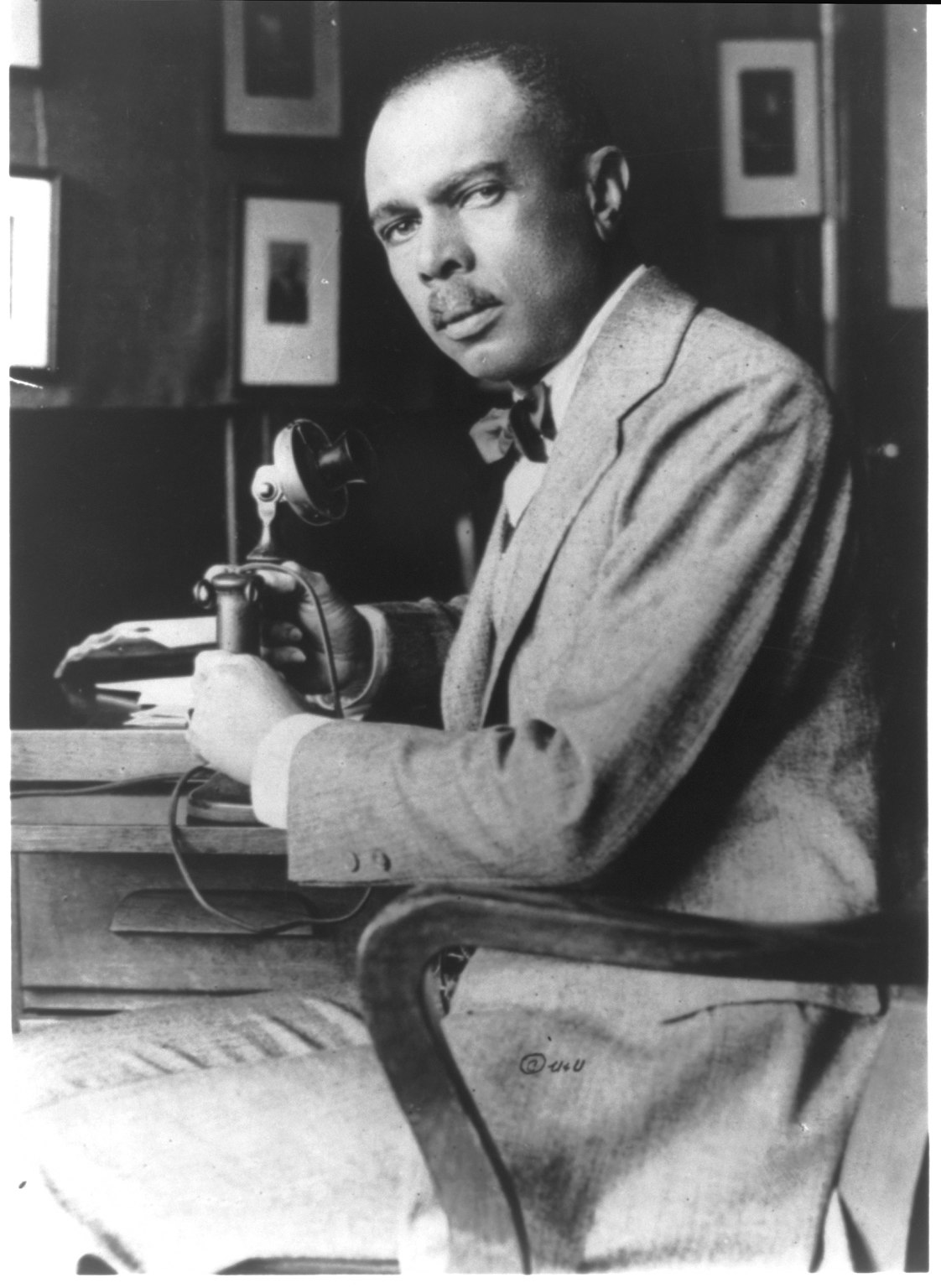
James Weldon Johnson's The Autobiography of an Ex-Colored Man is built on a title that almost tells the truth. It sounds like confession, but it is fiction. It sounds like self-possession, but the narrator begins by guarding "the great secret of my life."[1] It sounds like a clean before-and-after story, but the book's real pressure lies in the word "ex." What has the narrator actually left behind: a racial category, a public danger, a musical calling, a moral obligation, or only the courage to remain legible to himself?
That uncertainty is why the novel should not be reduced to a passing plot. Passing matters, but Johnson makes it the last form of a larger accounting system. The narrator is always measuring: skin tone against schoolroom classification, talent against patronage, money against safety, art against racial duty, and memory against comfort. By the final page, he has gained the protections of whiteness and lost the public form of the life he once imagined. The ending is not exposure. It is bookkeeping after the decisive transaction has already occurred.
Publication history intensifies that form. The novel first appeared anonymously in 1912 and was later reissued under Johnson's name in 1927, the moment when his Harlem Renaissance reputation could change the book's reception.[2][3] Library of America notes that early readers could take the original anonymous book for actual memoir, which means the text's masquerade did not stop at plot level.[3] Its first public form performed the very instability it narrates: a life story whose authority depended on a hidden author.
The First Discovery Is Social, Not Biological
The narrator's childhood discovery of race is often remembered as an identity scene, but it is more precisely a scene of public sorting. He does not learn a private essence. He learns that a room can name him before he has language ready. The famous schoolroom moment works because it turns racial identity into choreography: who stands, who is counted, who is suddenly watched. The damage is not only that the boy is hurt. It is that the world has shown him identity as an externally managed procedure.[1]
That early lesson shapes the whole novel. The narrator becomes observant because observation is survival. He notices complexion, accent, clothing, money, musical taste, regional codes, and the tiny shifts by which a room decides what kind of person someone is allowed to be. Johnson's realism is therefore not only sociological. It is perceptual. The narrator lives by reading the social surface, and the tragedy is that he becomes extremely good at the skill that will later help him disappear.
Library of America's paperback edition frames the narrator as a light-skinned Black man living on the edge of the color line in Jim Crow America, which is useful because it makes identity sound active rather than fixed.[2] Johnson's narrator is not simply "between" identities. He is trained by American life to understand identity as risk management. The child who is named by others becomes the adult who chooses, at terrible cost, which name will expose him least.
Music Offers A Public Self Before Fear Cancels It
Music is the novel's counterfactual life. Before passing becomes final, the narrator imagines a career that would transform Black musical materials into art with public force. His ambition is not merely to play well; it is to make ragtime, folk memory, classical training, and racial pride answer one another. In that unrealized project, art would do what social classification refuses to do: give complexity a form.
This is why Johnson's own career matters as context. Yale's notice for a critical edition stresses the autobiographical sources, cultural history, and reception history gathered around the novel, while Emory's Johnson project emphasizes the genre-crossing force of The Autobiography of an Ex-Coloured Man and its treatment of Harlem and Atlanta as fictional subjects.[4][6] The novel's narrator resembles and does not resemble Johnson. He has talent, mobility, education, and a gift for moving between worlds. But he lacks the public commitment that Johnson's later career would embody.
The narrator's abandoned music therefore becomes the book's moral register. Passing is not only a personal strategy; it cancels a possible contribution. When he gives up the dream of making Black music into public art, he does not simply protect himself. He withdraws a voice from the shared world. Johnson makes that withdrawal painful because the reader has seen how much attention the narrator could have converted into form.
The Lynching Scene Changes The Scale Of Choice
Any reading that treats the narrator's final passing as mere vanity has to pass through the lynching scene first. The spectacle of racial terror changes the moral scale of the book. The narrator does not choose whiteness in a neutral marketplace of identities. He chooses after seeing what the racial order can do to a Black body in public, and after seeing how spectators can convert violence into community ritual.[1]
That does not absolve him. It makes the indictment sharper. Johnson refuses the easy purity of judging from outside danger. The narrator's choice is ethically diminished and historically intelligible at the same time. He is cowardly, but cowardice here is not an abstract flaw. It is produced by a system that makes survival and public racial fidelity diverge.
The novel's philosophical intelligence lies in holding both facts together. Passing gives the narrator safety, marriage, wealth, and children. It also gives him a life that must keep editing its own origins. The cost is not melodramatic punishment. It is an ongoing narrowing of truth. He can live, but he has to live as someone who has turned a central fact of the self into classified information.
The Final Account Refuses Consolation
The last movement of the novel is devastating because the narrator understands more than he repairs. He does not end as a villain exposed or a hero redeemed. He ends as an accountant of loss. The things he has gained are real. The things he has forfeited are also real. Johnson's form denies the reader the pleasure of pretending those columns cancel.
That is why the anonymous-autobiography frame remains so powerful. The narrator's writing is a confession that preserves concealment. He tells enough to show the shape of the hidden life, but not enough to re-enter public accountability. The book becomes a document of intelligence under compromise: beautifully controlled, ethically incomplete, and still haunted by the music it did not make.
Read now, The Autobiography of an Ex-Colored Man feels modern because it understands identity not as a slogan but as a pressure system. The narrator's tragedy is not that he never knows who he is. It is worse: he knows enough to understand the price of what he has chosen. Passing has made him secure, but security has become an archive of absence. The account closes, and the debt remains open.
Sources
- James Weldon Johnson, The Autobiography of an Ex-Colored Man, Project Gutenberg ebook no. 11012 - primary text.
- Library of America, The Autobiography of an Ex-Colored Man paperback classic - publication framing and description of the narrator's position on the color line.
- Library of America, James Weldon Johnson: Writings - edition note on the 1912 novel, anonymous publication, and early memoir-like reception.
- Yale News, "Book: The Autobiography of an Ex-Colored Man" - critical-edition context for Johnson's life, autobiographical sources, cultural history, and reception.
- Wikimedia Commons, "File: James Weldon Johnson, half-length portrait at desk with telephone LCCN95518635.jpg" - Library of Congress photographic print used as the article image.
- Emory University, "About James Weldon Johnson" - overview of Johnson's literary, editorial, and civic career, including the novel's genre-crossing role.