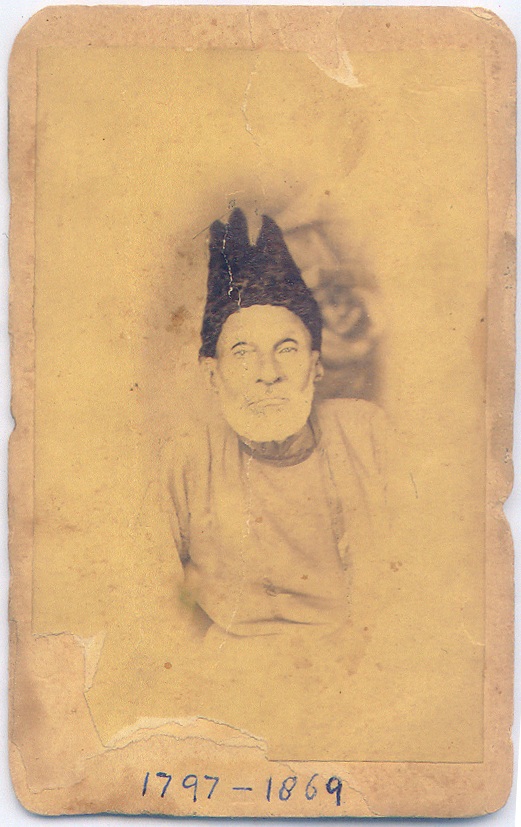
A couplet can become so famous that it stops behaving like language. It turns into a polished saying, detached from grammar: human beings have thousands of desires; even when many are satisfied, they still want more. Mirza Ghalib’s opening verse is often made to deliver that wisdom. In Urdu, however, its machinery is more unsettling. The same visible verb first describes a life-breath leaving and then describes longings emerging, being realized, or coming true.
hazāroñ ḳhvāhisheñ aisī ki har ḳhvāhish pe dam nikle
bahut nikle mire armān lekin phir bhī kam nikle [1]
A deliberately close crib might read: “Longings by the thousand, each such that at every longing the life-breath might come out; many of my longings came out, yet still too few came out.” That English is not graceful. Its awkwardness is useful. It reveals what a smoother translation has to conceal.
One word, two grammatical events
The pressure falls on nikle, a form of nikalnā: to come out, emerge, depart, appear, turn out, be produced, or be accomplished. Frances Pritchett’s close commentary shows how the grammar activates different parts of that range.[2]
In the first line, the subject is dam, “breath” or “life-breath,” grammatically singular. Nikle is a singular subjunctive: the breath might leave, perhaps at each desire or on account of it. The line does not merely say that the desires are intense. It imagines every one of them as an occasion on which life could go out.
In the second line, the subject is the masculine plural armān, “longings,” “wishes,” or “hopes.” Here the two appearances of nikle are plural perfect forms: many longings emerged, came about, or proved fulfilled; nevertheless, too few did. The spelling and sound return while tense, number, and event have changed.
English generally wants to mark that change. Urdu lets one form hold it. That is the couplet’s central translation problem, and also its central pleasure: fulfillment arrives in the grammatical shape of expiration.
English must decide what happens to the breath
The familiar phrase “each worth dying for” is wonderfully compact. It keeps death near desire and sounds proverbial enough to explain the couplet’s fame. But “worth” introduces a judgment the line does not explicitly make, while “dying for” turns the departing breath into an idiom. The bodily action disappears.
“Each takes my breath away” preserves breath, yet in contemporary English it usually signals admiration or astonishment. Ghalib’s dam nikle is more dangerous than that. A breath does not pause politely; it can be the breath that leaves at death.
The second line creates the opposite difficulty. “Many of my wishes were fulfilled” gives the idiomatic sense of armān nikalnā cleanly.[2] It also erases the fact that the same verb has returned. “Many came out” preserves the refrain but sounds in English as though the wishes were hiding in a cupboard. “Many came true” is natural, though it severs the line from the first line’s outgoing breath.
Compare two possible renderings:
Thousands of longings, each enough to draw the breath from me;
many of my wishes came to pass—and even then, too few.
And:
Longings by the thousand, each such that a life-breath might come out;
many longings came out for me, yet still too few came out.
The first is readable but sacrifices the refrain. The second keeps the repeated motion but pays in stiffness. Neither is the answer. Together they identify the choice: English can naturalize the meanings, or it can make the reader hear their shared hinge.
Dam and kam put mortality inside the rhyme
This is the first verse, or matla‘, of the ghazal, so both lines end with the poem’s rhyme and refrain. Dam and kam form the qāfīya, the rhyming element; nikle is the radīf, the word that returns after it.[2] The whole argument contracts into two endings:
dam nikle — the breath might come out
kam nikle — too few came out
Only the first consonant changes. Breath becomes insufficiency. The neatness of the sound does not reconcile the ideas; it locks them together. If a translation gives the first line “die” and the second “fulfilled,” it may convey both local meanings while losing the audible fact that Ghalib has made them rhyme through one unchanged exit.
There is another small asymmetry. The first line uses ḳhvāhish, desire; the second turns to armān, longing, wish, hope, even a cherished aspiration. Translating both as “wish” improves surface continuity but hides the shift. Translating them differently preserves texture but may make English readers imagine a distinction more rigid than Urdu requires. Ghalib does not supply a tidy taxonomy of wanting. He lets neighboring words overlap while the grammar relocates the verb from breath to aspiration.[2]
The arithmetic is designed not to balance
Four quantity words organize the couplet: hazāroñ, thousands; har, every; bahut, many; kam, few or insufficient. They do not simply say “a lot.” They change the scale against which satisfaction is measured.
“Thousands” opens an inventory too large to picture. “Every” then gives each item its own mortal charge: not one collective death for desire in general, but a breath at stake for each desire. The second line initially sounds like good news—bahut nikle, many emerged or were fulfilled. Then lekin phir bhī, “but even so,” changes the denominator. Many is an absolute quantity; too few is a relation. Against thousands, many can remain a deficit.
The word order makes that reversal audible. The second line begins with bahut nikle and ends with kam nikle. “Many” and “few” occupy opposing poles, both fastened to the same verb. Fulfillment is real here; the poem does not deny it. What it denies is fulfillment’s ability to close the account.
That distinction matters. A flat paraphrase—people always want more—makes the speaker merely insatiable. The couplet is harsher and more exact. It constructs a world in which abundance and inadequacy can be simultaneously true, because the unit of measurement keeps changing from the total achieved to the total imagined.
The opening teaches the ear how to read the ghazal
Ghalib wrote in both Urdu and Persian and lived through the last decades of Mughal Delhi; the compact Urdu ghazals for which he is now widely known sit within that larger bilingual career.[3] Pritchett dates this ghazal to 1853 and records its publication in the Dihli Urdu Akhbar on June 19 of that year, before its appearance in later editions of Ghalib’s divan prepared under his supervision.[2]
The poem contains nine autonomous verses rather than nine steps in a continuous story. What connects them is not plot but meter, rhyme, refrain, and the recurring capacity of nikle to change under pressure. Across the ghazal, things emerge, depart, turn out, and come forth in different circumstances.[2] The opening couplet therefore trains the listener. Each later return of nikle asks not only “what does this mean now?” but “what trace of the dying breath remains in the sound?”
That is why the refrain should not be treated as a decorative echo. Its repetition produces memory before interpretation. Even when a later use has an ordinary sense of leaving or emerging, the ear has already heard dam nikle. The first exit shadows the rest.
A translation should preserve the cost of choosing
No English version can carry all of this at equal strength. “Breath,” “life,” and “death” distribute the first line’s danger differently. “Emerged,” “were fulfilled,” and “came true” distribute the second line’s idiom differently. Repeating one English verb is likely to sound forced; changing verbs makes Ghalib sound less exact.
The best response is not to pretend that the loss can be eliminated. A translation can choose fluency and let a note restore the grammar. It can choose an abrasive repetition and allow strangeness to do some of the explanatory work. It can even offer two versions, one for movement and one for idiom. What it should not do is reduce the couplet to a maxim and discard the mechanism that makes the maxim memorable.
Ghalib’s insight is not merely that desire survives satisfaction. It is that satisfaction and depletion have been made forms of the same event. A longing comes out; a breath comes out. Many come true; too few come true. Between dam and kam, one consonant measures the distance from being alive to finding life insufficient—and nikle crosses that distance without changing its face.
Sources
- Rekhta, “hazāroñ ḳhvāhisheñ aisī…” by Mirza Ghalib—Urdu text, Roman transliteration, and an English rendering of the opening verse.
- Frances W. Pritchett, A Desertful of Roses, Ghazal 219, verse 1—grammar, dictionary ranges, publication context, and close commentary on nikle.
- Ralph Russell and Khurshidul Islam, Ghalib, 1797–1869: Life and Letters, Oxford University Press—historical and literary context for Ghalib’s Urdu and Persian career.
- Wikimedia Commons, “Mirza Ghalib (circa 1860–1869)”—source page for the surviving archival photograph used as the lead image.