Mary Shelley’s Frankenstein (1818) is one of the rare novels whose afterlife has become larger than the text most people actually read. Ask a general audience what “Frankenstein” means and you often get an image first—stitched body, laboratory lightning, bolts at the neck—and only then a memory of epistolary narration, moral argument, and grief. That mismatch is not a sign that readers “got it wrong.” It is the result of two centuries of adaptation selecting, simplifying, and recombining the novel’s strongest transferable parts.[1][2][3]
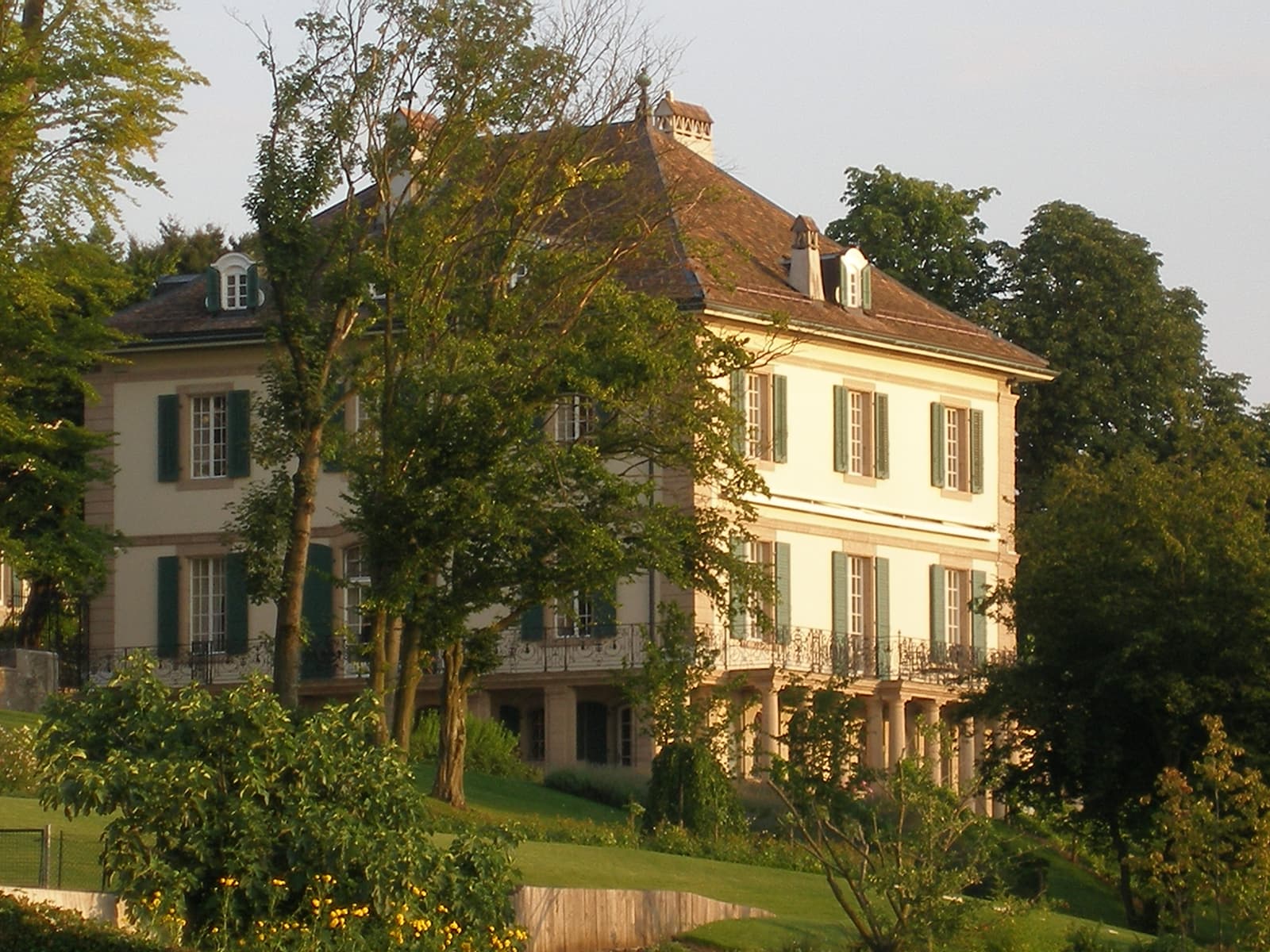
The lead image here is Villa Diodati in Geneva, where the 1816 ghost-story challenge set the novel in motion. It matters as a reminder that Frankenstein began as a literary experiment in voice and responsibility, before it became a global visual shorthand.[8]
1) What the 1818 novel actually optimized for
In the 1818 text, Shelley does not build horror through monster reveal alone. She builds it through narrative framing and delayed moral accounting: Walton writes to his sister; Victor tells Walton his history; the Creature then tells Victor his own history. The novel is an argument about who gets to narrate harm, in what order, and with what sympathy cost.[1][2]
That structure creates two durable engines:
- The creator-responsibility engine — scientific ambition is judged less by discovery than by post-creation duty.
- The voice-transfer engine — the “monster” is not only seen; he speaks, reasons, remembers, and indicts.
These engines explain why the novel keeps surviving format changes. Adaptations can drop large chunks of plot and still preserve recognizability, as long as they keep some form of responsibility conflict and some version of the Creature’s claim to personhood.
2) The first big mutation: 1823 stage compression
Richard Brinsley Peake’s 1823 play Presumption; or, the Fate of Frankenstein is the first major transformation point. The stage version had to solve practical constraints—time, staging, audience appetite for sensation—so it concentrated spectacle and externalized conflict. The Creature became more iconic as a body in motion, while philosophical density was reduced relative to the novel’s layered narration.[4]
This is not just “dumbing down.” It is medium logic. Theatre in that moment rewarded immediate legibility: recognizable silhouette, dramatic confrontation, moral polarity that can read across a crowded house. In adaptation terms, Presumption helped establish a pattern that repeats for two centuries:
- preserve the origin shock,
- intensify the confrontation scenes,
- reduce narrative nesting,
- move inward ethical debate into outward gesture.
By the time later adaptations arrive, this stage grammar has already taught audiences what they expect Frankenstein to feel like.
3) Universal 1931: the novel becomes a visual operating system
James Whale’s 1931 Frankenstein does something even more consequential than successful translation: it creates a reusable visual and sonic interface for the story. Even viewers who never watch the full film inherit pieces of it—laboratory architecture, electrical creation ritual, and a standardized “modern monster” silhouette that later media can quote in seconds.[3][5]
Three adaptation moves here became industry defaults:
- Creator-centered momentum: film pacing follows the scientist’s pursuit and hubris arc more tightly than Shelley’s polyphonic moral structure.
- Iconic embodiment: make-up and performance produce a body-template that can circulate independently of plot specifics.
- Set-piece memory: one or two scenes become stronger cultural memory units than the full narrative argument.
Once that happens, Frankenstein stops being only a novel with adaptations. It becomes a franchise grammar: different works can borrow a lab, a silhouette, a creation motif, or a “man plays God” line and still be instantly legible as “Frankensteinian.”
4) Hammer and after: from one story to a repeatable conflict chassis
Hammer’s The Curse of Frankenstein (1957) pushes the shift further by emphasizing serializable conflict mechanics. The center of gravity moves toward recurring creator obsession and escalating consequences, making the material easier to continue across installments and reinterpret across decades.[6]
This is where afterlife studies become more useful than fidelity scoring. If you ask “Is this faithful to the 1818 novel?” you get a narrow answer. If you ask “Which parts were selected to survive under new production economics and audience rhythms?” you see why the property stayed alive:
- the creator/creation asymmetry travels well,
- the moral panic around boundary-crossing science remains renewable,
- the body image is modular and easy to quote,
- the name “Frankenstein” itself drifts from authorial precision to cultural function.
In other words, adaptation did not merely reinterpret Shelley; it industrialized specific parts of Shelley.
5) The 21st-century return of split empathy
Recent stage revivals and reinterpretations often re-import complexity that earlier mass formats compressed. A visible example is the National Theatre’s 2011 Frankenstein, which cast Benedict Cumberbatch and Jonny Lee Miller in alternating Creature/Victor roles across performances. That casting decision makes a structural argument: creator and creation are not fixed moral positions but relational states the audience can experience from both sides.[7]
This move echoes what the novel already knew: the story is strongest when sympathy is unstable. If every adaptation turns into a simple “mad scientist plus monster attack” loop, the work shrinks. When an adaptation restores unstable empathy, the original ethical pressure returns.
6) Why Frankenstein keeps winning in new technological eras
Frankenstein survives because it can be retold whenever a society feels that invention speed has outrun accountability speed. That was true in early industrial modernity; it is true again in the age of AI systems, synthetic biology, and large-scale automation.
The most durable lesson from its adaptation history is practical:
- Stories that package responsibility conflict outlast stories that package novelty alone.
- A strong transferable image can carry a work globally, but only for a while unless moral depth gets periodically reloaded.
- Each medium preserves different layers: novels preserve interior argument; theatre preserves confrontation energy; film preserves icon memory; contemporary revivals can recombine all three.
So the best way to read Frankenstein in 2026 is not as a museum object and not as a meme source. Read it as a two-century stress test for how culture handles created power after the launch moment. Its afterlife shows that society repeatedly remembers the image first, then rediscovers the ethics when the next technological wave arrives.[1][2][3][7]
Sources
- Project Gutenberg, Mary Shelley, Frankenstein; Or, The Modern Prometheus (1818 text)
- Shelley-Godwin Archive, Frankenstein manuscript and editions context
- Wikipedia, “Frankenstein” (publication history and adaptation overview)
- Wikipedia, “Presumption; or, the Fate of Frankenstein” (1823 stage adaptation context)
- Library of Congress, “Frankenstein (1931)” (National Film Registry essay entry)
- Wikipedia, “The Curse of Frankenstein” (Hammer reconfiguration context)
- National Theatre Archive entry, Frankenstein (2011 production record)
- Image source (Wikimedia Commons, Villa Diodati, Geneva)