Ethan Frome is often remembered as a tale of thwarted love in deep snow: a poor New England farmer, a sick wife, a visiting cousin, one brief rush toward escape, and a crash that seals everyone inside the wreckage.[1][2] That outline is accurate, but it understates how carefully Edith Wharton builds Ethan as a character. He is not simply a man trapped by fate, nor simply a weak man who fails to act. He is a person who keeps translating feeling into obligation until obligation becomes the only language he trusts. By the time desire asks him for a sentence clear enough to change a life, he has spent years teaching himself to speak in postponements instead.[1][2]
That is why Ethan remains so unsettling. Wharton published the novella in 1911, after establishing herself with very different social worlds, yet she does not treat Starkfield as a picturesque regional detour.[2][3] She uses it as a pressure chamber. In the Berkshire landscape she knew from her Lenox years, weather, debt, family duty, and local scrutiny do not merely surround character; they enter it.[3][4] Ethan becomes the book's clearest proof. His tragedy lies in the way harsh conditions meet an already self-canceling temperament, until endurance starts looking to him like the highest available virtue.
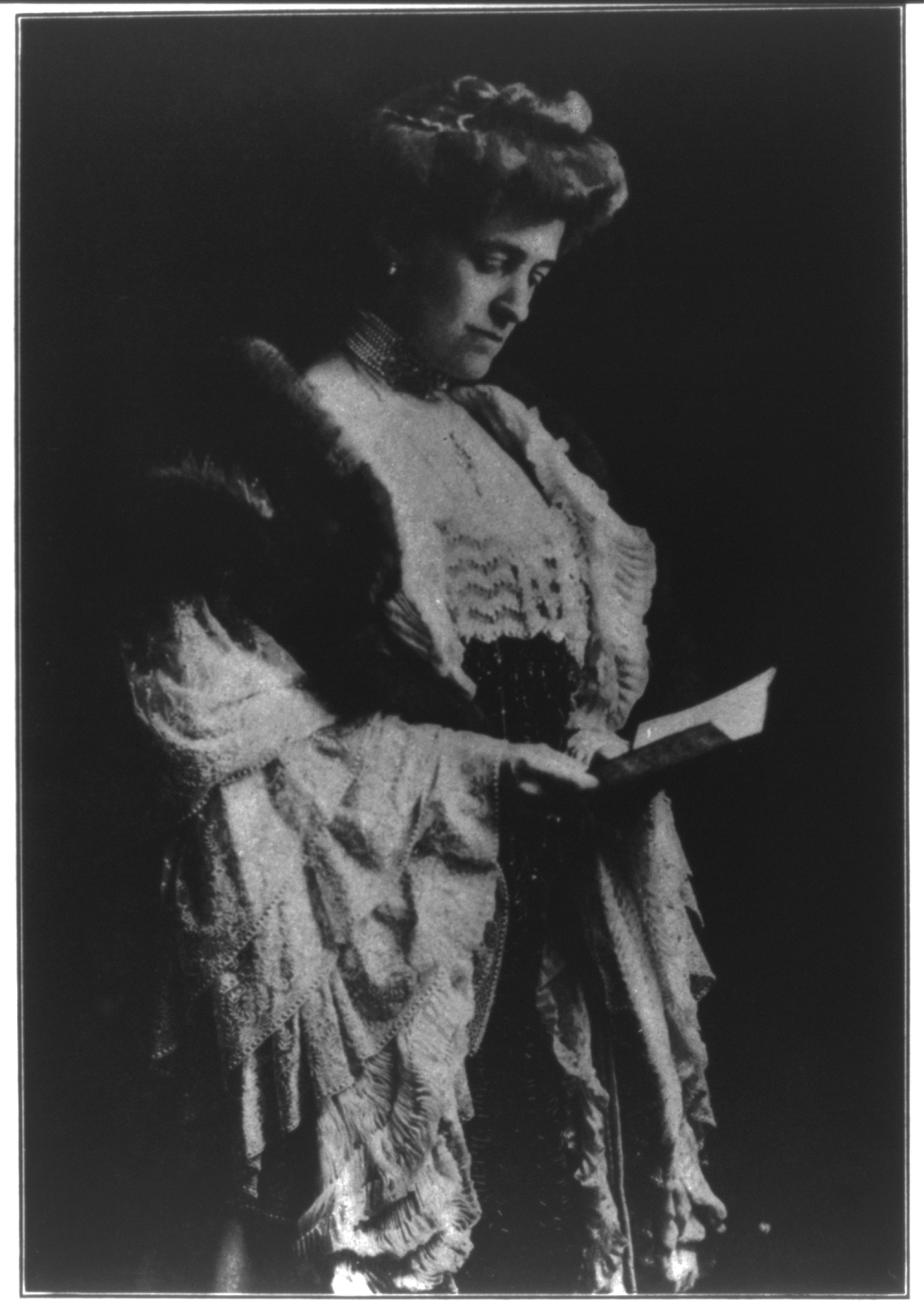
Image context: the cover uses an archival portrait of Wharton rather than a generic snow scene. That choice keeps the article close to the mind that designed Ethan's confinement. The winter in Ethan Frome matters, but the deeper structure is moral: what happens when a capable man turns patience into identity and cannot recover the difference between sacrifice and surrender.[5]
1) Ethan begins as a man built for more motion than the novel will allow him
One of Wharton's sharpest decisions is to introduce Ethan first as a damaged figure seen from outside, then work backward into the younger man who still has quickness, appetite, and unrealized direction.[1][2] The frame narrator meets a gaunt, taciturn survivor marked by the old "smash-up," but the central narrative reveals someone who had once wanted learning, movement, and a more expansive life.[1] Ethan had studied enough science to imagine technical work, had once hoped to leave the farm, and still registers beauty with unusual intensity. He is not naturally dull. He is a man who can perceive more than his circumstances can use.[1][2]
That distinction matters for character study. Ethan's suffering would be simpler if he had no inward surplus. Wharton instead gives him just enough imagination to feel what he is missing and not enough practical freedom, nerve, or social room to convert feeling into action. Britannica's summary catches one part of this when it describes him as a man of hidden depths in an inward-looking community.[2] The more painful truth is that Ethan shares the community's inwardness too. His sensitivity does not teach him expression. It deepens his private weather.
From the beginning, then, Ethan is divided. He can recognize grace, intelligence, and livelier possibilities when they appear, but recognition does not become decision.[1] He experiences alternatives as pressure rather than as plan. This is why Wharton makes him so memorable. Many tragic characters break because their desires are too large. Ethan breaks because his desires remain partially inarticulate, as though he can only feel them fully in the instant before they need words.
2) Starkfield is not just background; it is the climate of Ethan's moral habits
Readers often quote the line that "most of the smart ones get away," and the line matters because it sounds like social diagnosis while also becoming Ethan's biography in miniature.[1] He does not get away. First his father, then his mother, then his wife require staying, and each act of staying acquires moral weight because someone genuinely does need care.[1] Wharton does not trivialize that duty. Ethan is not wrong to feel responsible. The harder point is that responsibility becomes his preferred explanation even after it has stopped being his only option.
This is where environment and character fuse. Starkfield's winters, failing farm economy, distances, and narrow talk make every departure costly.[1][2] Yet the place alone does not finish Ethan. What finishes him is the habit of accepting burden as identity. He learns to think of himself as the one who remains, the one who carries, the one who can absorb deprivation without claiming a counter-right to pleasure or change. A temperament of reticence finds perfect shelter in a village that already mistrusts exposed desire.
Wharton herself had observed a different New England from the drawing rooms that first made her famous.[3][4] That turn matters. In Ethan Frome, the social question is no longer how an elite market prices beauty or status. It is how scarcity trains character. Ethan's virtue is real, but it is also dangerous, because it keeps maturing in only one direction. He gets better at bearing than at choosing.
3) Mattie Silver matters because she lights up capacities Ethan has practiced not using
Mattie does not enter the novella as a grand philosophical alternative. She arrives first as warmth, color, movement, and the possibility of being addressed in a livelier key.[1][2] Around her, Ethan's perceptions sharpen. The walk home from the dance, the shared domestic interval while Zeena is away, the red pickle dish, the smallest shifts in tone at supper: Wharton builds desire through minute enlargements of attention.[1] Ethan becomes easier to see in these scenes because he is briefly more available to himself.
This is why the affair of feeling matters more than the plot label "love triangle" suggests. Mattie reveals that Ethan has not become emotionally empty. He has become emotionally delayed. His tenderness comes alive most intensely when it cannot quite present itself as claim.[1] He can cherish a look, a household object, a few hours of reprieve, but once desire begins asking for a future, he recoils into the familiar grammar of renunciation.
Wharton is exact about the difference between feeling and agency here. Ethan can imagine elopement, calculate money, draft the letter, and even stage small moments of defiance, yet he cannot persist through the practical sequence that action requires.[1][2] His problem is not that he never knows what he wants. His problem is that wanting remains most vivid for him in suspended form. As soon as desire must survive daylight, accounts, train times, and public consequence, duty rushes back in and retakes the field.
4) The book's central pun is that endurance becomes Ethan's borrowed religion
Few details in Wharton's fiction are as ruthless as the old gravestone bearing the words "Ethan Frome and Endurance his wife."[1] Ethan notices it early, and the phrase works like a dark prophecy. On one level it is local accident, a quaint old inscription. On another it names the whole trap. Endurance begins as a family inheritance, then hardens into the moral style by which Ethan reads himself.
That is why I think Ethan is tragic in a stricter sense than the novella's melodramatic reputation suggests. He does not simply endure because he must. He comes to feel that enduring is what makes him decent.[1][2] Zeena's illnesses, the farm's decay, the town's watchfulness, and the long habit of self-denial all contribute to that conviction. By the time he contemplates leaving, he is not only measuring money and duty; he is also confronting the possibility that a man who chooses his own happiness may no longer recognize himself as good.
This is Ethan's deepest character flaw, and Wharton treats it without contempt. His conscience is real. So is his fear of injuring others.[1] Yet conscience, in him, has narrowed into a structure that can register obligation far more clearly than possibility. He is not ethically empty; he is ethically lopsided. The result is that endurance, which ought to be one virtue among others, swallows every competing claim and begins to masquerade as the whole moral life.
5) The sled crash is not a blaze of romantic freedom but the last form of failed decision
The novella's most famous scene can look, at first glance, like sudden action at last: Ethan and Mattie choosing a single violent moment over slow separation.[1][2] But Wharton does not frame the crash as triumphant passion. She frames it as the desperate endpoint of people who cannot imagine a durable life together and cannot endure the ordinary terms of parting. In that sense the "smash-up" is less an eruption of freedom than a final collapse of agency into impulse.
That reading matters because it protects Ethan from sentimentality. If the crash completed a pure love story, he would become noble through extremity. Wharton denies him that release. The failed suicide leaves everyone alive inside a more grotesque dependency than before.[1][2] The future he could not choose gets replaced by a punishment he did not fully choose either, and the novella returns to its harshest idea: evasion is itself a maker of destiny.
Here again Ethan's character is central. He has spent the book recoiling from clear action until only catastrophic shorthand seems available. That is why the ending hurts so much. It does not reveal that fate always wins. It reveals what can happen when a man lets all legitimate forms of self-assertion expire and then seeks transcendence in one impossible stroke.
6) Why Ethan Frome still matters
Ethan remains modern because the confusion at his center remains modern. Many people still inherit situations in which duty is undeniable, resources are thin, and leaving would injure someone real.[1][2] Wharton never insults that difficulty. What she adds, with unusual precision, is the danger of making a moral identity out of self-cancellation. Endurance can preserve a person through one season and then quietly become the habit that keeps him from claiming any future at all.
That is why Ethan Frome is more than a winter ruin or a regional classic. It is a character study of someone who can feel beauty, tenderness, and alternative life, yet repeatedly converts those recognitions into further silence. Ethan's tragedy is not that he has no conscience. It is that conscience, weather, poverty, and reticence join so tightly that he comes to treat his own diminishing as proof of worth.[1][2][4] Wharton saw how terrible that bargain could be. She built Ethan as the kind of man who keeps paying it until he has almost nothing left but the payment itself.
Sources
- Edith Wharton, Ethan Frome (Project Gutenberg full text).
- Encyclopaedia Britannica, "Ethan Frome".
- Encyclopaedia Britannica, "Edith Wharton".
- The Mount, "Edith Wharton Biography" (Lenox years and writing context).
- Wikimedia Commons, "File: Edith Wharton three quarters length portrait.jpg" (lead image source; Library of Congress portrait).