A tortoise has a dark back and a brighter underside. In the second sketch of Herman Melville's The Encantadas, that small observation becomes advice about how to look at the world. Turn the creature over, the narrator says, and you can keep its agreeable surface in view. There is a catch, tucked into the explanation: in his account, the overturned animal cannot right itself. The spectator's cheerfulness requires someone else to stay helpless.[1]
The sketch is called “Two Sides to a Tortoise.” Its opening could furnish a sensible little sermon about perspective. Its ending makes that sermon difficult to swallow.
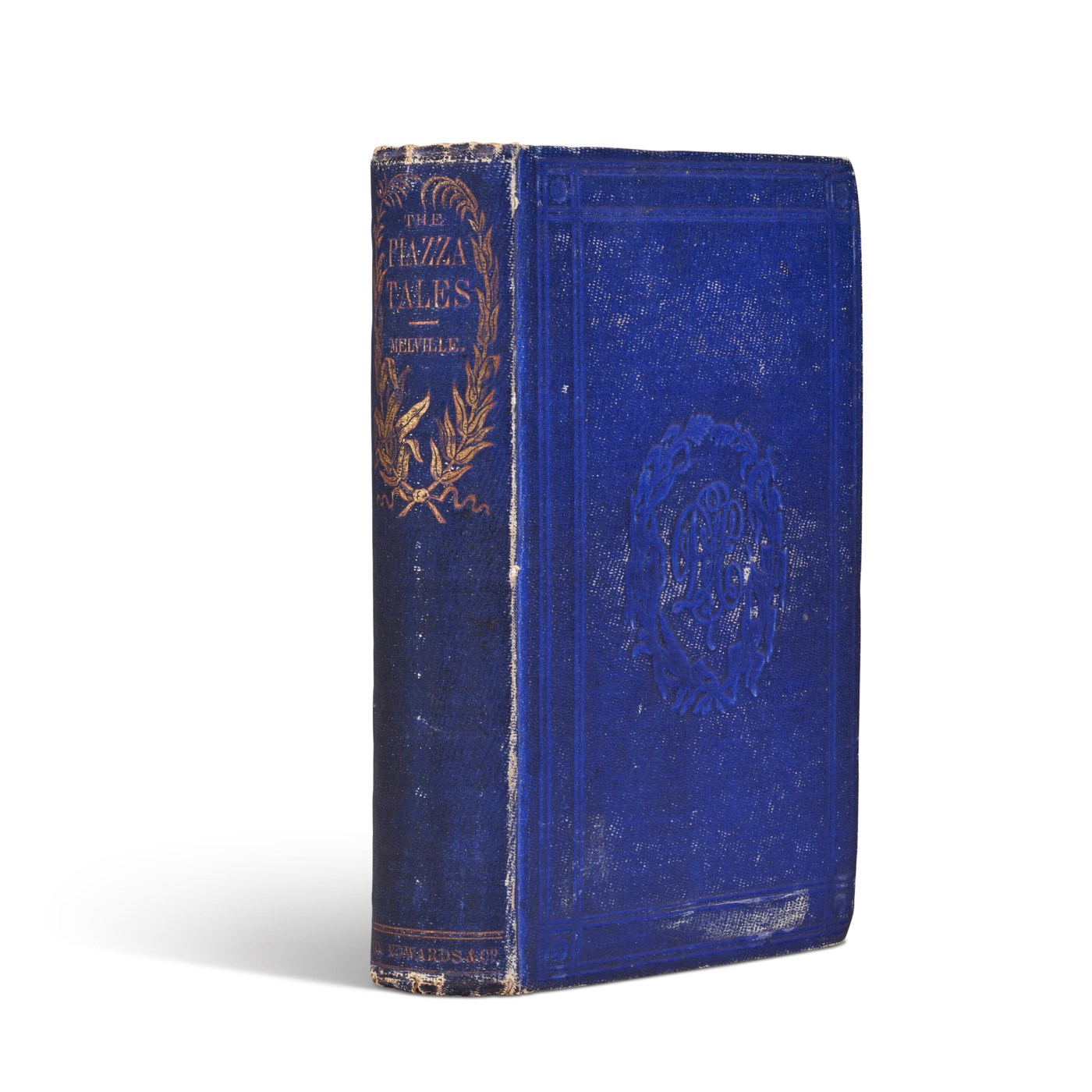
The book places The Encantadas alongside “Bartleby” and “Benito Cereno,” among other stories; the University of North Texas catalogs the 1856 edition published by Dix & Edwards.[2] Within the island sketches, the tortoise passage follows an opening vision of the Galápagos as scorched, haunted ground. At the end of Sketch First, the narrator even imagines a spectral tortoise intruding into candlelit parties far from the islands. A change of location has failed to make the memory sociable.[1]
Sketch Second appears to offer a remedy. The animal's underside sometimes has a yellow or golden tint. The narrator grants the reader permission to enjoy it, then adds a warning: “be honest, and don't deny the black.” He also rebukes the opposite observer, who sees the dark upper shell and concludes that the whole creature is gloomy. Both judgments mistake the visible surface for everything that exists.[1]
But the two mistakes are physically different. One spectator sees the tortoise in its ordinary position. The other turns it upside down and keeps it there. The warning to the optimist includes the phrase “because you have done this”: the observer's action is precisely why the evidence needs questioning. You have arranged the view you find reassuring. You cannot then treat its pleasantness as an independent discovery.[1]
That is my reading of the passage's quiet cruelty. The narrator does not pause to condemn the hypothetical handling. He moves briskly from the animal's inability to recover to the spectator's obligation to be fair. The tortoise's predicament almost disappears inside a lesson about intellectual honesty. A reader has to hold it in view.
Then the sketch changes scale. After the general advice comes an episode aboard ship: a returning boat brings three enormous tortoises, which are hauled onto the deck. The narrator inspects them by lantern light. Their battered shells suggest shields, ruined buildings, and records of an almost unimaginable age. Finally, he confesses, “I no more saw three tortoises.” His imagination has enlarged them into ancient architecture.[1]
The sentence sounds like a triumph of perception. It also records a disappearance. As the comparisons accumulate, actual animals become harder to see. The narrator can find whole civilizations in their shells, but this abundance of meaning does not tell him what he owes the creatures carrying them.
During the night, one tortoise presses against the foot of the foremast, trying to force a passage. The others stumble over equipment. The narrator interprets their persistence as a curse: a fixed determination to go straight through an obstructed world. Yet the immediate obstruction belongs to the ship onto which people have brought them. His account keeps widening a local predicament into a universal tragedy.[1]
This does not make the description worthless. Its sound and movement are extraordinary: heavy bodies drag, strike, and fall while a sleepless listener imagines the islands they have left. But the beautiful expansion also lets the listener drift away from his own setting. He dreams himself riding a tortoise beneath the weight of the universe. He occupies the animal's back even in his identification with it.
Gilbert Schricke's 1984 essay describes The Encantadas as a work that unsettles the reader through misleading appearances and concealed meanings.[3] Here, the uncertainty reaches into the narrator's eloquence. His reverence feels persuasive. The next paragraph tests how much it changes his behavior.
The following evening, he joins his shipmates in eating tortoise steaks and stews. After supper, he helps turn the curved shells into soup tureens and polishes the yellowish undersides into serving trays. The entire reversal occupies one short paragraph. A night of visionary grandeur becomes a cheerful meal followed by handicraft.[1]
Those trays return us to the opening advice. The bright side can now remain uppermost indefinitely. Its owner will never turn it over. What began as a proposition about selective attention ends with an object made convenient for human use.
The narrator supplies no confession equal in scale to his earlier wonder. That imbalance is the passage's lasting disturbance. His capacity to admire survives comfortably beside his capacity to consume. By the end, the question is what admiration has allowed him to overlook—and whether our pleasure in his sentences has followed him there.
Sources
- Herman Melville, The Piazza Tales (1856), Project Gutenberg — The Encantadas, end of Sketch First and complete Sketch Second, “Two Sides to a Tortoise”; primary text for the quotations and passage analysis.
- University of North Texas Libraries, The piazza tales — catalog record for the 1856 Dix & Edwards edition, including its contents and publication details.
- Gilbert Schricke, “Melville: ‘The Encantadas’ or the Deceitfulness of Appearances,” Journal of the Short Story in English 2 (1984), pp. 147–154 — opening argument on ambiguity and the reader's uncertainty, preserved by Persée.
- Christie's, The Piazza Tales, William S. Reese collection, lot 646 — source photograph and condition description of the blue cloth first edition. The detailed catalog entry identifies the publication year as 1856; the webpage heading incorrectly says 1858.