The first bird to sing in Paul Laurence Dunbar’s “Sympathy” is outside the cage. It has a whole spring morning for company. Grass stirs, water runs, a bud opens. The captive bird gets two stanzas further into the poem before we hear its voice. By then we have heard its wing strike the bars. Imagine hearing the two birds from the next room, with the window open, and guessing from their songs which one was free. Dunbar spends much of the poem supplying what a listener in that room would miss. In “We Wear the Mask,” he gives the singers themselves a say in how much the listener gets to know. [1][2]
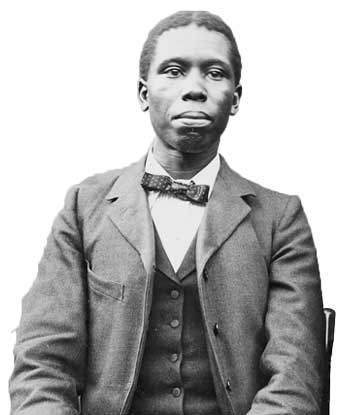
In the first stanza of “Sympathy,” try following the little word “when.” The speaker announces that he knows how the bird feels, takes five lines to describe when it feels that way, then repeats his claim. There was room in those lines to name an emotion. Instead we get a minute outdoors, right down to the scent escaping a flower. A scent can reach the perch. The perch can even give the bird a fine view. Each pleasure requires a sense the bird possesses, and each makes the use of its wings seem a more ordinary thing to want. [1]
Then Dunbar finds a rhyme for “cling.” The bird has flown at the bars and had to retreat to its perch. A line later we reach the bough where it longs to be, “a-swing.” Say the two words aloud. The mouth makes almost the same movement twice, once for the tight grip that keeps the bird upright and once for the give of a branch beneath its weight. That little pleasure in the second sound costs the reader nothing. The bird has blood on its wing. By the time it sings, we have had a small, uncomfortable education in how easily a poet can give pleasure out of an injury. [1]
“We Wear the Mask” puts that ease to work. Its second stanza wonders what business the world has “counting all our tears and sighs.” Counting is a wonderfully chilly choice. Think of the diligence it would take to record every sigh, and how little such a tally would tell you about even one of them. At the end of the stanza the speakers give the world permission to look. The permission runs straight over a line break. For the instant it takes to go from “while” to “We wear the mask,” you might almost think you had been invited to see their faces. [2]
Dunbar knew what it was to stand before people who came expressly to hear him. William Dean Howells’s praise of his dialect verse in 1896 helped bring him a national readership, and he toured as a public reader in the United States and Britain. Other listeners came to his poems at home. Writing in American Poets in 2022, Joanne M. Braxton recalls hearing Dunbar recited by her mother from infancy and later hearing his work performed in her African Methodist Episcopal church. Imagine what a difference that makes to the word we. Someone hearing a parent recite the poem might learn to say the word along with her. A stranger who comes to count sighs has been given a different part entirely. [3][4]
Near the end of “We Wear the Mask,” the singers turn to Christ. A person standing beside them could hear every syllable of the prayer and still be the wrong person to answer it. The bird’s final stanza makes the same fine distinction. Its plea goes “upward to Heaven.” Beside the cage stands a speaker who can tell us where that song is going. The refrain grants him considerable intimacy with another creature, and Dunbar lets him keep it. Read the last line aloud, though, and listen to the verb he gets. He knows. The bird still has the singing part. [1][2]
Sources
- Paul Laurence Dunbar, “Sympathy.” Academy of American Poets.
- Paul Laurence Dunbar, “We Wear the Mask.” Academy of American Poets.
- National Park Service, “Paul Laurence Dunbar.” Biographical sketch and portrait, circa 1900.
- Joanne M. Braxton, “Paul Laurence Dunbar at 150.” American Poets, Spring–Summer 2022. A recollection of reciting and teaching Dunbar.