Many readers delay Dubliners for the wrong reason. They expect a slab of dutiful gloom: fifteen early stories, lots of Catholic furniture, much gray weather, and a final famous snow scene that everyone tells you to admire from a respectful distance. That is a poor way in. A better entrance opens once you see the collection as a designed sequence of blocked motion, where each story sharpens the next and where small material details such as coins, tram fares, drinks, window frames, and songs do real structural work.[1][2][3][4]
That sequence matters because Joyce did not publish the book as a loose sampler. The stories were written in the first decade of the twentieth century, delayed by long publication trouble, and arranged to move from childhood to adolescence, maturity, and public life.[2][4] The ordering is your first reading tool. If you treat the book like a playlist of famous pieces, it can seem monochrome. If you treat it as a progression of social enclosures that widen as the people inside them fail to move, the collection starts to breathe.[1][2][4]
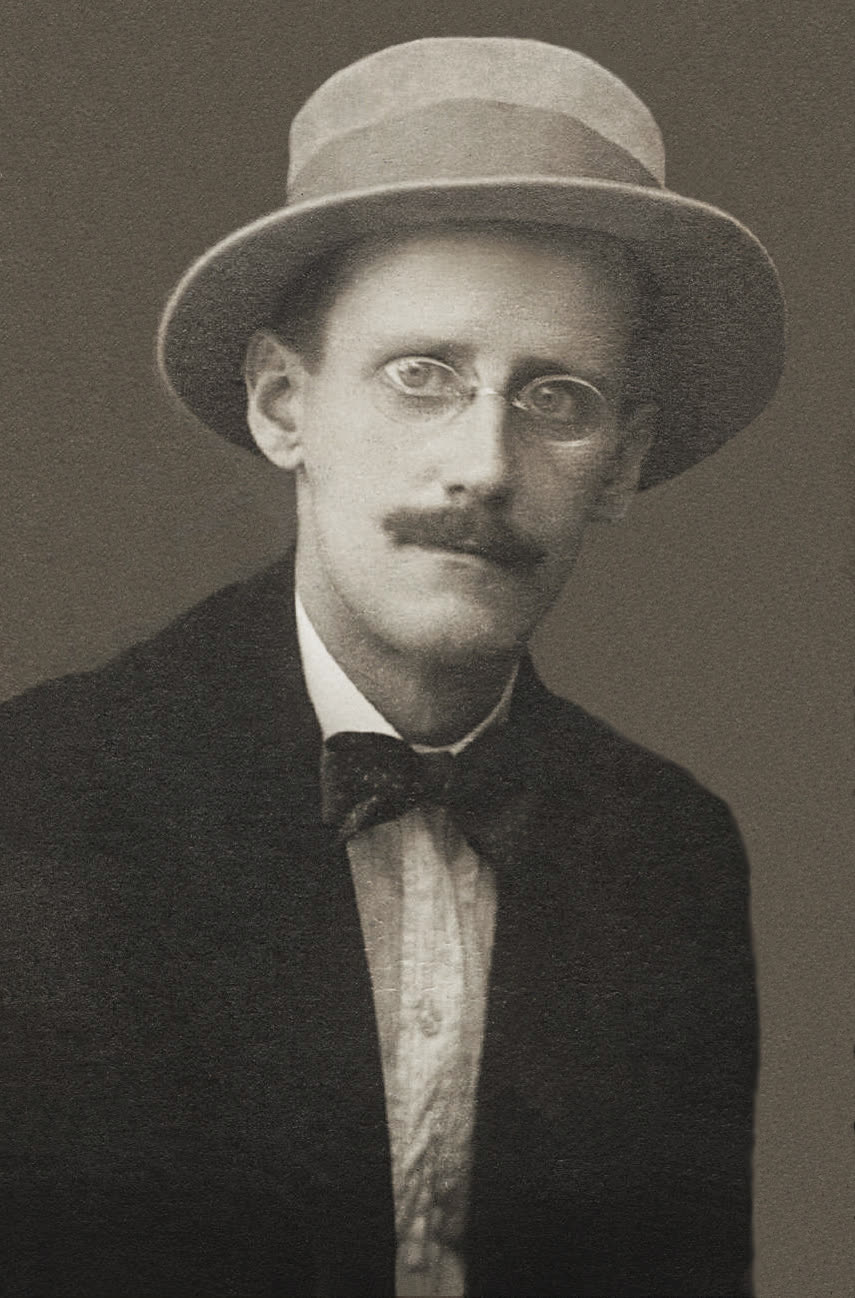
Image context: the cover uses a real 1915 photograph of James Joyce from Wikimedia Commons rather than a book jacket or illustration. That choice suits this guide because the book's tension is rarely spectacular. It lives in posture, restraint, and the pressure that gathers in ordinary rooms before anyone openly admits what has happened.[5]
1) Read the book in order, and read the first three stories close together
The best first move is also the least glamorous one: do not skip directly to "The Dead." Start at the front and keep "The Sisters," "An Encounter," and "Araby" close enough together that they still feel like one continuous apprenticeship in disappointment.[1][2] Joyce's own framework for the book, echoed by the James Joyce Centre, treats the collection as grouped stages rather than isolated gems; the stories gain force when the early lessons in fear, fantasy, and anticlimax keep echoing forward.[4]
"The Sisters" gives you a child staring at adult secrecy and learning that explanation arrives warped.[1] "An Encounter" turns schoolboy escape into something stranger and dirtier than adventure.[1] "Araby" then delivers the collection's first great collapse of imagined grandeur into tawdry light. None of these stories is long, but together they teach the reader what kind of energy Dubliners runs on: not event after event, but desire meeting atmosphere, ritual, money, embarrassment, and delay.[1][3]
If you read those three stories in one or two sittings, the collection's tone stops feeling merely sad. It starts to feel calibrated. Joyce is training your eye toward what will matter later: overheard speech, tiny humiliations, bad timing, and the painful distance between private script and public room.[1][4]
2) Keep one small note page with three columns: money, thresholds, performance
Most first-time readers over-annotate names and under-annotate pressure points. A lighter method works better. Keep one page only, and divide it into three recurring columns:
- Money: fares, wages, drinks, gifts, debts, and the price tags hidden inside courtship or respectability.
- Thresholds: doors, windows, streets, quays, staircases, and literal moments of standing still before crossing.
- Performance: songs, speeches, flirtation, hospitality, nationalism, piety, and every other script people use to keep the room arranged.
That small grid turns the book from "fifteen realistic stories" into a pattern machine. Money keeps surfacing because Joyce is interested in what feeling costs inside a colonized city of clerks, shop counters, offices, bars, and rented rooms.[1][3] Thresholds matter because people in Dubliners are always almost leaving, almost speaking, almost choosing. Performance matters because many of the characters survive by repeating a social part whose lines no longer fit the life underneath.[1][4]
Once you start reading that way, stories that can seem static begin to tilt. Eveline standing at the rail is no longer just a girl hesitating; she becomes one more Dublin body stopped at a threshold.[1] Farrington in "Counterparts" is not simply a bad-tempered office worker; he is a man moving between workplace humiliation, pub bravado, and domestic brutality, all of it measured by money, drink, and failed masculine performance.[1] Gabriel in "The Dead" becomes legible for the same reason. His speech, his clothes, his social ease, and even his flirtatious anxieties are forms of staging before the story makes him hear another life sounding beneath the one he thought he controlled.[1][3]
3) Treat "paralysis" as a narrative method, not a slogan
Readers often arrive already knowing that Joyce once framed Dublin as a "centre of paralysis."[4] That phrase is useful, but only if you keep it from becoming a lecture-note label. In the stories themselves, paralysis is not abstract civic diagnosis. It is a method of arranging scenes so that motion gathers and then fails, or so that recognition comes a beat after action should have been possible.[1][4]
That is why so many crucial turns in Dubliners happen at the end of stories or in the half-light after a social ritual seems complete. The bazaar in "Araby" does not explode; it drains. Eveline's decision is not dramatized as heroic conflict; it hardens into stillness. "A Painful Case" does not give you sentimental reunion; it gives you self-knowledge arriving under the sign of irreversibility.[1] Read the endings slowly. Joyce likes last-paragraph contractions, when a character's world suddenly narrows or, just as painfully, becomes visible at the exact moment it can no longer be altered.
This is also why Dubliners should not be rushed in giant batches. The stories are short, but their real movement is delayed and comparative. One stalled crossing teaches you how to read the next one. One scene of embarrassment tunes your ear for the next room where politeness begins to rot.[1][2]
4) When the middle stretches feel dry, read by pairings instead of by plot appetite
The collection often feels hardest in the middle, where no single story carries the anthology's halo and where Joyce turns harder toward adults who talk themselves into smaller lives. Do not answer that dip by skimming. Change the unit of reading instead. Pair stories by pressure system.[1][4]
One useful route is "Eveline" with "Two Gallants": both ask what forms of exchange hide inside romance and escape.[1] Another is "A Little Cloud" with "Counterparts": professional injury curdles into performance, resentment, and displaced force.[1] Then read "A Painful Case" as a cold preparation for "The Dead," because both stories care about self-protective people who discover feeling too late, though one discovery shrivels and the other opens into a harsher kind of largeness.[1]
This method helps because it keeps the collection cumulative. You stop asking, "What is the next plot?" and start asking better questions: Who wants motion here? What social script blocks it? What object, phrase, or gesture remains after the room clears? Those questions give the book traction even when the action looks modest on the surface.[1][3][4]
5) Let "The Dead" arrive as a scale change, not as a detached masterpiece
Yes, "The Dead" is extraordinary. But it works best when you reach it with the whole book still active behind you. By then Joyce has trained you to notice failed courtship, class nerves, hospitality as theater, songs as memory triggers, and the way a room can hold more history than the people inside it understand.[1][3] The last story widens those habits of attention. It begins as a dinner-party piece with comic motion and social tact, then slowly turns into a meditation on marriage, memory, the dead, and national weather.
The Dublin context matters here. Local readings of Joyce's city stress how inseparable the stories are from actual streets, quays, institutions, and social routes.[3][4] "The Dead" matters not because it abandons that material world for pure lyric transcendence, but because it absorbs all that ordinary civic texture and then changes scale. When the story reaches the famous report that "the snow is general all over Ireland," the line lands because the book has spent fourteen stories teaching you how private disappointment can already contain a whole social climate.[1]
That is the real payoff of reading Dubliners well. The collection stops looking like a museum tray of early pieces and starts reading like a pressure map of a city where money, shame, longing, habit, and public performance keep touching one another. Once that map comes into focus, the book's apparent stillness becomes one of the most exact narrative motions in modern literature.[1][2][4]
Sources
- James Joyce, Dubliners (Project Gutenberg full text).
- The Morgan Library & Museum, "Dubliners" (online exhibition note on structure, publication, and themes).
- Dublin City Council Library, "Dubliners by James Joyce" (local context and collection overview).
- James Joyce Centre, "Work" (Joyce's "centre of paralysis" framing, story grouping, and publication context).
- Wikimedia Commons, "James Joyce by Alex Ehrenzweig, 1915 cropped.jpg" (archival photograph used as cover image).