Dorothea Brooke enters Middlemarch with a dangerous kind of innocence. She does not want pleasure, status, or a flattering marriage-market victory. She wants an enlarged life, something closer to vocation than to comfort.[1][2] George Eliot makes that desire admirable from the start. She also makes it vulnerable to one of the novel's hardest truths: a hunger for seriousness can misread dryness as depth, renunciation as purpose, and self-sacrifice as a shortcut to usefulness.[1][4]
That is why Dorothea remains so alive. A weaker heroine would simply be deceived by Casaubon and then corrected by experience. Eliot gives Dorothea a more difficult arc. Her error grows from the same moral largeness that makes her worth caring about. She wants to be used by something greater than herself, and because that desire is genuine, she initially mistakes subordination for calling.[1][3] The character study therefore has to follow not only what Dorothea wants, but how she learns to revise the scale of that wanting.
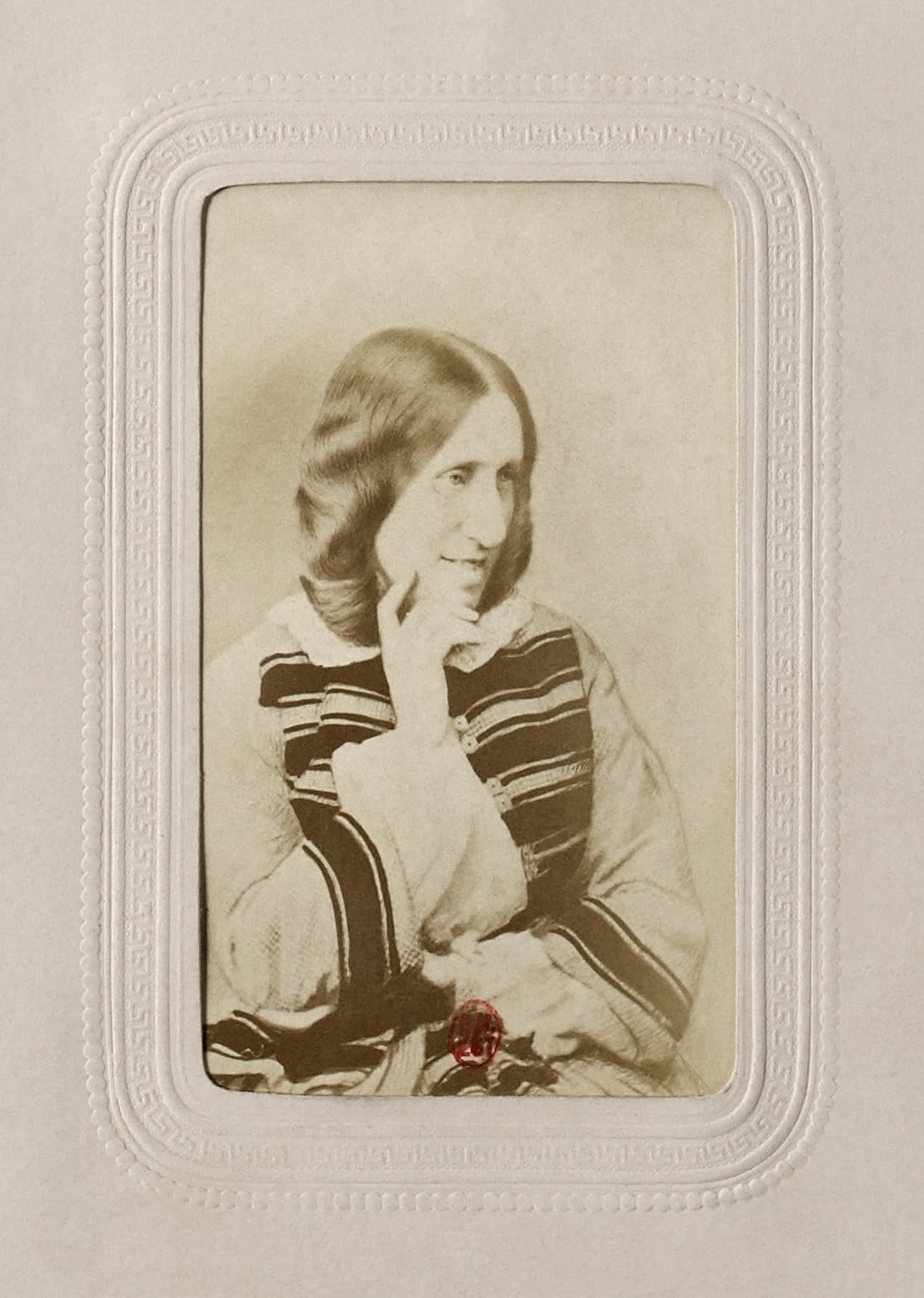
Image context: the cover uses an archival photographic portrait of George Eliot rather than an illustration of Dorothea. That choice fits the article because the subject here is not costume drama atmosphere. It is Eliot's moral design: how a heroine with saintly aspiration gets educated out of grand illusion and into difficult, ordinary efficacy.[6]
1) Dorothea begins as a seeker of vocation, not as a romance heroine
The novel's Prelude matters because Eliot frames Dorothea against Saint Teresa and the problem of "ardent deeds" in a diminished modern world.[1][2] That opening keeps readers from reducing her to a young woman who merely chooses the wrong husband. Dorothea wants a life commensurate with moral energy. She is rich enough to drift into decorative benevolence, yet she is repelled by ornament without purpose. Cottage plans, charitable schemes, religious seriousness, and intellectual submission all attract her because she longs to make her life count on a scale larger than comfort.[1][2][4]
This is the first thing Eliot gets exactly right about character. Dorothea's intensity is not vanity wearing pious dress. It is a real appetite for usefulness. But appetite is still appetite. It reaches outward before it knows the quality of what it reaches for. Dorothea can feel the pressure of unused purpose more clearly than she can read the institutions, men, and forms that promise to organize that purpose. Her idealism therefore arrives without enough suspicion.[1][3]
That combination explains her distinctive force. Dorothea is not Emma Woodhouse, delighting in social play, and she is not Maggie Tulliver, overflowing the banks of family life through excess feeling. She is a woman who believes the soul should be employed.[1][2] Eliot builds enormous pathos from that belief because nineteenth-century provincial life offers very few legitimate channels for female vocation at Dorothea's scale.
2) Casaubon is her great misreading because she mistakes aridity for magnitude
Dorothea's marriage to Edward Casaubon only looks implausible if readers assume she is choosing a man. Eliot makes clear that she is really choosing an idea of labor, authority, and access to history.[1] Casaubon appears to her as a gateway to the severe intellectual life, a scholar who has given himself to a vast synthesis beyond ordinary vanity. Dorothea imagines herself helping with that labor, entering a house of thought where personal comfort will properly shrink before high purpose.[1][3][4]
The tragedy is that Casaubon does have scale, but only in the dead sense. His famous "Key to All Mythologies" is less a living inquiry than a mausoleum of postponed completion.[1][2] Dorothea mistakes that arrested scholarship for depth because she has not yet learned that seriousness can be sterile. Eliot is ruthless here. She does not mock Dorothea's aspiration. She shows how aspiration, when joined to inexperience, can become vulnerable to false objects.
That is why the marriage matters beyond plot. Casaubon is not simply a bad husband. He is the embodiment of one possible answer to Dorothea's yearning: submit yourself to a grand design, erase private desire, call the erasure noble. The Roman journey and the chill of married life then expose the real cost of that answer.[1] Dorothea finds that she has entered not a larger world but a narrower one, governed by suspicion, emotional starvation, and the constant demand that she revere work whose animating life has already gone out of it.[1][4]
3) Dorothea's greatness lies in correction, not in purity
At this point many novels would reward the heroine for being inwardly right all along. Eliot chooses something finer. Dorothea is not right all along. She has to learn. The learning hurts because it requires her to revise her own self-conception, not just her opinion of Casaubon.[1][5] If she admitted only that she had married badly, the lesson would stay external. What Eliot presses harder is that Dorothea's own hunger for sublimity helped produce the mistake.
This is the deepest reason she becomes such a lasting character. She can suffer disillusion without turning cynical. She can recognize that an imagined greatness was false without deciding that greatness itself is childish. After Casaubon's death, the codicil tying her inheritance to her relation with Will Ladislaw tries to govern her even from beyond the grave.[1] Yet Eliot does not center the episode as mere melodrama. She uses it to test whether Dorothea will keep allowing dead authority to define the meaning of her life.
Dorothea's answer arrives through an increasingly disciplined relation to reality. She grows better at reading motives, better at distinguishing pressure from principle, better at seeing that moral action requires proportion as well as fire.[1][4][5] Correction becomes her true form of strength. She keeps her largeness, but she no longer confuses largeness with monumental form.
4) Will Ladislaw matters because he changes the weather around her aspiration
Will is easy to misread as the merely attractive alternative to Casaubon: youth instead of age, responsiveness instead of desiccation, life instead of scholarship.[1][2] That contrast is there, but Eliot gives him a deeper function. Will matters because in his presence Dorothea's energy stops having to travel only through reverence and duty. The world around her becomes more breathable.
This does not make the novel a simple liberation romance. Will is inconsistent, proud, and often reactive.[1] But he does something Casaubon never could: he addresses Dorothea as a living intelligence rather than as an assistant to dead labor. Under that altered pressure, Dorothea's vocation-seeking begins to change shape. She no longer imagines usefulness as pure self-erasure into a great man's project. She begins to recognize that affection, conversation, reform, money, marriage, and social choice all belong to the moral field.[1][3]
That widening matters because it rescues her from one of Eliot's central dangers: the temptation to adore abstract goodness while neglecting actual relations. Dorothea's feelings for Will are important not because they rescue her into private happiness alone, but because they force her to join moral seriousness to human reciprocity. She stops mistaking loftiness for truth.
5) The finale makes her smaller in scale and larger in truth
Readers who want triumphant completion often resist Middlemarch's ending, in which Dorothea's energies do not issue in public sainthood or grand historical fame.[1][2] Eliot refuses that reward on purpose. The famous final judgment about "unhistoric acts" is not a demotion. It is the novel's hardest clarification.[1] Dorothea had once wanted a life illuminated by visible greatness. Eliot ends by showing that real consequence is often dispersed, relational, and resistant to monument.
This is where Dorothea's character arc becomes fully intelligible. She has not failed because her name does not become historical thunder. She has learned to detach value from spectacle. Money directed well, sympathy used in time, marriages entered for living rather than vicarious glory, political and domestic influence exercised without theater: these are smaller goods than Saint Teresa's legend, but they are also more humanly available.[1][3][5]
Dorothea's greatness therefore survives by changing measure. Eliot keeps the original ardor but removes the self-dramatizing dream that ardor must culminate in visible exception. What remains is harder and, in some ways, braver: a life willing to do good without requiring epic form.
6) Why Dorothea Brooke still matters
Dorothea stays modern because many ambitious moral selves still begin where she begins. They want a serious life and are therefore drawn toward structures that look weighty, sacrificial, and elevated. Institutions, ideologies, and charismatic authorities continue to exploit that hunger by offering submission in the language of purpose.[1][4] Eliot saw the trap early. A noble appetite does not protect a person from misreading. Sometimes it deepens the misreading.
That is why Dorothea Brooke belongs among Eliot's greatest creations. She gives readers neither the glamour of the flawless idealist nor the flatter satisfaction of total disillusion. She gives something more exact: a woman whose soul is large enough to make a consequential mistake, large enough to survive it, and large enough to keep acting after she has surrendered the fantasy of heroic destiny. In character-study terms, that is her final distinction. Dorothea does not become less ardent. She becomes more exact about what ardor can honestly serve.[1][2][5]
Sources
- George Eliot, Middlemarch (Project Gutenberg full text).
- Encyclopaedia Britannica, "Middlemarch".
- Encyclopaedia Britannica, "Dorothea Brooke".
- Nancy Henry, "George Eliot," Stanford Encyclopedia of Philosophy.
- Manya Lempert, "Plasticity, Form, and the Matter of Character in Middlemarch," Stanford Humanities Center / Arcade.
- Wikimedia Commons, "File:George Eliot BNF Gallica.jpg" (lead image source).