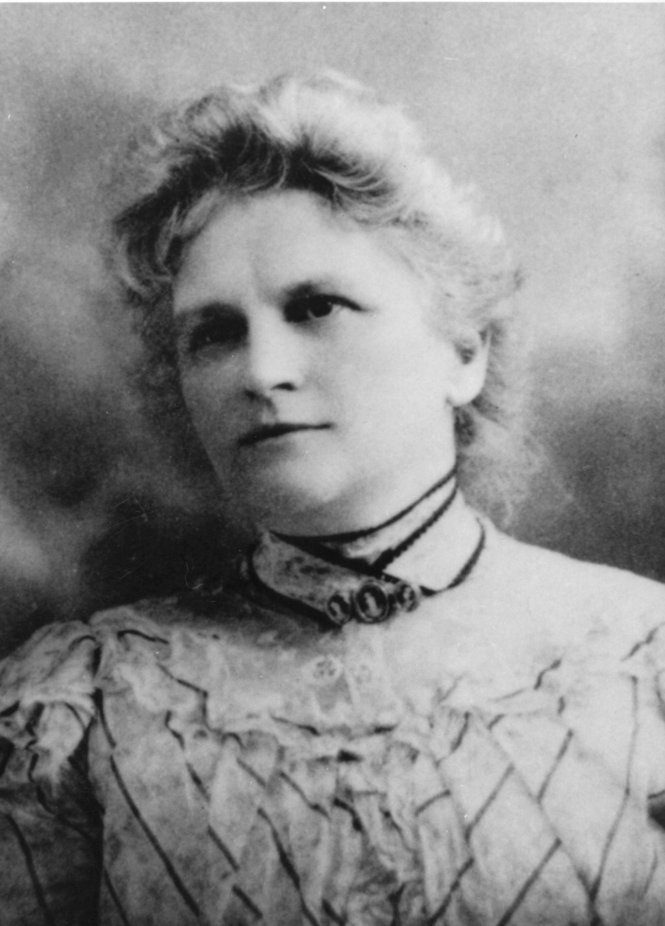
Kate Chopin's "Désirée's Baby" is often remembered for its final reversal, but the ending is not a trick attached to an otherwise simple melodrama. It is the scene in which the story reveals what its earlier objects have been doing all along. A baby, a name, a complexion, a plantation, a trousseau, a handful of letters, and a bonfire all become forms of evidence. The horror is not merely that Armand Aubigny discovers something about his own ancestry too late. The horror is that he has already used the logic of evidence to destroy everyone around him.[1]
The story was written on November 24, 1892, published in Vogue on January 14, 1893, and reprinted in Bayou Folk in 1894.[2] That publication history matters because the tale looks, at first, like it might belong to a familiar local-color shelf: Louisiana names, plantation houses, Creole social codes, courtship, marriage, domestic detail. Library of America's note on the story stresses how sharply it changed Chopin's reception by moving from the pleasing surface of "Creole tales" into a slaveholding household where racial classification has lethal force.[3] Chopin uses the materials of regional fiction, then makes them indict the society that enjoys arranging people by lineage.
The final passage begins after Désirée has already vanished into the bayou with the child. Armand remains at L'Abri, and the scene turns almost ceremonial. In the back yard, he commands a fire. The first thing to notice is that the fire does not read as grief. It reads as management. Armand sits with a view of the spectacle and sends objects into flame through the labor of enslaved workers.[1] Even his destruction of memory is delegated. The household machine that supported his authority is now made to dispose of its embarrassments.
The fire is a second inventory
Chopin has prepared this ending by making objects carry social meaning from the start. Désirée is first known through discovery: found as a baby near the Valmondé gateway, she is loved into a family but never given secure origin. Armand's desire initially treats that uncertainty as romantic freedom. Her lack of a known name does not trouble him when beauty and possession are on his side.[1] Once the child becomes legible to others as racially ambiguous, the same uncertainty turns into accusation. Nothing in Désirée's body has changed. The interpretive regime around her has.
That is why the bonfire matters as more than cleanup. Armand is not burning random keepsakes. He burns the baby's things, Désirée's fine clothes, the wedding gifts, the "corbeille," and then her letters.[1][2] The sequence turns marriage backward into inventory. What had once certified alliance, wealth, tenderness, and household legitimacy is now treated as contaminated material. The fire is a reversed wedding chest.
This is also where Chopin makes patriarchy look bureaucratic rather than merely passionate. Armand's cruelty has emotional heat, but his method is administrative. He sorts. He commands. He removes records. He decides which objects still belong in the house. The scene is devastating because it refuses to make violence appear only as an outburst. Violence also looks like a man in the hallway preserving the family name by destroying the objects that contradict his preferred story.
The letter changes the owner of the evidence
The final letter is so powerful because it enters after Armand believes the evidence has been controlled. He has already read the visible world: the child, Désirée's origins, the social gaze, the household's racial hierarchy. He has judged all of it in his own favor. Then one remnant in a drawer changes the grammar of the scene. The letter from his mother to his father makes Armand, not Désirée, the person whose lineage carries the secret he has been punishing.[1]
Chopin does not need a courtroom, a confession, or an avenging witness. She needs paper. The old letter is private, domestic, and almost accidental. That is the story's finest cruelty. Armand is not defeated by public justice; he is defeated by the household archive he failed to burn in the right order. The document has been sitting inside the same world that authorized him.
The language of the letter also sharpens the irony. His mother thanks God "night and day" for arranging a life in which Armand will never know the truth about her racial identity.[1] In context, piety becomes concealment. Maternal love protects him by hiding the fact that would make him vulnerable inside the caste system he later enforces. The result is not a simple moral reversal in which the guilty man is exposed and balance restored. Nothing is restored. Désirée and the child are gone. The enslaved people remain enslaved. The plantation remains a structure of domination. What changes is only the direction of knowledge.
That limited change is what makes the ending stronger than poetic justice. If the story ended with Armand publicly disgraced, readers could relax into punishment. Chopin gives something colder: private recognition, after irreversible harm. The final knowledge arrives too late to save anyone. It can only reveal that Armand's certainty was always dependence on a record he had not read.
Names behave like property
The story's deepest pressure is the way names function as ownership devices. Désirée's adoptive name is loving but incomplete; Armand's family name is authoritative but false in the way he imagines it. L'Abri itself feels less like a home than a legal and racial instrument, a place where people are ranked by proximity to white property and white inheritance.[1][3] The Kate Chopin International Society's biography places most of Chopin's fiction in Louisiana and stresses how much of her best-known work centers sensitive, intelligent women under social constraint.[4] In "Désirée's Baby," that freedom is crushed not only by marriage but by a system that turns identity into a claim men can accept, reject, or erase.
This is why the story's race plot and gender plot cannot be separated. Désirée is vulnerable because her history is unknown, because she is a wife in Armand's house, because the child is read through plantation race codes, and because Armand's word carries social force. When she asks, "What does it mean?" the question is not naive.[1] It is the story's central epistemological crisis. Meaning is being made around her by people who treat surfaces as verdicts and names as proof.
Armand's earlier transformation after the baby's birth helps reveal the trap. The child initially softens him; the household feels less afraid; even enslaved workers experience a temporary easing of his severity.[1] But that softening depends on the child confirming his desired line. Once the child appears to threaten the name, tenderness collapses. Love has been conditional on inheritance looking pure.
The ending leaves the reader with ash, not correction
Library of America's account notes the story's strong reception and its reputation as one of Chopin's most acclaimed short works.[3] The reason is not simply the famous last sentence. The ending lasts because every major object has been double-coded before the revelation arrives. The baby's clothes are tenderness and evidence. Désirée's letters are romance and archive. The bonfire is cleansing ritual and self-incrimination. The mother's letter is love and concealment. Armand's name is power and misrecognition.
Read closely, the final scene does not ask whether Armand is hypocritical. It asks how a society makes hypocrisy unnecessary by arranging power before evidence appears. Armand does not need to lie at first because the world has trained him to believe that judgment belongs to him. He only becomes visibly wrong when a document changes the terms. By then, the structure that let him judge remains intact.
That is the bleak brilliance of "Désirée's Baby." Chopin gives readers the satisfaction of reversal and then quietly spoils it. The last letter turns Armand's accusation back on him, but it cannot retrieve the woman and child sent into the landscape. It cannot undo the enslaved labor that fed his fire. It cannot make ancestry a harmless fact in a world built to weaponize it. The scene ends with knowledge, but the knowledge arrives as ash: bright for an instant, morally clarifying, and useless to the people who most needed it sooner.
Sources
- Kate Chopin, "Désirée's Baby," in The Awakening and Selected Short Stories, Project Gutenberg ebook 160 - full text used for passage reading and short quotations.
- Kate Chopin International Society, "Désirée's Baby" - text page with composition date, Vogue publication date, and Bayou Folk reprint note.
- Library of America, "Désirée's Baby," Story of the Week, September 17, 2010 - publication context, reception note, and discussion of the story's racial inventory.
- Kate Chopin International Society, "Biography" - biographical context, Louisiana fiction, women's lives in Chopin's work, and later literary revival.
- Wikimedia Commons, "File:Kate Chopin portrait T-P.jpg" - source page for the archival photographic portrait used as the article image.