The first word of Max Beerbohm’s “A Defence of Cosmetics” is “Nay.” Someone has apparently objected already, and the speaker has arrived to put them right. We enter the essay in the position of a person being interrupted.[1]
It is an excellent beginning for a defence that spends so much time giving orders. Published in the first Yellow Book in April 1894, the essay announces the return of artifice with the gravity of a prophet identifying a new historical age. Beerbohm was still an Oxford undergraduate; the imposing authority belongs to the voice he has made.[1][2]
That voice is the essay’s most elaborate cosmetic. It can turn a preference into a law, a sneer into an argument, and a newspaper attack on somebody else into evidence of its own persecution. Following those changes makes the original 1894 text more entertaining—and less easy to file away as either a manifesto for makeup or a joke against it.
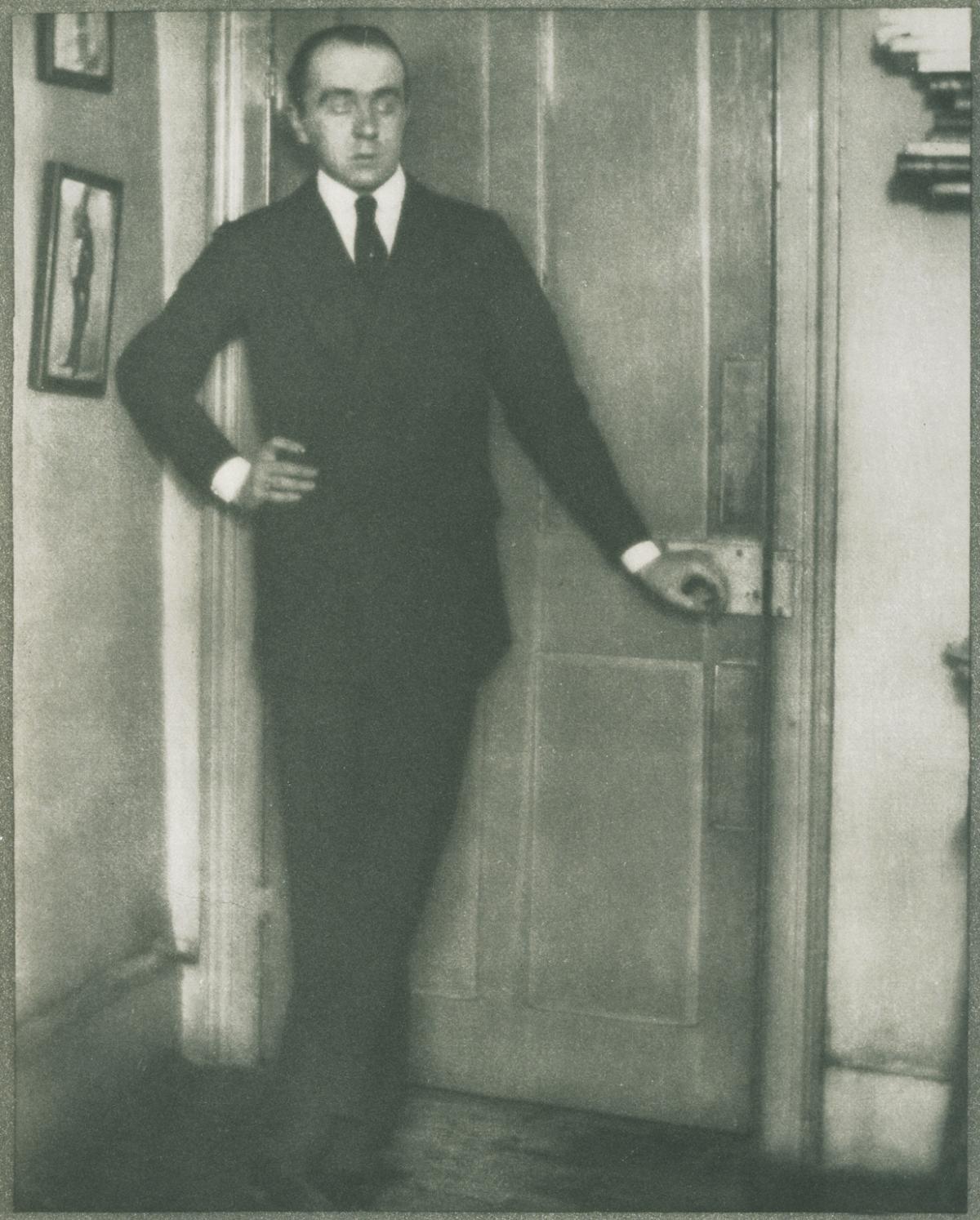
The audience already agrees
On page 65, the speaker raises a fashion to the scale of civilizations growing and falling. Resistance would be as futile as commanding the sea to retreat. Then comes “For behold!”—the verbal gesture of a man pulling back a curtain to reveal the future.[1]
The disproportion is delicious. A little rouge requires the full machinery of historical destiny. Yet the argument also contains a practical contradiction. If artifice is inevitable, why does the speaker have to keep telling people to welcome it? His commands supply the consent his theory claims is unnecessary.
The first-person plural helps. The speaker repeatedly gathers his audience into a knowing company, using we before readers have agreed to join. To disagree is to risk looking provincial, humorless or behind the times. The essay creates a small social pressure inside its sentences: surely a sophisticated reader would already understand.
Its learning has a similarly theatrical finish. On page 66, the account of Poppaea’s traveling supply of milk allows her “fifteen—or, as some say, fifty” she-asses.[1] The parenthesis resembles scholarly caution, but the size of the discrepancy makes accuracy seem wonderfully secondary. Fifteen or fifty: either number will furnish the scene. What matters is the speaker’s ability to move through antiquity as though he knows everybody there.
The prose lets us enjoy that assurance while noticing its workmanship. Its authority is something being performed in front of us.
The compliment that keeps women still
The performance grows more uncomfortable when it assigns women their proper place. On pages 69–70, the speaker praises their intellectual powers while reserving action for men. Cosmetics conveniently require stillness: bodily exertion might disturb the painted face.[1]
The compliment closes a door. Women may possess superior minds, provided that superiority does not carry them into the activities the speaker wants to retain. His apparent submission to feminine brilliance becomes a means of issuing instructions. He can sound gallant while arranging the room so that nobody else gets up.
This is one reason to resist translating every extravagant statement into its reassuring opposite. Satire does not automatically produce a consistent politics. Kristin Mahoney’s account of Beerbohm for Yellow Nineties 2.0 describes the essay as simultaneously voicing and mocking decadent artifice, while also antagonizing the New Woman movement and conservative moralists.[2] The targets overlap; the reader cannot simply pick a camp and assume the author has joined it.
There is nevertheless a suggestive literary argument inside the provocation. On pages 71–72, the separation of outward appearance from inward feeling becomes a challenge to novelists who substitute familiar facial signs for psychological attention. A painted face would frustrate their easy shortcuts.[1]
Read this way, the fantasy asks fiction to work harder. A character’s inner life should require more than a convenient blush. But the freedom granted to the imagined woman’s mind remains entangled with the pleasure her unreadable beauty gives a male observer. The prose can expose a habit of interpretation without escaping its own habits of possession.
A heckler with a prepared line
Beerbohm also gives the reader a demonstration of how to control disagreement. On page 76, an imagined opponent enters with “Tush” and receives the designation “damned flutterpate.”[1] The objection comes prepackaged with the reason to despise its speaker.
This is dialogue in which one participant has written both parts. The little scene allows the essayist to appear responsive while preserving his advantage. Before we can consider whether the dissenter has a point, the voice has made dissent sound ridiculous.
A real reviewer stepped into that arrangement. The Westminster Gazette of 18 April 1894 called the essay “triumphantly silly” and “pernicious nonsense,” and referred to its own offended position using Beerbohm’s insult.[4] The reviewer was resisting the performance, yet had begun to speak in its vocabulary.
That does not prove the review foolish or the essay right. It shows how difficult it can be to answer a writer who has already made indignation one of his comic effects. The laughter changes the conditions of the dispute before the dispute begins.
The explanation puts its costume back on
Beerbohm’s “A Letter to the Editor,” published in July 1894, apparently offers a way out. On page 282 he says the essay was a hoax, a burlesque of affected writers. But even this explanation is staged: the critics become an enraged crowd, while their young target steps forward with exquisite composure.[3]
Comparing his account with the newspaper reveals a small, consequential shift. The letter presents a demand for a prohibiting Act of Parliament among the attacks on his essay. In the original Westminster Gazette review, however, that remark follows the discussion of Beardsley’s drawings. The review turns to Beerbohm afterward.[3][4]
The hostility to his writing was real. The legislative flourish has changed its object. Placed in his narrative, it makes the outrage appear grand enough to match the original essay’s prophetic ambitions. His reply arranges the documentary surface as confidently as his essay arranges an imaginary audience.
Then the closing paragraph resumes the prophecy. Artifice approaches as a queen, and the critics are invited to decorate the streets for her arrival. The letter ends by wondering whether its warning will arrive in time.[3] The supposed explanation has put on the costume it was meant to remove.
This is where the two pieces become most rewarding together. The reply offers information about the essay, but it also asks for another round of admiration. Beerbohm keeps making readers decide how much trust to place in a voice they enjoy. His defence of a painted face leaves us looking closely at the finish of a sentence.
Sources
- Max Beerbohm, “A Defence of Cosmetics,” The Yellow Book, vol. 1, April 1894, pp. 65–82. Facsimile of the original printing; page references and quotations above follow this version. Yellow Nineties 2.0.
- Kristin Mahoney, “Max Beerbohm (1872–1956),” 2010. Yellow Nineties 2.0; Oxford, the first Yellow Book contribution, and the essay’s competing satirical targets.
- Max Beerbohm, “A Letter to the Editor,” The Yellow Book, vol. 2, July 1894, pp. 281–284, signed Oxford, May 1894. Yellow Book Digital Edition, Yellow Nineties 2.0.
- “The Yellow Book,” The Westminster Gazette, 18 April 1894, p. 3. Contemporary review, including the separate passages on Beardsley’s illustrations and Beerbohm’s essay; transcription at Yellow Nineties 2.0.
- The Phillips Collection, Alvin Langdon Coburn, Max Beerbohm (1908), hand-pulled photogravure, object 2008.012.0003r. Collection record and source photograph.