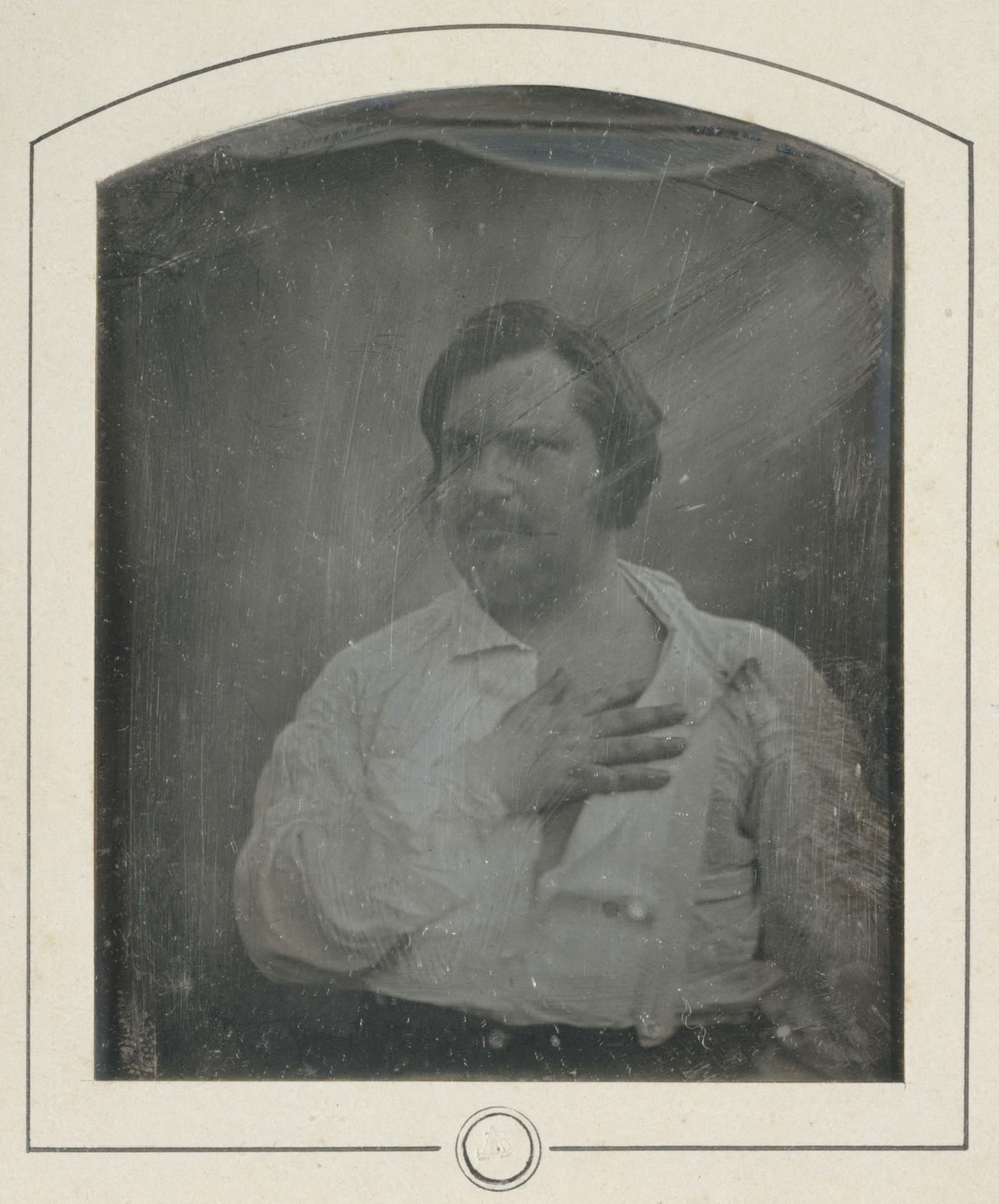
Honoré de Balzac saves the cleanest joke in Cousin Bette for Lisbeth Fischer’s deathbed. The Hulot family gathers around the dying woman in tears, mourning her as the “angel of the family.” They do not know that this angel has spent years helping to engineer their debts, estrangements, disgrace, and grief. Lisbeth knows. Her last satisfaction is to leave their mistake intact.[1]
It is a superb piece of villainy, but “perfect disguise” is too simple a verdict. The family’s sorrow is sincere because Lisbeth really has served them. She has carried news, managed rooms, advanced money, kept secrets, nursed an old man, and made herself available whenever a domestic crisis required another pair of hands. The same usefulness that hides her revenge also constitutes a life the others have reason to value.
That contradiction is the key to her character. Lisbeth gains power by inhabiting the role she most resents: the poor relation who can be asked to help, trusted not to judge, and counted on to disappear into the work. She turns subordination into access. Yet every advance she makes—protector, conspirator, housekeeper, prospective wife—returns her to a form of service. Her revenge can make her indispensable. It cannot make her free.
The novel first appeared in Le Constitutionnel from October to December 1846, then in volume form in 1847 and eventually beside Le Cousin Pons under the title Les Parents pauvres (The Poor Relations).[2] That pairing matters. “Cousin Bette” is not a full social identity but a family coordinate: near enough to be used, too peripheral to set the terms. Balzac builds his avenger out of that grammar of kinship.
Dependence is mistaken for silence
Before Lisbeth becomes a plotter, she is a worker. She learns to read, write, and keep accounts, then becomes a skilled forewoman making the gold and silver lace used on military uniforms. She might have entered business, but the fall of the Empire contracts the trade; she refuses the partnership and financial arrangements offered by the Hulots and settles into precarious independence. By the time the main action begins in 1838, family gifts, firewood, dinners, and occasional assistance supplement what she earns.[1]
The arrangement contains kindness and insult at once. The Hulots do not disown her. They always lay a place for her, but they joke about her clothes, her unmarried state, and her country manners. Offers of incorporation feel dangerous to her: a room in Adeline’s home looks like “a halter of domestic servitude,” while the proposed marriages seem calculated to dispose of an awkward dependent.[1] She wants help without absorption, intimacy without obligation—an unstable wish in a world where money, marriage, and household position define one another.
So Lisbeth studies the traffic between drawing room and servants’ quarters. She brings small gifts to servants and talks with them before joining the family. She flatters younger relatives, listens to older ones, and obliges people most readily when no one openly commands her. The result is an intelligence network disguised as good nature. She calls herself the “Family Confessional.”[1]
The family confides in her because it mistakes lower status for guaranteed discretion. A recent study of Lisbeth’s marginality makes the spatial logic exact: the character introduced at the edge of the opening scene gradually turns that edge into the place from which the action can be controlled. The Hulots’ condescension makes her seem negligible, and negligibility grants her access to secrets.[5]
Balzac’s narration participates in the injury it records. It repeatedly filters Lisbeth through hostile stereotypes about unmarried women, peasants, physical appearance, and supposed “savagery.”[1][5] A careful reading need not accept that vocabulary as diagnosis. What the novel demonstrates more persuasively is a social mechanism: people speak freely before someone they have decided does not count. Lisbeth’s first power is to remember what they say.
Wenceslas is the first person she tries to make
Lisbeth’s relation with Wenceslas Steinbock begins in action, not malice. Smelling charcoal fumes from the garret above her, she breaks in and saves the destitute Polish exile from suicide. She sits beside his bed working gold thread, discovers his sculptural ambition, and offers a severe but practical bargain: food, a furnished room, instruction, and small monthly loans, provided he works. Her thrift gives his talent time to become visible.[1]
This is genuine rescue. It is also an attempt at possession. Lisbeth tries several names for the bond—comrade, adoptive mother, benefactor—while treating Wenceslas as a private creation. She monitors his expenses and output, shifts from rough tenderness to punishment, and expects gratitude to function like a permanent deed of ownership. The young artist eventually describes the life as that of a galley slave.[1]
Lisbeth’s error is not that she asks him to work. Without her discipline, he may never have survived long enough to become a sculptor. Her error is to believe that because she supplied the conditions of his future, the future belongs to her.
When Hortense Hulot discovers Wenceslas and marries him, Lisbeth experiences more than romantic rejection. In her accounting, the rich family has appropriated the one proof that she could find, finance, train, and present value of her own. She reaches for the biblical image of the poor relation’s single ewe-lamb stolen by people who already have flocks.[1] The analogy is self-serving—Wenceslas is a person, not livestock—but it reveals the exact wound. The Hulots have converted her hidden labor into a prestigious family marriage, leaving her once again as the useful cousin outside the photograph.
Her care for Wenceslas therefore establishes the pattern her revenge will repeat. She is excellent at creating dependencies and unable to imagine a relationship that survives their end. When the person she has helped becomes autonomous, she experiences autonomy as theft.
She never pushes what appetite will pull
Lisbeth’s alliance with Valérie Marneffe gives revenge a larger operating system. Lisbeth knows the Hulot household; Valérie knows how to convert desire into appointments, gifts, promotions, and cash. Together they exploit Baron Hulot’s compulsive pursuit of women, Crevel’s need to avenge an earlier humiliation, and Wenceslas’s appetite for admiration without sustained work. Lisbeth supplies routes and information. Valérie supplies the spectacle toward which the men willingly move.[1]
Kris Vassilev’s study of revenge in the novel argues that Lisbeth’s project works only while it remains aligned with social and economic realities. Unlike a romantic avenger who seems to stand above ordinary institutions, she calculates within hierarchy: marriage prospects, annuities, government posts, household credit, and family reputation.[3] She does not invent the forces that damage the Hulots. She connects them.
That distinction keeps the character study from turning every disaster into evidence of supernatural cunning. Hulot already treats public office as a resource for private appetite. Crevel already understands intimacy as purchase. Wenceslas already drifts when praise replaces discipline. Valérie has plans, lovers, and reserves of her own. Lisbeth’s genius is logistical; her blindness is to mistake logistics for ownership.
Three years into the conspiracy, she occupies Valérie’s home as a hybrid of relation, companion, and housekeeper. The two women confer over each move, and Lisbeth pursues revenge with “pitiless logic.”[1] Yet the job description should trouble her. She shops for dinners, keeps the household running, makes tea, schedules intelligence, and protects another woman’s public performance. In trying to turn Valérie into an instrument, Lisbeth becomes the manager of Valérie’s desires.
Valérie is also the first person who appears to meet her as an equal. Their attachment includes strategy, amusement, tenderness, and the thrill of speaking without the Hulots’ patronage. Balzac’s melodramatic moral scheme strains to contain that intimacy. Fredric Jameson’s influential account treats Bette and Hulot as opposed embodiments of destructive negation and erotic appetite, characters becoming obsessions rather than merely possessing them.[4] The symmetry is illuminating, but the novel’s household detail adds something crucial: appetite needs an administrator. Lisbeth acquires power by doing the work that lets other people’s impulses become events.
Care is the alibi that nearly becomes a life
The most audacious stage of Lisbeth’s revenge is not an act of sabotage. It is her return as the family’s truth-teller. When Hortense’s marriage breaks under Valérie’s pressure, Lisbeth denounces her supposed friend, warns Hulot that he is being duped, and allows the Hulots to embrace her courage. They then ask her to remain near Valérie and report what she learns.[1] The spy is commissioned by her targets.
At the same time, the family arranges Lisbeth’s marriage to the elderly Marshal Hulot. She takes command of his house, reorganizes the servants, watches his comfort, and makes herself so useful that he comes to regard her care as part of the life he had wanted. When family disgrace requires money, she promptly surrenders a prospective financial interest. Her motives are mixed, but the sacrifice is material. The Hulots do not love a pure fiction; they love acts whose hidden intention they cannot see.[1]
Marriage would finally change “Cousin Bette” into Madame la Maréchale Hulot. It would also make her status depend on caring for an older man and preserving his household. The route out of service is another, more honored service role.
Then the Marshal dies four days before the final banns. The scandal that Lisbeth helped produce has broken him, so the ruin of the Hulots destroys her own path into their rank.[1] Vassilev reads this failure as central to the revenge’s social meaning: Lisbeth can damage the hierarchy by using its mechanisms, but she cannot simply promote herself above it.[3] Her campaign is powerful enough to burn the ladder she is climbing.
The angel and the avenger are not opposites
By the final pages, Valérie and Crevel are dead, the Hulot finances have partly recovered, and the missing Baron has been brought home. Lisbeth, already ill, declines rapidly when she sees the family reunited. She keeps her hatred secret and receives their grief as proof that her performance was complete.[1]
But what has she won? She has preserved control over the interpretation of her life. No one can accuse or expose her. At the same time, a revenge born from being unseen ends in total misrecognition. The family mourns a woman whom Lisbeth believes never existed, while the calculating self she wanted to vindicate remains unacknowledged.
The irony cuts in the other direction too. The “angel” is not wholly invented. Lisbeth did perform the care the family remembers. She even paid a regular allowance to the fugitive Hulot while privately savoring Adeline’s anguish.[1] Malice and service occupy the same acts. Bad motives do not erase useful consequences; useful consequences do not acquit the scheme.
Nor does Lisbeth’s death cure the household. Hulot’s appetite survives its supposed mastermind and produces one last betrayal after she is gone.[1] That coda confirms the limit of her authorship. She can route the novel’s destructive energies, accelerate them, and conceal her hand. She cannot claim to have created them, and she cannot decide where they stop.
This is why Lisbeth remains more disturbing than a merely underestimated villain. She learns that service passes through doors closed to authority. It gathers knowledge, creates obligations, and makes itself difficult to remove. She converts those advantages into secret mastery, but she never invents a form of power that does not require somebody to be dependent—Wenceslas on her, the men on Valérie, the Marshal on her care, the Hulots on her discretion.
Lisbeth becomes indispensable to the family she means to destroy. Balzac’s hardest insight is that indispensability and freedom are not the same achievement.
Sources
- Honoré de Balzac, Cousin Betty, translated by James Waring—Project Gutenberg edition used for scene references and short quoted wording.
- Bibliothèque nationale de France, “La cousine Bette”—catalogue record documenting the October–December 1846 serialization, 1847 volume publication, and grouping within Les Parents pauvres.
- Kris Vassilev, “Représentation et signification sociale de la vengeance dans un texte réaliste: L’exemple de La Cousine Bette,” Romantisme 127 (2005), pp. 45–57.
- Fredric Jameson, “La Cousine Bette and Allegorical Realism,” PMLA 86, no. 2 (1971), pp. 241–254—obsession, frustrated desire, and the novel’s character system.
- Gabrielle Flipot Meunier, “Le malheur des uns fait le bonheur des autres: marginalité et empowerment dans La Cousine Bette d’Honoré de Balzac,” Revue FéminÉtudes (2026)—Lisbeth’s liminal status and informational power.
- Paris Musées / Maison de Balzac, “Balzac”—collection record and downloadable image for Louis-Auguste Bisson’s 1842 daguerreotype, inventory BAL 93.