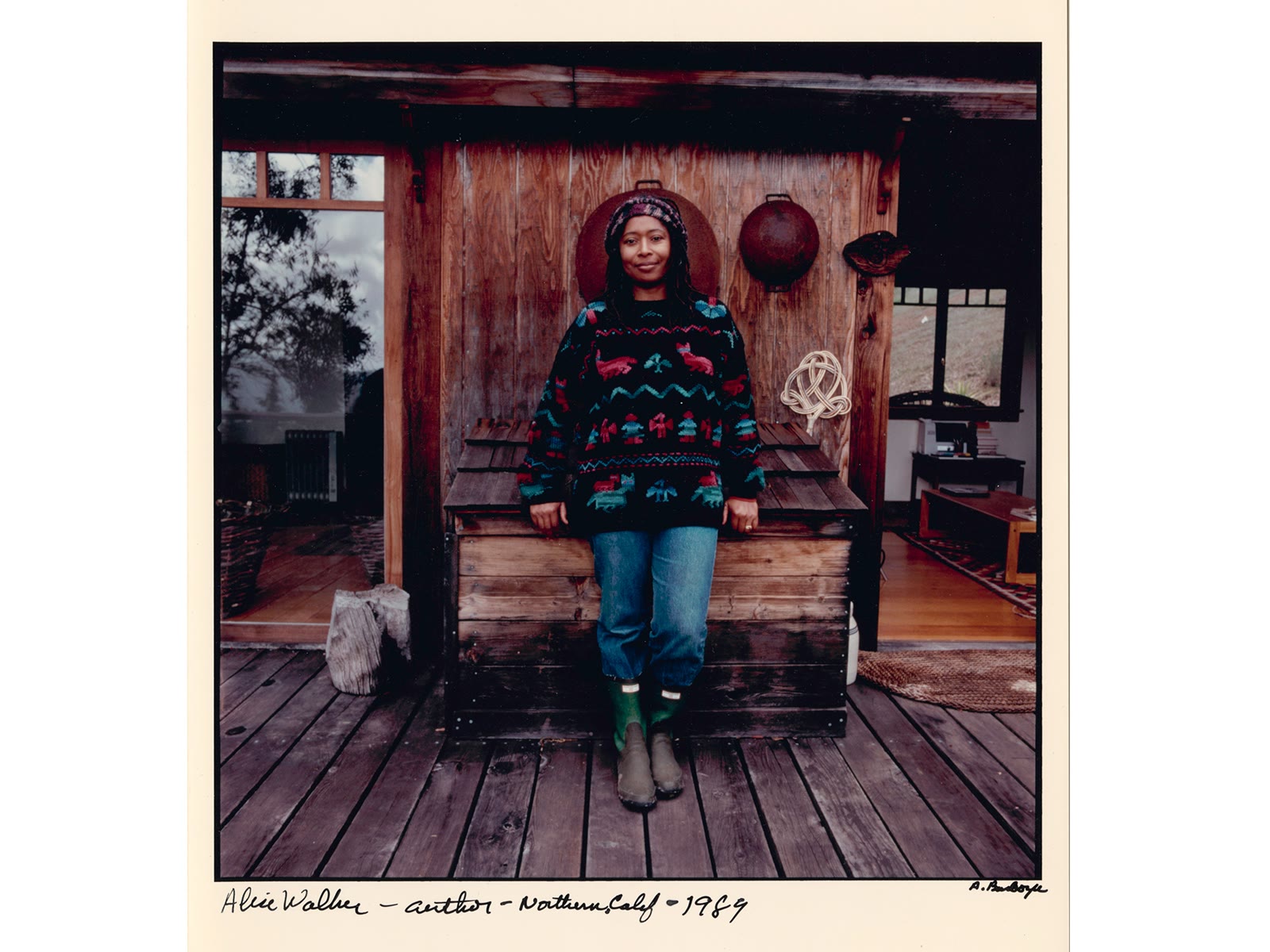
There is a tidy version of literary history in which a great book appears, wins the right prizes, survives a few offended readers, and settles into the canon. The Color Purple refuses that story. Alice Walker's novel was published in 1982, won both the National Book Award and the Pulitzer Prize in 1983, reached a much larger public through Steven Spielberg's 1985 film, and became a recurring target of school challenges. At every stage, recognition widened the argument instead of ending it.[3][4][6][9]
The arguments were not all alike. Some Black critics asked whether the novel's abused women and violent men would confirm stereotypes for white readers.[5] Other readers found in Celie's language an authority that American fiction had too often denied poor Black women.[2][7] The film made the story communal and spectacular, but also encouraged audiences to treat adaptation and novel as interchangeable.[6] School challengers then converted disputes about sex, violence, religion, race, and suitability into disputes about access.[9]
Those positions should not be collapsed into a simple contest between admirers and enemies. Criticism asks what a book does, to whom, and at what cost; censorship decides who may encounter it. The Color Purple became durable because the first question remained open even when institutions repeatedly tried to answer the second by removal. Its canonical life is not the calm after controversy. Controversy is part of the form that life took.
The book makes a record out of a silenced life
The novel begins with a command intended to prevent narration: “You better not never tell nobody but God.” Celie's first answer is only an address—“Dear God”—but that small opening changes the command's logic. She obeys its literal limit while creating a witness beyond her abuser's control.[1] The letter is private inside the story and public in the reader's hands.
That paradox powers the book. Walker does not install a polished narrator above Celie to explain what her life means. She lets meaning develop inside the record Celie can make: what she sees, what she has been told, what she does not yet understand, and what she gradually learns to name. The Penguin edition's description gives the essential architecture: letters first from Celie to God, then between Celie and her sister Nettie, extending across decades of separation.[1] The sequence makes voice an action rather than a possession a character either has or lacks.
Celie's vernacular is central to that action. Its grammar is not a temporary error waiting for education to erase it. Repetition carries shock; compressed syntax registers danger; jokes arrive with the exact timing of someone learning that judgment can be pleasurable. As her circumstances change, the prose grows more expansive without turning into standardized English. Independence appears not as a borrowed voice but as greater freedom inside her own.
The hidden letters from Nettie make control over writing part of the plot. Albert has not merely kept two sisters apart; he has intercepted an archive that would have changed what Celie knew about her children, her family, and the wider world. When Celie and Shug recover and order the letters, reading becomes material labor. Envelopes must be found, opened, dated, and placed into relation. The book's form therefore makes a sharp claim: a life can be suppressed not only by forbidding speech, but by controlling delivery.
By the final greeting, Celie's field of address has widened to “Dear God. Dear stars, dear trees, dear sky, dear peoples. Dear Everything. Dear God.”[1] The change does not discard God so much as remove one distant male image from exclusive possession of the word. Celie's writing moves from a secret report sent upward to an address spacious enough for nature, absent family, flawed neighbors, and herself. That formal journey explains why the book's reception became so charged. Readers were not only judging a plot about survival. They were being asked to accept Celie's language as a way of knowing.
The prizes arrived before consensus
Early acclaim was emphatic. The National Book Foundation records The Color Purple as the 1983 winner for hardcover fiction, and the Pulitzer board awarded it that year's fiction prize.[3][4] These were not predictions of eventual importance; they were acts of institutional recognition made within months of publication. The Pulitzer also made Walker the first Black woman to win that prize for fiction, a fact that attached the novel's achievement to a long history of exclusion from literary authority.[11]
A contemporary review by Rose Gladney shows what one admiring reader heard before the later film became the dominant public image. Writing in Southern Changes in 1983, Gladney placed the novel in Walker's larger tribute to Black women as artists and witnesses, and singled out its thinking about spirituality and sisterhood.[2] Her emphasis matters. She did not praise Celie merely for enduring harm. She read the novel's questioning—of God, love, gender, and human purpose—as intellectual work carried by voices that conventional institutions had underestimated.
Yet prizes can compress a book into a victory story. The shorthand is familiar: voiceless woman finds her voice; suffering yields empowerment; prejudice is overcome. That arc is present, but the novel makes every term unstable. Celie writes from the first page, so “finding a voice” cannot mean moving from no language to language. Her material independence depends on inherited property, skilled work, female alliance, and a transformed household, not confidence alone. Even reconciliation is uneven: some men change, but change does not reimburse the women who absorbed their violence.
The speed of canonization therefore created its own critical problem. Once a novel becomes the emblem of a breakthrough, objections to its choices can sound like objections to the breakthrough itself. Conversely, prestige can make one story appear representative of lives far more various than any novel could contain. The Color Purple entered the canon early enough that readers had to argue about what its new authority would authorize.
Black critical debate was part of the reception, not noise around it
Trudier Harris's 1984 essay “On The Color Purple, Stereotypes, and Silence” remains important because it resisted the pressure to treat acclaim as closure. Harris questioned the novel's rapid canonization, worried that “spectator” readers could use its characters to confirm racist expectations, and challenged the moral and psychological terms of Celie's long passivity and eventual reward.[5] Her essay did not simply ask whether ugly things happen in Black communities. It asked what happens when a particular fiction enters a market already trained to generalize Black people from a narrow set of images.
That challenge is strongest when kept specific. A reader can reject Harris's estimate of Celie's credibility while retaining her question about spectatorship. Celie is one character in one invented Georgia community; the risk begins when readers convert her situation into an ethnographic summary. The novel's prestige could resist the old exclusion of Black women's writing while still exposing the work to another distortion: being asked to stand for “the Black family” in a way white family novels rarely have to stand for whiteness.
Other critics located political possibility in precisely the features Harris distrusted. Lauren Berlant argued that the novel relocates collective identity away from patriarchal political language and into aesthetic and everyday relations, especially the relations women create through care, work, beauty, and exchange.[7] On this account, pants-making, letter-reading, friendship, erotic attachment, and a rearranged household are not evasions of politics. They are the scale at which the novel imagines a less coercive social order.
The disagreement is productive because it reaches the book's actual machinery. Is the late household a persuasive model of repair or a fairy-tale settlement? Does Celie's endurance reveal a survival strategy, repeat a stereotype of the endlessly suffering Black woman, or do both at once for different readers? Does the novel redeem its male characters by making change imaginable, or ask injured women to carry too much of that redemption? A canon worth having does not silence those questions. It gives them a durable object.
The film enlarged the audience and changed the argument
Spielberg's film did not merely add another interpretation in 1985. It altered the scale and setting of reception. Jacqueline Bobo's 1989 study observed that the film had earned almost $100 million by October 1986 and reasonably assumed that more people had seen it than had read the novel. She also noted that, in public discussion, the two works had become nearly interchangeable.[6]
That interchangeability matters because reading letters alone and watching a film in a crowded theater distribute authority differently. On the page, Celie controls the order in which a reader learns her world, even when she does not control that world. In a theater, performance, camera, music, casting, publicity, and other viewers' reactions mediate the story together. Bobo stresses that the film's public viewing situation could make reception itself audible: laughter, anger, recognition, and discomfort passed through an audience rather than remaining inside one reader's encounter.[6]
The adaptation also intensified the dispute over representation. Protests focused on violent Black men, the image of the Black family, and the fact that a story by a Black woman had become a major studio film shaped by white male leadership. At the same time, many Black women defended the value they found in the work. Bobo's crucial intervention was to treat those women not as passive consumers of a media event but as culturally situated readers whose interpretations had been obscured by accounts that described “the Black response” as if it were singular.[6]
Reception history must therefore keep book and film close without merging them. The movie helped secure the novel's name in public memory, but it also supplied images through which many nonreaders imagined the book. Some later praise and blame landed on Walker's pages after passing through Spielberg's screen. The canon expanded, but the object under discussion became blurrier.
The classroom reopened the original struggle over address
Challenges began almost immediately. The American Library Association's historical record notes a 1984 dispute over use of the novel in an Oakland high-school honors class, followed by objections in other districts to its sexual content, language, violence, treatment of religion and race, and portrayal of Black men.[9] Some challenges ended in retention; others produced removal, restriction, or parental-permission rules. The pattern is too varied to assign one motive to every complainant.
What recurs is a fight over audience. The opening sexual violence is often named as a reason young people should not read the book, although the scene presents abuse as terror, not invitation. Celie's same-sex desire and changing idea of God become objections for readers who regard heterosexuality or conventional Christianity as conditions of suitability. Racial language and depictions of Black male violence have also prompted challenges, sometimes in the vocabulary of protecting Black students from degrading representation.[9] The same textual features can thus produce politically different demands for restriction.
That complexity makes a boundary essential. Harris's criticism and a school board's removal are not stronger and weaker versions of the same act. Harris places an argument into circulation and gives later readers something to test. A ban narrows the people allowed to test anything. Criticism multiplies the record; censorship interrupts delivery—the very form of power Albert exercises when he hides Nettie's letters.
The struggle is not safely historical. The New York Public Library's censorship exhibition records the novel's permanent removal from schools in Clay County, Florida, in January 2024.[11] PEN America's December 2025 tally counted 62 bans of The Color Purple in U.S. public schools since 2021.[10] A book can be a prize winner, a bestseller, an adaptation source, and an established classroom text while still being made locally unavailable. Canonical status does not guarantee access.
The novel gives a useful measure for that situation. Its letters are valuable not because every claim inside them is complete, but because another person can finally receive, answer, order, and reassess them. A classroom does not have to manufacture consensus around Walker. It has to preserve the conditions for a serious encounter: historical framing, attention to form, room for Black critical disagreement, and refusal to confuse depicting abuse with endorsing it.
The archive keeps the argument attached to revision
Emory University's Rose Library identifies a 1982 manuscript of The Color Purple among the Alice Walker papers.[8] That physical record offers a way to test one of the easiest myths about Celie's voice: that it arrived as pure testimony, unshaped by literary labor.
The archive does not make the voice less authentic. It makes “authentic” a less useful compliment. The finished novel constructs sequence, withholds letters, varies address, and times revelations; its apparent directness is an artistic effect. Manuscript study can ask how those choices emerged instead of treating vernacular as an unmediated sample of a community. It returns craft to a reception history often dominated by verdicts about representation.
That is where The Color Purple now belongs: not above argument, and not trapped inside its first controversies. The novel can be honored for enlarging American literary authority, criticized for the burdens its plot and reception place on Black women and men, separated carefully from its adaptations, and defended against removal. None of those acts requires the others to disappear.
The canon is sometimes imagined as a shelf of resolved masterpieces. Walker's novel suggests a better image: an archive of addressed and intercepted letters, prizes and protests, readings and misreadings, with delivery never guaranteed. The Color Purple became a classic because readers kept answering it. Its future depends less on agreement than on keeping the correspondence open.
Sources
- Alice Walker, The Color Purple, Penguin Classics edition page — publication overview, epistolary architecture, and the novel's account of Celie and Nettie's long separation.
- Rose Gladney, “The Color Purple. Alice Walker. Harcourt, Brace, 1982,” Southern Changes 5, no. 2 (1983) — contemporary review emphasizing spirituality, questioning, Black women artists, and sisterhood.
- National Book Foundation, “The Color Purple” — official record of the 1983 National Book Award for hardcover fiction.
- The Pulitzer Prizes, “The Color Purple, by Alice Walker” — official record of the 1983 Pulitzer Prize in Fiction.
- Trudier Harris, “On The Color Purple, Stereotypes, and Silence,” Black American Literature Forum 18, no. 4 (1984), pp. 155–161 — critique of canonization, spectatorship, stereotype, and narrative resolution.
- Jacqueline Bobo, “Sifting Through the Controversy: Reading The Color Purple,” Callaloo, no. 39 (1989), pp. 332–342 — novel/film conflation, public viewing, divided response, and Black women as readers.
- Lauren Berlant, “Race, Gender, and Nation in The Color Purple,” Critical Inquiry 14, no. 4 (1988), pp. 831–859 — analysis of aesthetic representation, womanist values, and collective identity.
- Emory University Rose Library, “Permissions and Citations” — repository guidance identifying the 1982 manuscript of The Color Purple in the Alice Walker papers.
- American Library Association, “Most Challenged Books” — historical record of challenges, restrictions, removals, stated objections, and retention decisions involving The Color Purple.
- PEN America, “Top 52 Banned Books: The Most Banned Books in U.S. Schools” (December 16, 2025) — tally of 62 bans of The Color Purple recorded from 2021 through 2025.
- New York Public Library, “The Color Purple by Alice Walker, 1982” — Schomburg Center exhibition record, awards context, censorship history, and the January 2024 Clay County removal.
- Smithsonian magazine, “Unearth the Roots of Alice Walker's The Color Purple” (December 22, 2023) — publication page and credit for Anthony Barboza's 1989 NMAAHC portrait used as the article image.