Claude McKay's "If We Must Die" is often remembered as a rallying cry, but its force depends on a paradox: the poem sounds most collective when it is most formally controlled. It does not shout itself loose. It tightens. Written in 1919 and first published in the July issue of The Liberator, the sonnet came out of the same violent season that later accounts call the Red Summer, when anti-Black attacks and racial massacres made public life feel like exposure.[2][3] McKay answered that emergency with a poem whose speaker keeps saying "we" while refusing to name the attackers, the city, or the race of the threatened group.[1][4]
That omission is not evasive. It is one of the poem's working engines. The National Humanities Center's teaching notes ask what explains the poem's "racelessness," while the Library of Congress Red Summer guide keeps the historical violence of 1919 in view.[3][4] The result is not generic universality. It is a charged double address. Readers can hear the 1919 situation behind the poem, but the poem's grammar also lets the threatened "we" expand wherever people are hunted, cornered, and forced to decide how they will meet danger.
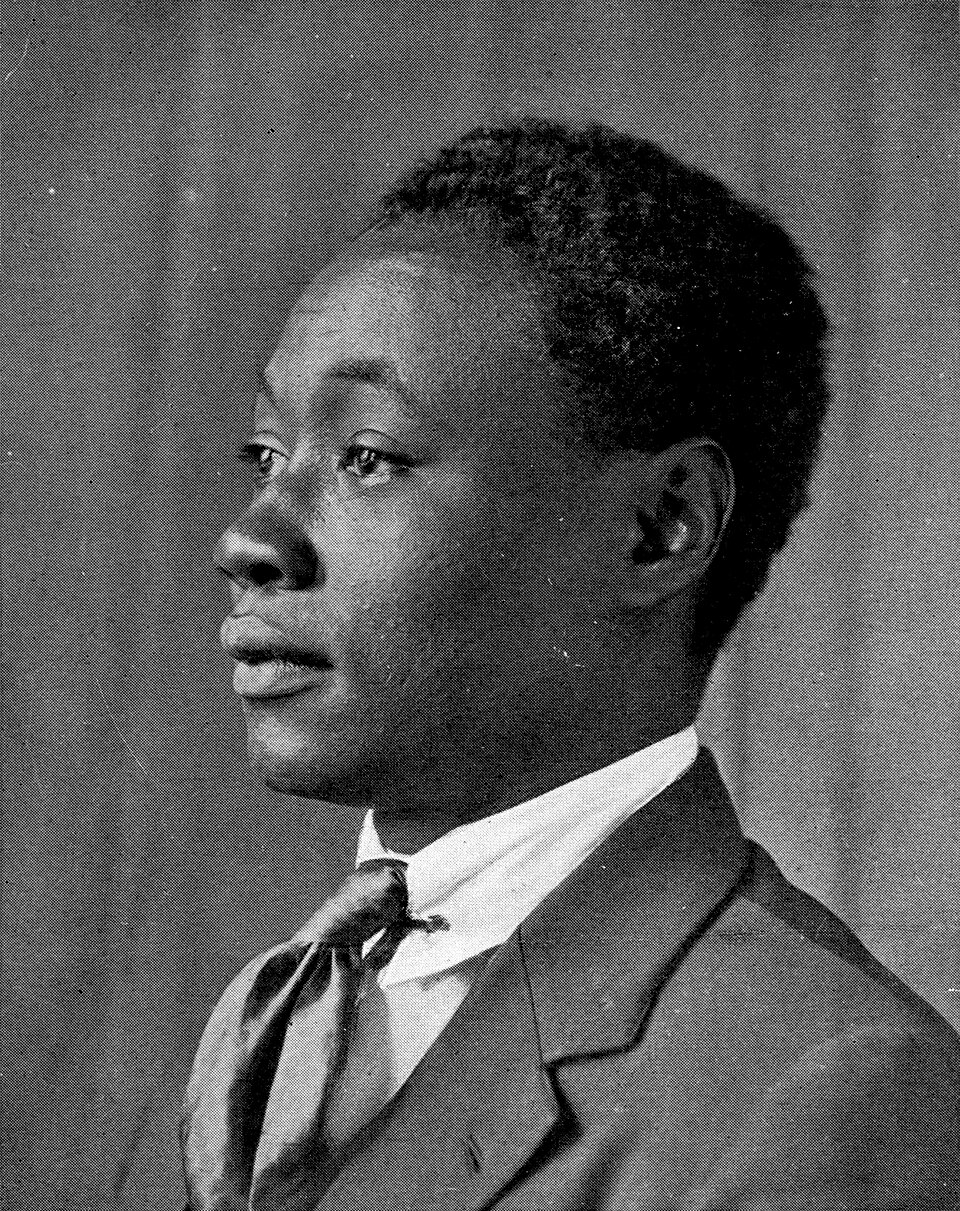
Cover image context: McKay's 1920 portrait is not a decorative author headshot. It matters because the poem's public voice depends on composure under pressure. The photograph's direct gaze and formal studio stillness echo the poem's own strategy: not panic suppressed into silence, but discipline turned into address.[6]
The first word makes death conditional, not passive
The poem begins with a condition, not a declaration. "If we must die" is a frightening phrase because it concedes possibility without conceding meaning.[1] The speaker does not pretend that courage can cancel violence. He begins by admitting the worst case, then immediately contests the terms under which it will happen. That is the poem's first stylistic lesson: grammar becomes resistance before imagery does.
The repeated "if" matters because it keeps death from becoming fate alone. A fate has no argument inside it. A condition can still be shaped. McKay's speaker cannot guarantee survival, but he can insist that death not be made degrading, comic, or easy for the persecutors. The voice is therefore neither optimistic nor despairing. It is procedural. If this happens, then not that way. If the surrounding world has narrowed to danger, then the last remaining freedom is the form of response.
This is why the sonnet form is not a genteel container placed around violent content. It is part of the action. A Shakespearean sonnet moves through quatrains toward a closing couplet; McKay uses that architecture to make fear pass into command.[4] The poem begins by rejecting humiliation, then enlarges the threatened group into a disciplined company, then ends by turning pressure into a final collective stance. The rhyme scheme and meter do not soften the emergency. They make the voice sound drilled.
Animal imagery creates the insult the poem refuses
McKay's most memorable opening image is deliberately degrading: the threatened group must not die "like hogs."[1] The phrase is brief, ugly, and necessary. It names what mob violence tries to do before it kills. It reduces people to animals, pens them in, and makes spectacle out of vulnerability. The speaker's first act is not revenge. It is refusal of that interpretive frame.
The surrounding animal language sharpens the social picture. The victims are imagined as penned, mocked, surrounded by dogs, and pressed by "monsters" who behave with appetite rather than law.[1] Yet McKay does not simply reverse the insult by making the attackers animals and the victims pure heroes. He does something more tactical. He shows that dehumanization is a performance staged by violence: the threatened people are being treated as livestock so that their deaths can be made to look natural, deserved, or entertaining.
The poem's answer is to break that staging. "Nobly" arrives as a counter-word.[1] It does not mean prettily or politely. It means that the threatened group must recover a public grammar of human stature. In that sense, the sonnet's elevated diction is not ornamental. It is argumentative. McKay takes the language of honor, battle, and noble death, then hands it to people whom white supremacist violence wanted to render nameless and disposable.
The voice is masculine, but the strategy is larger than bravado
Modern readers can hear the poem's martial masculinity clearly. The speaker's language of kinship, fighting, and honor leans into a heroic code associated with men under siege. That can make the poem sound almost too stern if it is read as simple chest-thumping. But McKay's craft is subtler than a command to be fearless.
The voice does not deny fear. It organizes fear. The poem never says the enemy is weak. It describes an outnumbered "we" facing a murderous pack, with the wall behind them and the odds against them.[1] The courage here is not swagger before danger appears. It is conduct after danger has already become inescapable. The speaker's power comes from converting panic into syntax, not from pretending panic has vanished.
That distinction helps explain why the poem circulated beyond its first moment. Britannica describes McKay as a Jamaican-born American writer and one of the leading voices of the Harlem Renaissance, while the poem's 1919 setting ties its literary fame to a wider crisis of racial violence and public resistance.[4][5] The fame makes sense because the poem is portable without being vague. It does not offer a detailed program for politics, nor does it narrate one particular riot. It gives threatened people a language for refusing the enemy's preferred script.
The unmarked we is the poem's risky achievement
The most interesting word in the poem is not "die" or "fight." It is "we." The pronoun sounds simple, but McKay makes it do several jobs at once. It gathers a community under attack. It speaks to that community as if the speaker is already inside it. It also invites later readers into a position of identification, though not a position of easy ownership.
That risk matters. A racially unmarked "we" can be misread as abstract humanism, as if the poem were detached from Black historical danger. But the publication trail and the 1919 context push against that flattening.[2][3][4] McKay's achievement is that he refuses to let the attackers define Black suffering as a local spectacle while also refusing to make the poem intelligible only as documentary evidence. He writes from a specific crisis in a voice built to travel.
The poem's address is therefore not private lyric speech. It is public rehearsal. The speaker is teaching a group how to hear itself before the encounter comes. The "we" must not scatter into isolated terror. It must become audible to itself as a body capable of judgment. This is why the poem feels spoken aloud even on the page. Its argument depends on cadence, repetition, and the pressure of collective breath.
The couplet does not resolve the danger
The final couplet is often quoted because it sounds like victory, but it does not promise victory. Its power is more austere. McKay leaves the group still pressed against the wall, still dying, still fighting back.[1] The ending does not undo the condition announced in the first line. It changes the moral shape of that condition.
That is why the poem remains uncomfortable. It does not let readers escape into inspirational uplift. The speaker is not saying that courage guarantees survival. He is saying that even when survival cannot be guaranteed, degradation must not be granted in advance. The poem's dignity is severe because it has no sentimental insurance policy.
This severity also explains the sonnet's lasting sound. McKay takes a form associated with love, argument, courtship, and literary inheritance, then uses it for a crowd at the edge of violence. He does not discard the old form as inadequate to modern racial crisis. He repurposes it. The sonnet becomes a small chamber where collective speech can gather, breathe, and harden.
That hardening is the poem's style. Conditional grammar, animal insult, heroic diction, and disciplined rhyme all work toward the same end: they keep the threatened group from hearing itself as prey. "If We Must Die" is not powerful because it ignores fear. It is powerful because it gives fear a shape that can stand upright.
Sources
- Claude McKay, Harlem Shadows (Project Gutenberg HTML text; includes "If We Must Die" and the collection's publication context).
- NYU Libraries, The Liberator, July 1919 - digitized issue record for the magazine in which "If We Must Die" first appeared.
- National Humanities Center, "Poetry, in Protest" - teaching context for McKay, "If We Must Die," and African American protest literature.
- Library of Congress Research Guides, "Racial Massacres and the Red Summer of 1919" - contextual guide to the violence surrounding McKay's poem.
- Encyclopaedia Britannica, "Claude McKay" - biographical overview and Harlem Renaissance context.
- Wikimedia Commons, "File:Claude McKay 1920.jpg" - source page for the archival portrait photograph used as the article image.