Most classic novels survive because of language. A Christmas Carol survives because of design. Dickens built a compact moral machine in 1843 that can be transplanted into almost any medium—stage, radio, television, animation, parody—without collapsing into pure nostalgia.[1][3][4]
The story is short, but its architecture is unusually portable: a hard deadline, a reversible protagonist, a sequence of guided encounters, and a socially legible verdict. This is why it keeps returning every winter, and why each new adaptation can alter tone, politics, even genre, while still feeling recognizably “Carol.”
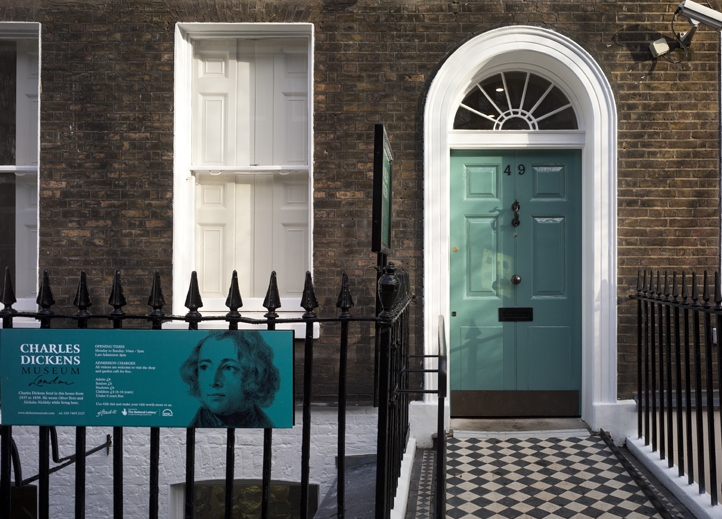
Image context: the cover image shows the Charles Dickens Museum at Doughty Street, London, a place-bound reminder that this text’s long afterlife started from a very specific Victorian writing world before turning into a transnational seasonal template.
1) Dickens built a countdown structure that adaptation teams can always budget
The novella opens with forensic certainty—“Marley was dead: to begin with.”—then quickly installs a clock.[1] Scrooge is given one night, three future-facing encounters, and one chance to alter trajectory. That structure matters more than ornament.
For adapters, this is gold:
- time-boxed plot (easy to stage in 90–120 minutes),
- episodic visitation logic (modular scenes that can be expanded or compressed),
- clear before/after contrast (high audience payoff even with limited exposition).
This is a practical reason the text keeps getting reused. Its narrative unit economics are favorable: you can deliver emotional conversion without an epic runtime.
2) The moral turn is coded as public accounting, not private sentiment
One reason Carol travels so well is that Scrooge’s transformation is testable in public acts. Dickens gives him memorable cruelty lines early—“Are there no prisons?” and “And the Union workhouses?”—so the reader can measure distance when he later says, “I will honour Christmas in my heart, and try to keep it all the year.”[1]
That sequence is adaptation-friendly because it is not vague inner healing. It is a staged audit:
- prior position (punitive social logic),
- evidentiary confrontation (past/present/future witnesses),
- revised behavior (money, kinship, labor, civic generosity).
Even when films shift tone toward comedy, romance, horror, or children’s fantasy, this audit spine remains visible. Remove it, and the story stops being A Christmas Carol and becomes generic holiday mood.
3) Afterlife phase one: Dickens himself turned text into performance protocol
The novella’s adaptation history did not begin with twentieth-century cinema. Dickens publicly performed the work in the 1850s and kept revising it for listeners, not just silent readers.[4][5] That move is crucial: he effectively proved that Carol could be re-authored at the level of delivery while preserving core structure.
In other words, the afterlife is built into the work’s early history. The text was never only a page object; it became a repeatable event format.
The Dickens Project’s adaptation taxonomy is useful here: faithful retelling, topical repurposing, and commercially driven reuse.[3] That three-lane model explains why the adaptation stream is so large without requiring all versions to share one ideological goal.
4) Why the story keeps accepting rewrites without identity loss
The adaptation record is massive and continuous across media.[4][6] That durability can look mysterious until you inspect what must stay fixed versus what can move.
Usually fixed
- Scrooge’s baseline miserliness and social hostility.
- Supernatural visitation sequence.
- A future-judgment horizon.
- Behavioral conversion expressed through concrete generosity.
Freely variable
- Historical setting and production design.
- Degree of satire versus sentiment.
- Religious framing intensity.
- Class politics emphasis and ending temperature.
This “fixed core + flexible surface” balance is exactly what high-survival narratives need. Too rigid, and adaptation dies. Too loose, and brand identity dissolves.
5) 2026 reading: the novella still works because it links memory to obligation
A lot of seasonal stories offer warmth; fewer offer mechanism. Dickens ties personal memory to social obligation in ways modern audiences still recognize: labor precarity, moral distance from poverty, and the temptation to call structural harm “efficiency.”[1][2]
That is why Carol remains adaptable even in cynical eras. Its question is never only “Can one man feel better?” The question is “What forms of accounting count as human?”
For readers and adapters, that is the real inheritance. The ghosts are memorable, but the lasting technology is the structure that forces private emotion to become public action.
Sources
- Charles Dickens, A Christmas Carol (Project Gutenberg full text)
- The British Library (Works), “A Christmas Carol”
- The Dickens Project (UC Santa Cruz), “Adaptations”
- Wikipedia, “A Christmas Carol” (publication and public-reading history)
- Wikipedia, “Adaptations of A Christmas Carol” (cross-media adaptation record)
- Radboud University, “Why Dickens' Christmas Carol is the most adapted literary work ever”
- Image source (Wikimedia Commons, Charles Dickens Museum London)