The Awakening is often reduced to a proposition about female freedom: Edna Pontellier wants more life than Creole marriage allows, she reaches toward erotic and artistic autonomy, and the novel records the cost.[1][2] That summary is not wrong, but it is thinner than the book itself. Kate Chopin does not build Edna's conflict as an abstract argument first and then decorate it with imagery. She lets the argument emerge through a recurring set of objects and environments. Birds, houses, and the sea do the novel's deepest structural work.[1][2]
Those motifs matter because they keep the book from becoming a simple emancipation fable. Birds give the dream of altitude, but they also register weakness, injury, and the difficulty of sustaining flight. Houses define the visible social script, then miniaturize rebellion into rooms and domestic experiments. The sea offers the strongest sensation of unclaimed selfhood, yet it never becomes a workable civic alternative. Read together, these three systems show why the novel still feels modern: freedom appears not as a slogan but as a problem of medium, shelter, and duration.[1][2][4]
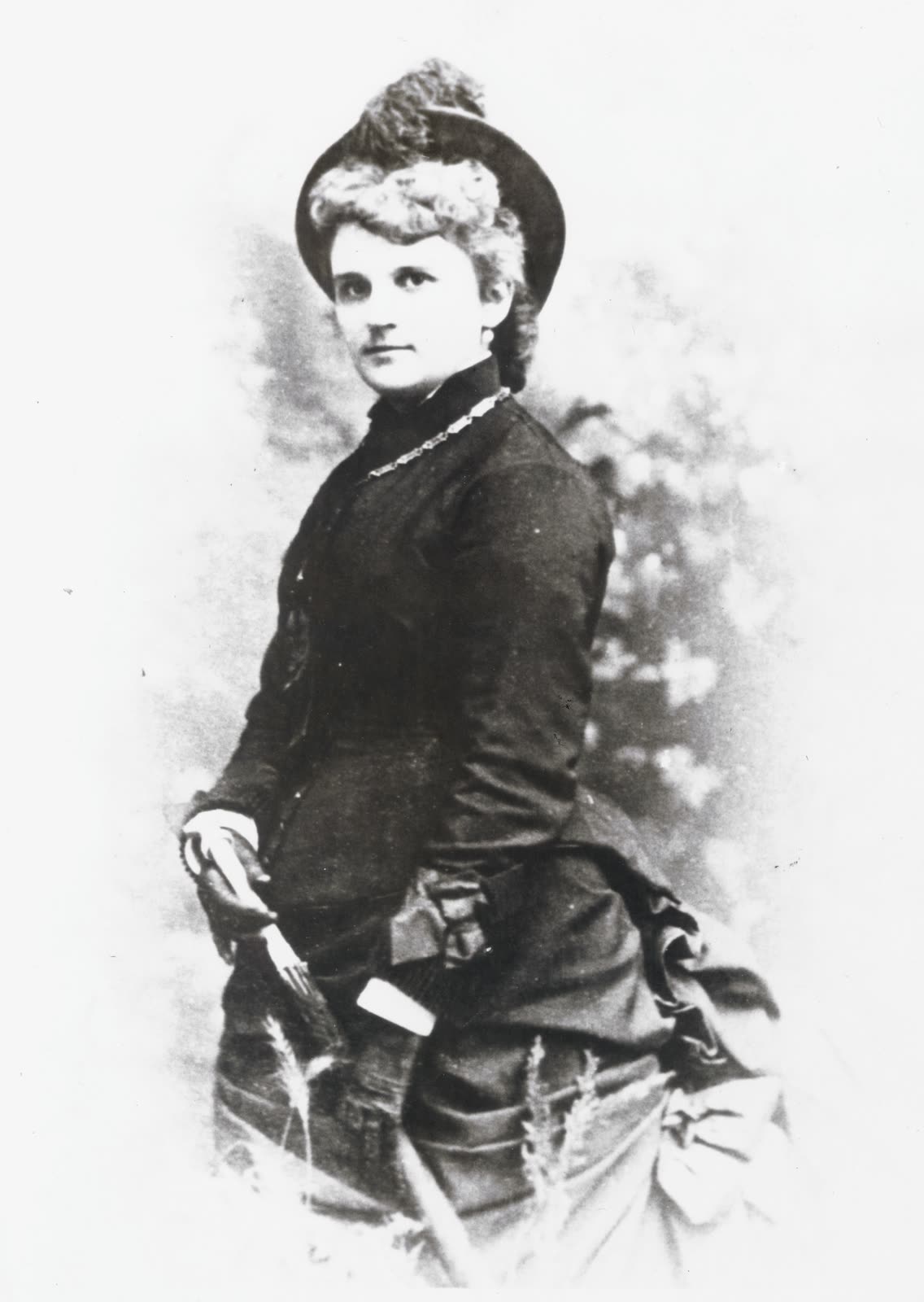
Image context: the cover image is an 1876 archival photograph of Kate Chopin from the Missouri History Museum collection. It belongs here less as author-icon worship than as a reminder that Chopin wrote bodily posture into the novel's symbolic grammar: costume, carriage, confinement, and poise all matter in a book where social form is never merely background.[5]
Birds: the fantasy of lift arrives already under pressure
Chopin places birds in the novel before Edna has language for her own restlessness. The opening scene gives us a "green and yellow parrot" and a mockingbird, a noisy threshold in which speech, mimicry, and confinement are already fused.[1] That beginning is easy to overlook because the book soon shifts into social observation, but its function is exact. The novel's first symbolic register is not the sea. It is caged or perched life trying to produce expression inside someone else's frame.
As the story develops, birds mark the difference between desire for height and capacity for it. Mlle Reisz states the principle most bluntly when she ties artistic and existential courage to wings strong enough to rise above convention.[1][4] The line is famous because it sounds aphoristic, but within the novel it is diagnostic. Edna wants the sensation of ascent before she has found the structures that could support it. Chopin therefore keeps returning to avian imagery not to flatter rebellion but to measure its physical and moral cost.
That is why the ending matters so much. The final image of a "bird with a broken wing" is not ornamental tragedy pasted onto Edna's last walk to the shore.[1] It gathers the whole symbolic sequence into one compressed judgment. Flight has been the novel's central fantasy, yet Chopin insists on damage, gravity, and exposed flesh. The image refuses two weak readings at once: Edna is neither simply liberated nor simply punished by authorial decree. She has moved beyond the script available to her, but the book has shown from the start that leaving the script does not guarantee a viable sky.
Bird imagery also helps explain why The Awakening still resists easy classroom domestication. The novel is not saying that true life lies in instinct alone. Birds in Chopin are not pure nature tokens. They are creatures of fragility, display, and precarious motion. Their symbolic force comes from the fact that they can be admired, housed, trained, injured, and seen. Freedom here is always entangled with spectacle.[1][2]
Houses: social life becomes legible through rooms, thresholds, and scale
If birds supply vertical longing, houses give the novel its social geometry. Edna begins in a domestic architecture that already separates surfaces from inwardness. Chopin writes of "the outward existence which conforms" and the inward life that questions.[1] That division is one of the novel's most durable insights. Marriage is not represented only as feeling or law. It is built into rooms, routines, visiting customs, dinner obligations, and the spatial expectations attached to a respectable woman.
The Pontellier home on Esplanade Street matters because it is large enough to display status and stable enough to make Edna intelligible to others. In that house she appears as wife, mother, hostess, and possession within an orderly arrangement.[1][2] Once she leaves it, the move looks revolutionary. Yet Chopin is too exact to romanticize relocation by itself. The smaller "pigeon house" offers privacy, concentration, and a sharpened sense of chosen life, but its very name prevents it from becoming a triumphant escape emblem.[1] The house is freer, but it is also narrower, smaller in scale, and still figured through domesticated bird imagery.
This is one reason the novel's spatial symbolism feels stronger than a simple opposition between prison and freedom. No house in the book is neutral. Grand Isle offers holiday looseness rather than durable independence. The city house offers legitimacy at the price of role-performance. The pigeon house offers intimacy and self-direction, but in reduced dimensions. Chopin keeps asking what kind of shelter can hold a self that has stopped consenting to its assigned script, and her answer is severe: every available room carries a cost.[1][2][4]
Houses also make visible the difference between inner awakening and public readability. Edna can alter where she sleeps, whom she receives, what furniture she chooses, and how she orders the day, but the social world remains skilled at translating those changes back into legible scandal, eccentricity, or temporary mood.[1][2] The architecture of the novel therefore does not just house experience. It governs interpretation.
The sea: sensuous solitude without a durable polity
Readers often remember the water first, and rightly so. The sea is the novel's strongest medium of bodily transformation. Its touch loosens Edna from the fixed posture expected on land; her first successful swim becomes the book's most immediate scene of altered self-relation.[1][2] But Chopin's crucial phrase is "voice of the sea."[1] The sea does not issue a program. It calls, surrounds, and dissolves. It invites surrender before it offers structure.
That distinction is what keeps the symbolism from turning mystical or merely scenic. The water gives Edna the sensation of unowned being, a state in which family duty, social surveillance, and conversational etiquette lose their ordinary force.[1][2] Yet the novel never suggests that the sea can become a habitable public world. It is powerful precisely because it suspends the social forms that houses enforce. It cannot by itself replace them. In that sense the water is less a destination than a medium in which the burden of legibility briefly falls away.
This is why the swimming scene and the ending belong together. Early in the novel, the sea enlarges possibility through bodily competence: Edna learns she can move alone in a different element.[1] At the end, the return to the shore strips that discovery of any easy progressive reading. The sea remains seductive, but seduction is not the same thing as an alternative order. Chopin keeps the symbol radically double. Water is awakening, solitude, sensual expansion, and obliteration at once.[1][2]
The novel's modern force comes partly from this refusal to overstate what private sensation can accomplish. Many weaker readings convert Edna's experience into pure manifesto. Chopin is more exacting. She grants the necessity of sensuous, private awakening, then asks what happens when no matching social architecture exists to receive it. The sea gives amplitude. It does not give durable form.[1][4]
Why the three motifs matter together
The real achievement of The Awakening is not that each symbol can be decoded separately, but that the three motifs keep correcting one another. Birds prevent the sea from looking like uncomplicated release because they remind us that ascent requires strength, balance, and survival. Houses prevent bird imagery from becoming vague romantic aspiration because they show how power settles into custom and space. The sea prevents the houses from looking total because it discloses a realm of sensation the social script cannot fully govern.[1][2]
That interlock also helps explain the novel's historical afterlife. Britannica notes the hostile 1899 reception and the later recognition of the book as a major American novel, while the Kate Chopin biography and site track how decisively the text entered the classroom and critical canon in the second half of the twentieth century.[2][3][4] The afterlife makes sense because the symbolism never collapses into a period case study. Birds, houses, and the sea turn Edna's conflict into a durable form-question: what carries a self, what contains it, and what happens when desire outruns the available structures that might keep it aloft?
That is why the novel still feels sharper than its summary. The Awakening does not offer a clean doctrine of liberation. It gives us an unstable symbolic ecology in which lift, shelter, and dissolution remain painfully out of alignment. Chopin's greatness lies in refusing to smooth that misalignment away.[1][2][4]
Sources
- Kate Chopin, The Awakening (full text at the Kate Chopin International Society site).
- Encyclopaedia Britannica, "The Awakening" (novel summary, publication context, and critical afterlife).
- Encyclopaedia Britannica, "Kate Chopin" (biographical context for the novel's composition and reception).
- Kate Chopin International Society, "The Awakening" (publication history, classroom afterlife, and critical edition context).
- Wikimedia Commons, "File: Kate Chopin in riding habit.jpg" (image provenance from the Missouri History Museum collection).