Mary Astell's A Serious Proposal to the Ladies can sound, at first, like a pious oddity: an Anglican writer in the 1690s asking elite women to withdraw into a "Religious Retirement."[1][4] Read quickly, that phrase makes the book look smaller than it is. Astell is not simply recommending quiet manners or devotional seclusion. She is designing a counter-environment for attention.
The title page already frames the argument as a social intervention. The book appears in 1694 as A Serious Proposal To the Ladies, For the Advancement of their true and greatest Interest, signed "By a Lover of her SEX."[2][3] The voice is intimate, but the claim is large. Astell argues that women are being trained to spend their minds on perishable value: beauty, praise, flirtation, display, and the anxious management of reputation.[1][2] Her answer is not merely "read more." It is: change the room, change the company, change the habits, and the mind can become available to itself.
That is why the proposed retreat matters. It is not escape from thought. It is infrastructure for thought. Astell imagines a place where women can step outside the loops of courtship and fashionable idleness long enough to learn method, discipline, friendship, and self-command.[1][4] In modern terms, she understands that attention is not only an inner virtue. It is produced, protected, and damaged by institutions.
Beauty Moved From Body To Mind
Astell's opening maneuver is brilliant because it does not begin by insulting beauty. It relocates beauty. The project, she says, aims to fix beauty by moving it "from a corruptible Body to an immortal Mind."[1][2] The phrase is theological, but it also has a sharp literary economy. Physical beauty is unstable because time, sickness, age, and fashion can take it away. Intellectual and moral beauty, by contrast, can be cultivated.
This is not a simple rejection of the body. Astell knows the social world has made women's bodies into instruments of value. Her point is that a system that rewards women chiefly for charm also keeps them dependent on spectators. Praise becomes a form of governance. If a woman is trained to ask whether she is admired before asking whether she understands, her inner life is already being managed by other people.[1][4]
The Stanford Encyclopedia of Philosophy reads this as part of Astell's broader rationalist moral psychology. Women, in that account, have been denied the education that would let them know what they are and how to use their wills well; instead, they are pushed toward "physical perfection" and the praise attached to it.[4] That helps explain why Astell's prose can feel both severe and protective. She is not attacking women for vanity as if vanity were a private defect. She is attacking the training system that makes vanity predictable.
The Retreat Is A Method, Not A Hideout
The most easily misunderstood part of A Serious Proposal is the proposed female institution. Astell calls it a "Religious Retirement," and she even entertains the word monastery before softening the name for Protestant England.[1][4] The word can make the plan sound passive. But the mechanics are active: selected company, regulated conversation, study, devotion, and a shared life arranged around improvement rather than display.
That arrangement is the philosophical heart of the essay. Astell is asking what kind of place would let women practice being rational persons before marriage, household duty, gossip, and fashion consume the available day. Her answer is spatial and social. You need a house. You need a rule of life. You need companions who are not competing for the same male attention. You need time that is not already mortgaged to performance.
Literature in Context's edition keeps the first-edition texture visible: London, R. Wilkin, St. Paul's Churchyard, 1694, with page images sourced from Yale's Beinecke Library.[2][3] That material setting matters because the work itself keeps imagining print as a practical proposal, not a private meditation. Astell writes as if a book might gather subscribers, rearrange behavior, and create a community that does not yet exist.[2]
The retreat is therefore both literal and rhetorical. Even if no reader ever enters such a house, the essay asks her to imagine what her mind would become if it were treated as worth housing.
Knowledge As A Broken Enclosure
Astell's boldest line comes when she predicts how men may react: they may resent having their "enclosure broke down" and women invited to taste "that Tree of Knowledge" men have monopolized.[1][2] The biblical echo is risky and deliberate. The phrase makes learning feel forbidden because that is exactly how the gender order has treated it.
The point is not that Astell is a modern secular egalitarian in disguise. She is not. Her argument is deeply Christian, aristocratic in its immediate address, and aimed especially at women with the leisure and means to enter such a retirement.[4] But those limits do not erase the force of the move. She makes education a question of unjust possession. Knowledge has been fenced off, and the fence has been moralized as if exclusion were nature.
This is where A Serious Proposal becomes more than conduct literature. Conduct books often tell women how to behave inside existing expectations. Astell asks why the expectations have so much power in the first place. If women appear frivolous after being denied serious intellectual practice, the frivolity proves the damage of the system, not the incapacity of the sex.[1][4][5]
Britannica's short account rightly identifies the work as Astell's best-known proposal for a women's college-like institution.[5] But the word institution should not make the essay feel cold. Astell's institution is built from habits of attention: whom one speaks with, what one reads, how one uses French, philosophy, devotion, silence, and friendship.[1][2] The planned community is a machine for making a different kind of day.
Friendship Against Spectatorship
One of Astell's strongest insights is that women cannot simply think themselves free from a bad social script while still surrounded by the incentives that script controls. If conversation is organized around admiration, envy, matchmaking, and display, then friendship weakens into spectatorship. Women look at one another through the same scale by which they are being judged.
The retreat tries to reverse that. It imagines women becoming one another's intellectual company rather than one another's rivals in a public market of charm. This is why Astell's devotional language matters even for readers who do not share her theology. Prayer, study, and regulated conversation are not decorative pieties in the essay. They are practices that slow the appetite for applause and replace it with shared discipline.[1][4]
The result is a philosophy of freedom that does not begin with public rights language. It begins with self-command. Astell wants women to gain an "empire" over themselves, as the Stanford account notes, but that empire is not rugged isolation.[4] It is cultivated through a community strong enough to protect the mind from the cheap satisfactions that have been sold as femininity.
That is the essay's continuing bite. Astell sees distraction as political before the word would be used that way. She understands that a culture can waste women's intelligence without ever openly declaring war on it. It only has to keep them busy with lesser prizes.
Why The Proposal Still Reads Sharply
The book's limitations are real. It speaks most directly to gentlewomen, not to all women. It binds intellectual development to a Christian account of salvation. It does not imagine economic independence in the later Wollstonecraftian sense. Yet its central literary and philosophical form remains powerful: Astell turns a proposal for withdrawal into an argument about the conditions under which thought can happen.[4][5]
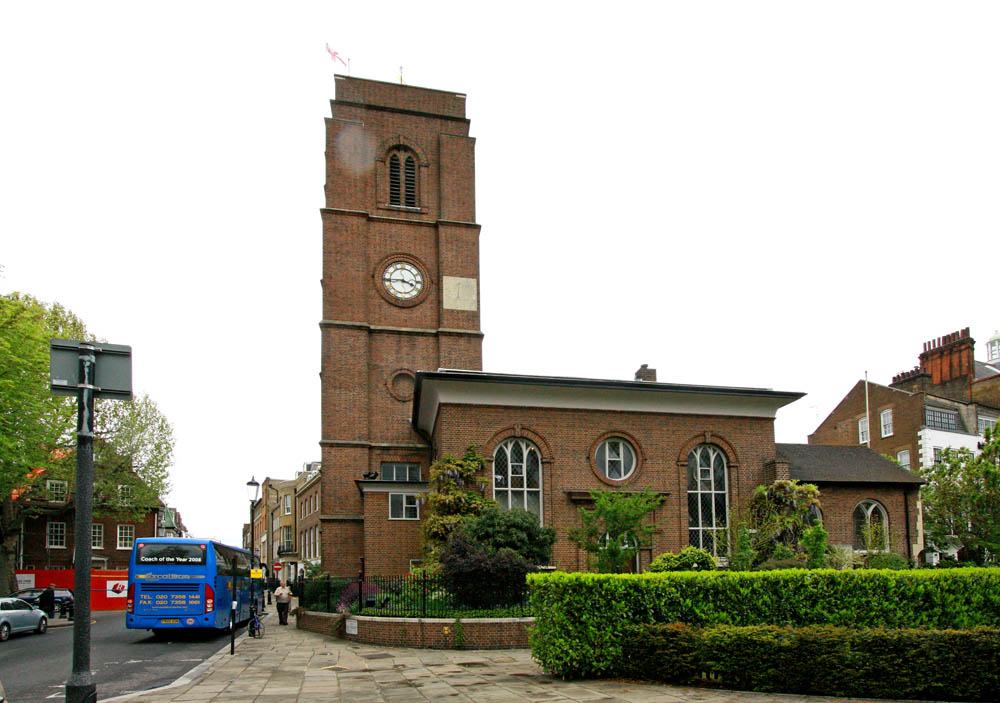
That is why Chelsea Old Church is the right image for the article. The 1694 title page still stages the textual drama: a woman writing anonymously, a public printer in London, a direct address to ladies, and a promise that their "true and greatest Interest" is not the interest society has been selling them.[2][3] But the church photograph adds the missing spatial pressure. Astell's proposal is about housing attention, and her later Chelsea world connects that argument to parish rooms, charitable education, and the stubborn material fact that minds need places.[6][7]
In Astell's hands, retreat is not disappearance. It is a way to stop being organized by spectators. The proposed house is a room before Woolf's room, but sterner, more communal, more devotional, and more suspicious of fashionable life. It says that the mind needs shelter not because women are fragile, but because attention is precious and the world is very good at spending it for them.
Sources
- Mary Astell, A Serious Proposal to the Ladies, for the Advancement of Their True and Greatest Interest - Project Gutenberg eBook page and public-domain text.
- Mary Astell, A Serious Proposal to the Ladies - Literature in Context open anthology edition, based on EEBO-TCP transcription with first-edition page images.
- Yale University Library Digital Collections, A serious proposal to the ladies: for the advancement of their true and greatest interest - Beinecke digitized 1694 copy used for the title-page image.
- Jacqueline Broad, "Mary Astell," Stanford Encyclopedia of Philosophy - account of Astell's rationalist education, religious retirement, self-command, and philosophical context.
- Encyclopaedia Britannica, "A Serious Proposal to the Ladies" - concise work overview identifying Astell's proposal for a women's educational institution.
- Chelsea Old Church, "A Short History of Chelsea Old Church" - parish history noting Mary Astell among figures associated with the church's Chelsea world.
- Wikimedia Commons, "File:All Saints, Chelsea Old Church, Cheyne Walk, London SW3 - geograph.org.uk - 1874767.jpg" - real photograph of Chelsea Old Church used as the article image.