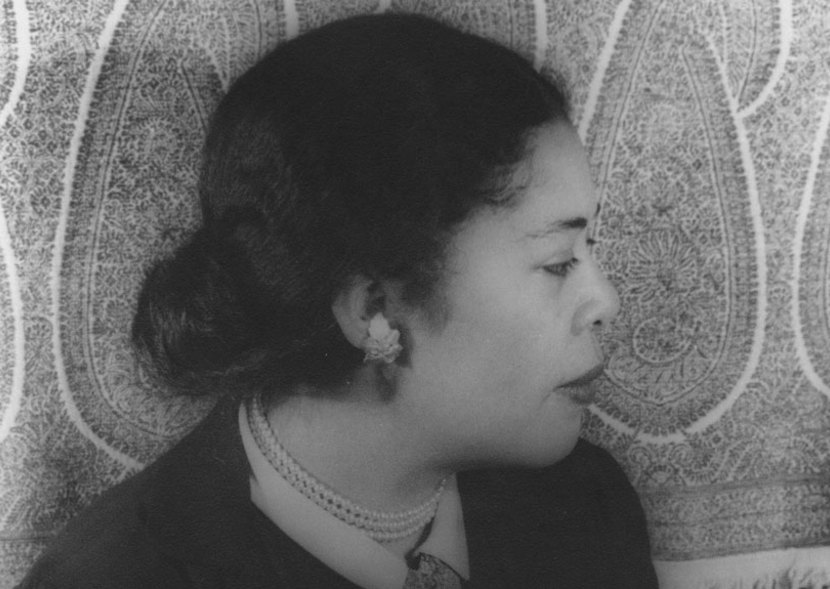
Ann Petry's The Street is often introduced through its breakthrough status: published in 1946, it became the first novel by an African American woman to sell more than a million copies.[3][4][5] That fact is indispensable, but it can also flatten the book into a milestone. The stronger reason to return to The Street is that Petry made a city block behave like a machine. Wind, rent, stairs, hallways, bar rooms, shop windows, police indifference, male entitlement, and the promise of self-help all bear down on Lutie Johnson until plot starts to feel less like choice than pressure finding its channel.[1][2][4]
This is why The Street still reads with such force. It is not only a social-problem novel about 1940s Harlem, and it is not only a naturalist descent into trapped circumstance. Petry's achievement is more exact. She turns environment into grammar. The city does not sit behind the characters as background. It moves through the sentences, alters how people look at one another, narrows what Lutie can imagine, and converts ordinary errands into risk.[1][2]
Petry knew Harlem as a reporting and working environment before she made it fiction. The Connecticut Women's Hall of Fame traces her move to New York in 1938, her work for the Amsterdam News and The People's Voice, her first published story in The Crisis, and the Houghton Mifflin Literary Fellowship connected to The Street.[2] Library of America adds the afterlife: the 2019 LOA volume placed The Street beside The Narrows and a selection of essays, including Petry's 1949 article "Harlem."[1][3] That pairing matters. The novel and the essay share a crucial discipline: Petry studies Harlem as a lived system, not as scenery offered to outsiders.
A Bestseller That Became Strangely Underread
The reception story has its own tension. In 1946, The Street was not obscure. Library of America notes that the book sold more than a million copies, and its later Petry feature cites more than two million copies across languages by the time of the LOA recovery.[3][4] Farah Jasmine Griffin, interviewed by LOA, argues that Petry benefited from a readership already primed by Richard Wright's Native Son, from Petry's own visibility in Harlem journalism, and from active attention in the Black press.[4] That is not the pattern of a quiet masterpiece discovered only by later scholars. It was a major event.
Yet the book's later reputation did not match its first impact. Griffin points to sexism, changing literary taste, and the dominance of later Black male writers as part of Petry's relative invisibility.[4] The Connecticut Women's Hall of Fame gives the biographical counterpart: Petry returned to Old Saybrook in 1947 and remained closely tied to the town where she had grown up.[2] The result is one of the odder canons in American fiction. A novel can be historically famous, commercially proven, and formally powerful, and still require periodic rescue from the margins.
That rescue should not turn Petry into an emblem only. The milestone matters because of the work, not the other way around. If The Street sold because readers wanted a gripping urban novel, it lasted because Petry refused to let grip become simplification. Lutie is vulnerable, ambitious, practical, proud, frightened, tender toward her son Bub, and repeatedly misled by the American promise that work plus thrift should add up to safety.[1][4] Petry makes that promise legible before she breaks it.
The American Dream Enters Through the Kitchen
One of LOA's excerpted passages gives a compact version of the novel's moral method. Bub asks why white people want Black people shining shoes; Lutie cannot produce a clean explanation and finally tells him, "I don't know, Bub."[1] The scene matters because Petry does not let racism stay abstract. It enters the kitchen as a child's question, as a mother's failed explanation, as the cracked ceiling and narrow window she gestures toward while trying to name why their lives are so constrained.[1]
That is Petry's great structural move. Large systems appear as household facts. Race is not only a doctrine. It is where one can live, what work one is assigned, how a child learns the world, and what a mother cannot truthfully soften. Gender is not only a social theme. It is who can move safely through a hallway, whose body becomes a target, whose labor is expected to absorb everyone else's need. Class is not only income. It is rent due, food bought, rooms shared, heat endured, and the small humiliations of having too little margin.[1][2][4]
This domestic scale keeps the novel from becoming a lecture. Lutie is not asked to represent "Black womanhood" as a static category. She is asked to survive Tuesday, then Wednesday, then the next demand. She is trying to keep Bub safe, keep employment, avoid predatory men, hold onto dignity, and believe that disciplined striving might still work. Petry's realism is punishing because it lets the dream remain attractive. If Lutie never believed in self-making, the novel would be simpler. Because she does believe, every blocked door becomes an argument with American common sense.
The Street Watches Back
Petry's Harlem is full of eyes. People stand at windows, observe hallways, size up bodies, read vulnerability, and turn neighborhood knowledge into leverage. That surveillance is one reason the novel feels modern beyond its period details. The street promises public life, but for Lutie it often becomes public exposure. A woman walking home is not merely moving through space. She is being interpreted.
The 1949 "Harlem" context sharpens this point. Library of America notes that George Leavens's photographs accompanied Petry's Holiday magazine essay, showing business districts, cars, local celebrities, crime scenes, and tenement dwellers.[3] Petry was interested in Harlem's variety, including aspiration and glamour, not only deprivation. The Street narrows that broader social field into a danger system because Lutie has so little control over who sees her and what seeing permits them to do.
That distinction keeps the novel from simple urban fatalism. Harlem is not evil. The street is not a supernatural villain. The threat comes from how power circulates through the street: landlords, employers, police, bar owners, gossip, sexual pursuit, and the commercial packaging of Black life for other people's profit. The city block becomes a machine because institutions and appetites mesh there. Petry's title is brutally accurate. The street is a place, but it is also a process.
Covers, Marketing, and the Problem of Looking
PBS NewsHour's feature on five covers of The Street is useful because it shows how the novel was visually sold across decades.[5] The covers turn Lutie and Harlem into different kinds of market signals: literary seriousness, urban danger, paperback seduction, social realism, recovered classic. That visual history exposes a problem already inside the novel. Who gets to look at Lutie, and what do they think they are buying when they look?
Petry's prose resists the more sensational packaging. She writes pressure, not spectacle. The book contains violence and sexual threat, but its deepest unease comes from the way ordinary structures prepare those threats before they arrive. Bad outcomes do not fall from nowhere. They are assembled out of rent logic, employment scarcity, gendered vulnerability, racial exclusion, and the fantasy that someone else's beauty, voice, body, or labor can be converted into money.
That is why The Street belongs beside the strongest American city novels, not in a separate display case marked "important rediscovery." Petry understood that a city novel has to solve two problems at once. It must make a place feel materially real, and it must reveal the invisible rules by which that place distributes freedom. In The Street, wind and architecture do the first job. Surveillance, money, race, and sex do the second.
Why the Book's Revival Should Stay Restless
The most useful modern reception of The Street does not simply say: here is an overlooked classic, now restored. Restoration is only the beginning. The better question is what kind of reading the novel demands once restored. Petry asks readers to notice sequence: how a joke becomes a threat, how a job becomes dependence, how a room becomes exposure, how an aspiration becomes a trap, how a child becomes the pressure point through which a mother can be punished.
That sequencing is the novel's craft. Petry's world is harsh, but it is not vague. Each narrowing has a mechanism. That is why the ending, however one responds to its severity, does not feel like melodramatic punishment pasted onto social critique. It feels like the machine has completed a circuit. The tragedy is not that Lutie lacked will. The tragedy is that will was forced to operate inside a rigged architecture.
Seen this way, The Street is not only an answer to its 1946 moment. It remains a method for reading American promises when they arrive without the material conditions that would let them become true. Work hard, save money, protect your child, improve yourself, keep your dignity. Petry lets those instructions sound reasonable. Then she shows what happens when the street has already priced them beyond reach.
Sources
- Library of America, "Ann Petry" (author page with 1948 Carl Van Vechten portrait, major works, and an excerpt from The Street).
- Connecticut Women's Hall of Fame, "Ann Petry" (biographical profile, induction record, Harlem journalism context, and publication history).
- Library of America, "Ann Petry, 'Harlem'" (2019 note on Petry's 1949 Holiday essay, Harlem photographs, LOA edition, and sales afterlife).
- Library of America, "The power of Ann Petry: 'the issues . . . she faces resonate with our times'" (2019 Farah Jasmine Griffin interview on reception, sales, and Petry's literary place).
- PBS NewsHour, "5 book covers that show how Ann Petry's 'The Street' was depicted over time" (cover and marketing history).