
On September 22, 2003, Adrienne Rich appeared in Wellesley College's Meet the Poet series, in a program later preserved and distributed by GBH's Forum Network.[1][2] The archive looks modest at first glance: a poet reading, introducing poems, and speaking a little about influence, politics, film, and language. But the modesty is deceptive. What the recording preserves is not merely a respectable late-career appearance by a canonical writer. It captures Rich demonstrating, in real time, how public speech can remain lyrical without turning vague, and how lyric speech can remain intimate without withdrawing from history.[1]
That is why this talk matters as an archival object. Rich is often flattened into one of two myths that never quite fit her. In one version she is the poet of political declaration, as if the main thing to notice were the correctness or militancy of the stance. In the other she is the maker of unforgettable lines, a writer whose intelligence can be admired apart from the historical pressures that shaped it. The 2003 recording refuses both reductions. Her voice moves with a speaker's patience and a poet's pressure. She dedicates the reading to a dead childhood friend, situates a poem through Brecht and American dread, speaks about film as a generative force, and later returns to a hard question about whether language can still carry shared meaning.[1][2]
By 2003, Rich's place in American literature was long secure, but the archive is useful precisely because it does not sound monumental. The Poets.org biography tracks the career from the formally accomplished early work of A Change of World through the politically sharpened and intellectually expansive later collections that made her central to feminist and American literary history.[3] The National Book Foundation page for Diving Into the Wreck marks one of the most visible public recognitions of that achievement.[4] The recording, though, puts prestige in the background. What comes forward instead is method: how a poet arranges occasions, names debts, and makes the movement from scene to thought feel earned rather than proclaimed.
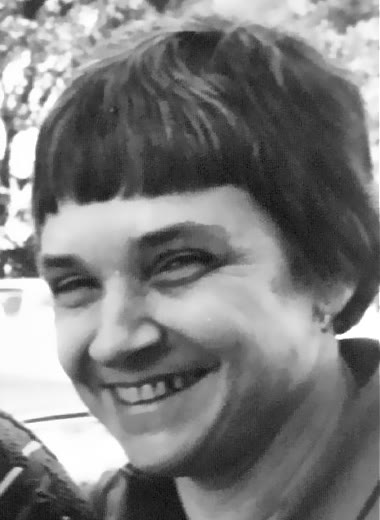
Image context: the cover uses a real 1980 portrait photograph from Wikimedia Commons. That choice fits the argument because the article is about literary presence in historical time. A documentary portrait keeps the emphasis on Rich's public bearing, not on symbolic illustration, and it matches the archival character of a recorded reading from 2003.[6]
Historical context: by 2003 Rich had become canonical without surrendering the urgency of address
Rich's literary career had always involved more than a single tonal register. The compressed biography on the GBH event page moves quickly from her selection in the Yale Younger Poets series to books such as Diving into the Wreck and The Dream of a Common Language, while Poets.org traces the same development as a movement from early formal mastery toward a style increasingly shaped by feminism, public argument, and a refusal of inherited silence.[2][3] Modern American Poetry is useful here because it does not reduce that change to biography alone; it frames Rich as a poet whose formal decisions and political commitments become difficult to separate.[5] That combination is exactly what the 2003 recording makes audible.
The event setting matters too. GBH's page identifies the program as a Wellesley College partnership and notes the introduction by Lawrence Rosenwald, then Anne Pierce Rogers Professor of English at Wellesley.[2] This is important archival provenance, but it also places the talk inside a recognizable academic-literary ecology: an institutional room, a serious audience, a poet who no longer needs to prove status. Yet Rich does not use the occasion to settle into retrospective legend. She speaks as someone still testing relations between poetry, witness, and ordinary speech.
That is the larger historical value of the archive. Rich's reputation is often invoked through titles and positions: feminist poet, lesbian writer, public intellectual, essayist, dissenter. All of that is true, but categories can harden into distance. In the recording, categories give way to tempo. The live voice shows how her authority actually works. It comes not from raising volume or reducing complexity, but from holding private memory, geopolitical anxiety, and formal exactness inside the same sentence.[1][3][5]
Video provenance
The embedded video is the official GBH Forum Network upload of the Wellesley College Meet the Poet event featuring Adrienne Rich.[1] The related GBH event page identifies the date as Monday, September 22, 2003, names Wellesley College as the institutional partner, and preserves the program description that Rich "reads from her and discusses her poetry," introduced by Lawrence Rosenwald.[2] That combination gives the clip the provenance an archival spotlight needs: original series context, event date, institutional host, and preservation through an established public-media archive.
Close reading: what the live voice clarifies
The first decisive moment arrives immediately. Rich opens not with a manifesto, not with institutional thanks stretched into ceremony, but with a dedication to Ellen Carter Spears, the "oldest" and "dearest" friend of her childhood, someone she remembers as possessing an early ethical sense before she herself had language for it.[1] That opening matters because it resets the whole question of public poetry. Rich does not separate the political from the intimate and then move between them as if switching channels. The reading begins in memory, grief, sexuality, and moral recognition all at once. Public seriousness enters through relation, not through abstraction.
That opening also prevents a common misreading of Rich as a poet who arrives already armored in argument. The dedication is careful, vulnerable, and unsentimental. It gives the room a human measure before any larger frame appears. What follows, then, is not a poet stepping away from intimacy into politics. It is a poet showing that the two have always belonged to the same field of obligation. The personal anecdote does not soften the reading. It establishes what public language is supposed to answer to.[1][3]
Around the 8:50 mark, Rich introduces "What Kind of Times Are These" by tracing the title back to Brecht and the period before Hitler's rise.[1] This is a crucial move. Rather than presenting the poem as free-floating lyric conscience, she places it inside a historical relay of warning, transmission, and altered context. Then, a minute later, the poem sharpens into one of the talk's most arresting lines: this is "not somewhere else but here," our own country moving toward its own truth and dread.[1] In performance, that gesture does two things at once. It internationalizes the poem's origin and localizes its demand. Rich makes historical analogy function as a pressure on the present, not as a decorative allusion.
What becomes audible there is her sense of scale. She does not inflate the poem into prophecy. She narrows it into address. The effect is characteristic Rich: the poem sounds politically alert because it is formally exact about where speech is standing. That is one reason her work has lasted beyond the immediate circumstances of any given movement. She does not merely state that public life is dangerous. She builds a sentence that makes evasion harder. The archive lets us hear the craft behind that force.[1][3][5]
The middle of the recording adds another layer. Around 23:00, Rich introduces a poem generated by Nina Menkes's film The Great Sadness of Zohara, describing the movie as almost without dialogue and centered on a woman leaving Jerusalem's ultra-Orthodox quarter.[1] This is a revealing aside because it shows Rich speaking not only as a political poet or autobiographical witness, but as a reader of other arts. She tells the audience that film helped generate the poem. That explanation matters. It suggests that for Rich, public consciousness is not only produced by slogans, essays, and events. It is also shaped by visual structures, by silence, by the movement of a body through social and religious space.
The late section of the talk brings the argument to its clearest theoretical point. Around 47:50, Rich introduces "Transparencies" by referencing an ongoing argument in literary theory and among poets about whether language is "transparent or not," whether words can mean, whether people can understand one another at all.[1] She does not offer a seminar summary. She stages the problem at the threshold of a poem. That choice is revealing. Rather than solve the question discursively, she lets the poem become the place where doubt about language must still work through sound, syntax, and relation. The archive catches Rich refusing two temptations: naive confidence that words automatically connect us, and fashionable despair that they cannot connect us at all.
This is the deepest reason the reading still feels contemporary. Rich's public voice is neither merely declarative nor merely skeptical. It is answerable. The opening dedication, the Brecht-framed warning, the film-mediated poem, and the reflection on language all belong to the same ethic. Form is not ornament laid atop conviction. Form is how conviction avoids becoming dead rhetoric. In that sense the 2003 recording is a compact lesson in why Rich's poetry remains difficult to paraphrase into slogans even when it enters public debate so forcefully.[1][3][5]
Why this archive still matters
This archive matters now because it restores labor to a writer too often encountered as a finished emblem. Rich can be invoked so quickly, and for such strong reasons, that the work of the poems sometimes disappears behind the authority of the name. The Wellesley recording reverses that process. It puts the name back inside breath, pacing, framing, and choice. One hears how she opens a room, how she situates a poem historically, how she credits other forms, and how she keeps returning to the ethical problem of address.[1][2]
That is also why the recording belongs under literature rather than only under political history or feminist history. Its enduring force is inseparable from poetic technique. Rich's seriousness does not survive because her themes were correct in the abstract. It survives because the poems keep converting historical pressure into forms that remain speakable. The 2003 archive preserves that conversion while it is happening, which is why it remains more than tribute material. It is still instruction.[1][3][5]
Sources
- GBH Forum Network, "Meet the Poet: Adrienne Rich," YouTube video.
- GBH, "Meet the Poet: Adrienne Rich" (Forum Network event page with date, partner, and program description).
- Academy of American Poets, "Adrienne Rich."
- National Book Foundation, Diving Into the Wreck: Poems 1971-1972.
- Modern American Poetry, "Adrienne Rich."
- Wikimedia Commons, "File:Adrienne Rich 1980 (820298895) (cropped).jpg."