The Wagner Act is often remembered as a pro-union landmark from the New Deal, a moment when the federal government finally declared that workers had a right to organize.[1][2] That memory is true as far as it goes, but it leaves the law flatter than it really was. The sharper historical point is that the National Labor Relations Act of 1935 endured because it did not stop at recognition. It built a mechanism. Rights in Section 7, employer unfair labor practices in Section 8, majority-rule representation in Section 9, a national board, regional offices, complaint procedure, and supervised elections all worked together to turn labor conflict into an administrative file the federal state could process.[2][4]
That mechanism is why the act survived the gap between legislative aspiration and social struggle. A declaration of rights can be ignored. A rights system with intake points, investigators, hearings, ballots, and enforceable orders is harder to evade.[1][2][4] The constitutional rescue in 1937 mattered for the same reason. When the Supreme Court upheld the act in NLRB v. Jones & Laughlin Steel Corp. on April 12, 1937, it did not simply approve a labor ideal. It kept an institutional machine alive long enough to scale.[5][6]
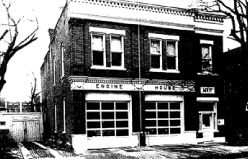
The cover image catches that mechanism at the right level.[3] It shows the first NLRB election, held in a Fort Wayne, Indiana firehouse in December 1935 for workers at Wayne Knitting Mills.[3] That is the right visual because the Wagner Act's force did not lie only in the language Congress enacted on July 5, 1935. It lay in the moment the law began sorting workers into a bargaining unit, taking a count, and certifying a representative.[2][3][4]
Timeline anchors
- February 1935: Senator Robert F. Wagner introduces the bill in the Senate after revising earlier New Deal labor-board experience into a stronger enforcement design.[1]
- July 5, 1935: President Franklin D. Roosevelt signs the National Labor Relations Act into law.[2]
- December 1935: the first NLRB election is held in Fort Wayne on behalf of workers at Wayne Knitting Mills.[3]
- June 30, 1936: the Board's first annual report says 1,068 cases had been filed with the Board and its regional offices, with 664 already closed.[4]
- April 12, 1937: the Supreme Court upholds the act in NLRB v. Jones & Laughlin Steel Corp., preserving the Board's machinery.[5][6]
- After Jones & Laughlin in 1937: the NLRB says its caseload rose 1,000 percent, forcing Congress to appropriate more funds and expand staff.[3]
These dates matter because they show a sequence larger than one statute. The act moved from congressional design, to field procedure, to constitutional crisis, and then into rapid administrative expansion.[1][3][4][5]
1. The act converted labor rights into a federal operating system
The first mechanism was structural. The National Archives summary is especially useful because it shows how much the law tried to do at once. Congress did not merely bless collective bargaining in the abstract. The act guaranteed employees the right to self-organization, to choose representatives, and to engage in concerted activity; it also created the National Labor Relations Board to supervise elections, investigate disputes, and penalize employer unfair labor practices.[2]
That combination mattered because earlier New Deal labor policy had already exposed the weakness of softer enforcement. The NLRB's own history says Wagner revised his bill in 1934 and 1935 in order to build on the experience of the earlier NIRA boards and solve the enforcement problem that had plagued them.[1] The new board was meant to enforce employee rights rather than merely mediate disputes.[1] This is the first causal hinge. The Wagner Act worked differently because it linked principle to forum. Once a worker's right could be filed, investigated, heard, and remedied, the state stopped acting only as a witness to industrial conflict and began acting as its procedural manager.[1][2]
2. Majority rule and exclusive representation made bargaining legible
The second mechanism was the law's insistence on majority rule inside an appropriate bargaining unit. The first annual report explains the architecture clearly: collective bargaining under the act rested on the idea that representatives chosen by a majority would be the exclusive representatives of all workers in the unit for bargaining purposes.[4] That design reduced a recurring industrial question that employers had long manipulated: who, exactly, speaks for labor?
This was more than a technicality. Before a system of certified representation, employers could delay, divide workers by craft or department, sponsor compliant in-house plans, or simply dispute whether any union truly represented the workforce.[2][4] The act turned that ambiguity into a contest with rules. The Board would determine whether a question concerning representation existed, identify the appropriate unit, direct an election, and certify the result.[2][4] The firehouse election in Fort Wayne matters because it shows the law making that process visible.[3] Representation ceased to be only a matter of street pressure or employer recognition. It became something that could be counted and certified.
This is also why the act changed the tempo of labor politics. A strike could still happen. Organizing pressure still mattered. But a vote administered by the Board gave unions a way to convert organizing energy into a legally recognized bargaining relationship.[2][3][4]
3. Complaint procedure and regional offices made the law portable
The third mechanism was administrative reach. The annual report describes a fully regionalized system: charges were ordinarily filed with the regional director where the unfair labor practice occurred; the regional director and regional attorney investigated; efforts at voluntary compliance came first; and, if necessary, formal complaints, hearings, and Board orders followed.[4] That is the machinery that made the law portable. Workers did not need the full federal government physically present at each factory gate. They needed accessible intake points that could translate local conflict into federal procedure.[4]
The early numbers matter here. By June 30, 1936, the first annual report recorded 1,068 cases filed with the Board and its regional offices, with 664 already closed.[4] That is not yet the scale the act would later reach, but it is enough to show the mechanism taking hold. A labor law becomes historically durable when people begin using it. Filing, investigation, settlement pressure, hearings, and orders are what turned the Wagner Act from a declaration in Washington into a recurring practice in the field.[3][4]
The complaint side also explains why employer hostility became so intense. The law did not only praise unionism. It identified actionable conduct: interference, coercion, domination of labor organizations, discrimination to encourage or discourage union membership, and refusal to bargain collectively.[2][4] That meant the Board was not just offering rhetoric to workers. It was creating a docket against management behavior.
4. Constitutional survival kept the whole mechanism from collapsing
The fourth mechanism was judicial survival. The NLRB history says employer groups attacked the law almost immediately, federal courts issued nearly 100 injunctions against its operation, and the Board was effectively paralyzed until the Supreme Court ruled on constitutionality.[5] That point is crucial. A well-designed administrative system still fails if courts prevent it from functioning.
The breakthrough came in NLRB v. Jones & Laughlin Steel Corp. The NLRB history page summarizes the holding at a high level: the Court sustained Congress's power to regulate employers whose operations affect interstate commerce, even if they were not themselves directly engaged in commerce.[5] The GovInfo record fixes the date at April 12, 1937 and ties the case to the Board's order requiring reinstatement of workers discharged for union activity.[6] In practical terms, the decision preserved the legal bridge between workplace conflict and federal power.[5][6]
The post-decision effect shows why this mattered. The NLRB says caseload rose 1,000 percent after Jones & Laughlin, and Congress had to provide more operating funds and staff.[3] That is the giveaway. The act's historic power did not lie only in the Court's language or only in Wagner's drafting. It lay in the fact that, after April 1937, unions and workers could treat the Board as a functioning venue rather than as a stalled experiment.[3][5][6]
Why the Wagner Act lasted
The Wagner Act endured because it solved several labor-governance problems at the same time.[1][2][4] It defined worker rights, named employer conduct that violated those rights, created a national agency, distributed that agency through regional offices, established majority-rule representation, and supplied procedures for elections and complaints. Then the Supreme Court preserved the whole arrangement before the courts could suffocate it.[4][5][6]
That is the more precise causal reading. The Wagner Act did not become foundational simply because it was pro-labor in sentiment. It became foundational because it made collective bargaining administratively legible. Rights could be filed. Representation could be counted. Employer resistance could be charged. Orders could issue. After Jones & Laughlin, all of that could continue at national scale.[2][3][4][5][6]
Sources
- National Labor Relations Board, "1935 passage of the Wagner Act" - on Wagner revising earlier New Deal labor-board experience, the bill's creation of an independent enforcement agency, Section 7 rights, and the law's July 1935 passage.
- National Archives, "National Labor Relations Act (1935)" - on the act's July 5, 1935 signing, Section 7 rights, interstate-commerce coverage, democratic union elections, and employer unfair labor practices.
- National Labor Relations Board, "1935 Enforcement of the Wagner Act" - on the first NLRB election in Fort Wayne, the post-1937 1,000 percent caseload increase, and the field-level pressures confronting the early Board.
- National Labor Relations Board, First Annual Report of the National Labor Relations Board - on majority rule, exclusive representation, regional-office procedure, complaint handling, and early case volume through June 30, 1936.
- National Labor Relations Board, "1937 Act Held Constitutional" - on employer attacks, the nearly 100 injunctions against the act's operation, and the Supreme Court's decision upholding the law in Jones & Laughlin.
- GovInfo, "National Labor Relations Board v. Jones & Laughlin Steel Corporation, 301 U.S. 1 (1937)" - official case record giving the Supreme Court decision date and the case context around Board-ordered reinstatement.