Nelson Mandela's Rivonia Trial speech is usually remembered from the back end. Public memory runs straight to the last line, to the ideal for which he was prepared to die, and the speech is therefore often treated as an act of moral courage suspended above the rest of the trial.[1][2][6] That memory is understandable, but it hides the more exact historical force of the document. The speech mattered because it was not only brave. It was tightly built.
Read as a primary source, the statement works less like a farewell and more like a legitimacy brief. Mandela opens by admitting what can be admitted, including his role in founding Umkhonto we Sizwe, and then spends the rest of the speech narrowing, sequencing, and politically reframing that admission.[1] He argues that sabotage emerged only after peaceful channels had been blocked, that it was chosen over terrorism because the leadership wanted to control violence rather than unleash racial war, and that the apartheid state itself had broken the democratic basis on which legal obedience usually rests.[1][2][4] By the time the famous closing sentence arrives, it no longer sounds like a theatrical flourish. It sounds like the final consequence of the argument that precedes it.[1][2]
Timeline anchors
- 21 March 1960: the Sharpeville killings and subsequent state crackdown accelerate the closing of legal political space for the ANC and allied movements.[1][4]
- 1961: Umkhonto we Sizwe is formed after the ANC leadership concludes that nonviolent methods alone can no longer carry the struggle.[1][4]
- 11 July 1963: police raid Liliesleaf Farm in Rivonia, seizing documents and arresting leading activists; the broader Rivonia case takes shape from that raid.[3][4]
- 9 October 1963: the Rivonia Trial opens in Pretoria.[4]
- 20 April 1964: Mandela delivers the speech from the dock on the first day of the defense case.[1][2]
- 12 June 1964: Mandela and several co-accused are convicted and sentenced to life imprisonment rather than death.[6]
These dates matter because the speech is not detachable from the trial sequence around it. It belongs to a moment when the state wanted to prove criminal conspiracy and the defense wanted to turn the courtroom back toward the political order that had produced the case.[2][3][4]
1. Why the speech came from the dock, not the witness box
The first structural fact is procedural. Mandela did not take the stand as an ordinary witness. The Nelson Mandela Foundation account explains that he chose to make a speech from the dock rather than testify under oath, which meant he could deliver a long uninterrupted political statement without exposing himself to cross-examination on every point.[2] That choice already tells us how the defense understood the moment. The point was not only to rebut facts in the indictment. The point was to change the frame of judgment.
This is why the opening matters so much. Mandela does not begin with abstraction. He begins with identity, legal position, and responsibility. He tells the court that he is already a convicted prisoner serving five years, that he helped form Umkhonto, and that he intends to correct false impressions created by the state's witnesses.[1] The move is deliberate. He does not speak like someone fleeing authorship. He speaks like someone taking charge of authorship.
That choice gave the speech a peculiar authority. If he had started with moral grandeur alone, the address could have been dismissed as heroic camouflage. Instead he starts by conceding what the state can already show, then insists on defining what those admissions mean.[1][2] The source of force is not innocence. It is political explanation.
2. The speech admits sabotage, then narrows it with almost legal precision
The most important turn comes early, when Mandela addresses sabotage directly.[1] He does not deny planning it. But he refuses the state's preferred moral vocabulary. In the transcript, he says the decision did not arise from recklessness or love of violence. It followed what he presents as a long, sober assessment of tyranny, exploitation, and the closing of lawful opposition.[1]
This is the center of the speech's political intelligence. Mandela does not try to erase militancy. He tries to rank forms of militancy. The speech argues that if African leaders did nothing, uncontrolled violence and racial bitterness would spread anyway; responsible leadership therefore tried to channel pressure into sabotage rather than terrorism.[1] That distinction is not cosmetic. It is the hinge between criminal conspiracy and political strategy.
He makes the sequencing visible. The ANC had pursued constitutional protest for decades. It had sent delegations, passed resolutions, and pressed demands through lawful channels. Even after that, it shifted into peaceful but unlawful protest, including the Defiance Campaign, and still emphasized discipline and nonviolence.[1] Only after those avenues were legislated against, and after the state answered peaceful pressure with bans, force, and emergency power, did the leadership decide that a controlled form of violence had become unavoidable.[1][4]
That chronology does two jobs at once. First, it gives sabotage a history, which makes it look less like appetite and more like consequence. Second, it turns the state into the causal engine of escalation. The speech keeps saying, in different forms, that the government closed the door and then prosecuted those who refused to stay outside it.[1][2][4]
The argument also protects the speech from the charge of racial revenge. Mandela insists that the movement did not want inter-racial war and tried to avoid it.[1] He places sabotage inside a nonracial horizon, not outside one. That is why the speech still reads as more than militant self-justification. It is a document about restraint under conditions of coercion.
3. From sabotage, the statement widens into a deeper argument about political legitimacy
Once Mandela has dealt with violence, the speech expands. It becomes a history of why the apartheid state lacked the moral right to demand obedience from the majority it excluded. The transcript traces the ANC from 1912, through decades of constitutional petitioning, into the era of bans and underground organization.[1] The historical point is not decorative. He is building a record that says: legality in South Africa had ceased to be democratically reciprocal long before the accused were charged.
This is where the speech becomes more radical than the slogan attached to it. Mandela argues that Africans were governed by laws they did not help make, barred from meaningful representation, and confronted by a white republic built without their consent.[1][4] He invokes the Universal Declaration of Human Rights to say that governmental authority should rest on the will of the people, then places the ANC's refusal to dissolve in that frame.[1] The implication is sharp. The state is treating obedience as neutral while preserving a political order structured around white supremacy.
Seen in that light, the speech is not only defending particular acts. It is contesting the court's monopoly on legitimate public reason. Mandela effectively says that the defendants are being judged by a legal system whose own democratic standing is broken. That does not make the courtroom disappear. It makes the courtroom historically conditional.
This is why the speech spends so much time on institutional lineage. A shorter speech could have rushed to martyrdom. Mandela instead gives the court a history of patient petition, disciplined protest, legal exclusion, and state force.[1][4] He wants the decision for sabotage to look derivative, not original. The originating violence, in his account, lies in apartheid's structure.
4. Why the ending lands so hard
By the time the speech reaches its most famous paragraph, several layers are already in place. Mandela has presented himself as accountable, described sabotage as controlled rather than indiscriminate, rejected both white domination and black domination, and tied the entire argument to a democratic future in which all persons live together with equal opportunity.[1][6] The closing sentence lands because the speech has already made clear what is being risked and what is being defended.
This is also why it is too shallow to read the ending as pure martyr language. The last line matters because it is not detached from political design. It is the endpoint of a long demonstration that the struggle was neither nihilist nor tribal. The ideal is not vengeance. The ideal is a nonracial democracy. The willingness to die is therefore not presented as romance with sacrifice. It is presented as the price of holding that democratic claim under a regime that has criminalized it.[1][2]
The archival page reproduced on the Foundation site reinforces this point.[6] Seeing the typed final paragraph as a document, with Mandela's signature beneath it, brings the speech back down from quotation culture into material history. It was a courtroom statement, prepared for a capital-risk setting, not a free-floating line invented later for commemoration.[2][6]
5. Two strong readings
Reading A: the speech is mainly remembered because of personal courage
This reading centers the final paragraph and the death-sentence risk surrounding the trial. It hears the speech as a moral act of self-offering that resonated far beyond law.[2][6]
That reading captures something real. Courage is inseparable from the event, and no close reading should pretend otherwise.
Reading B: the speech is mainly a political legitimacy argument
This reading gives priority to the way Mandela sequences the case: decades of closed constitutional channels, disciplined nonviolent protest, escalating repression, controlled sabotage, and then the claim to a democratic South Africa beyond white supremacy.[1][2][4]
That reading also captures something essential. The speech's real power lies in how carefully it explains the movement's choices and contests the state's moral standing.
Working assessment
The strongest reading is sequential. The speech becomes unforgettable because it is first a legitimacy argument and then a courage argument. The ending would not carry the same historical force if the preceding pages had not already transformed the meaning of sabotage, law, and political obligation.[1][2]
Why this document lasts
Many political trial statements survive only as slogans. Mandela's Rivonia speech survives as argument. It does not ask the listener to admire resistance in the abstract. It reconstructs the path by which a movement crossed from constitutional petition to underground struggle while still insisting on a nonracial democratic horizon.[1][2][4]
That is why the statement remains larger than the courtroom in which it was delivered. It shows how a defendant can refuse the state's narrative without pretending the facts are simple. Mandela admits enough to sound credible, narrows enough to sound responsible, widens enough to sound historical, and only then ends on principle. The final sentence is famous. The architecture underneath it is why the document still matters.
Sources
- Nelson Mandela Foundation, Prepared to die 20 April 1964 speech final - official transcript of Mandela's statement from the dock, used for the speech's structure, sabotage argument, ANC chronology, and democratic claim.
- Nelson Mandela Foundation, Prepared to Die speech: Not Mandela's first speech from the dock - on why Mandela chose the dock statement form, the absence of cross-examination, and the defense team's political strategy.
- Nelson Mandela Foundation, "Rivonia Trial" - official overview of the trial archive, its fragmented custody history, and its significance in South African political history.
- South African History Online, "Rivonia Trial 1963 - 1964" - background on the Liliesleaf raid, the trial sequence, and the apartheid-era setting in which the speech was delivered.
- Nelson Mandela Foundation, "Nelson Mandela makes his historic three-hour 'I am prepared to die' speech at the Rivonia Trial" - date-specific archive note confirming the 20 April 1964 speech and its place in the trial's historical memory.
- Nelson Mandela Foundation, "I am prepared to die" - source page for the signed typescript image and for the speech's afterlife in archival memory.
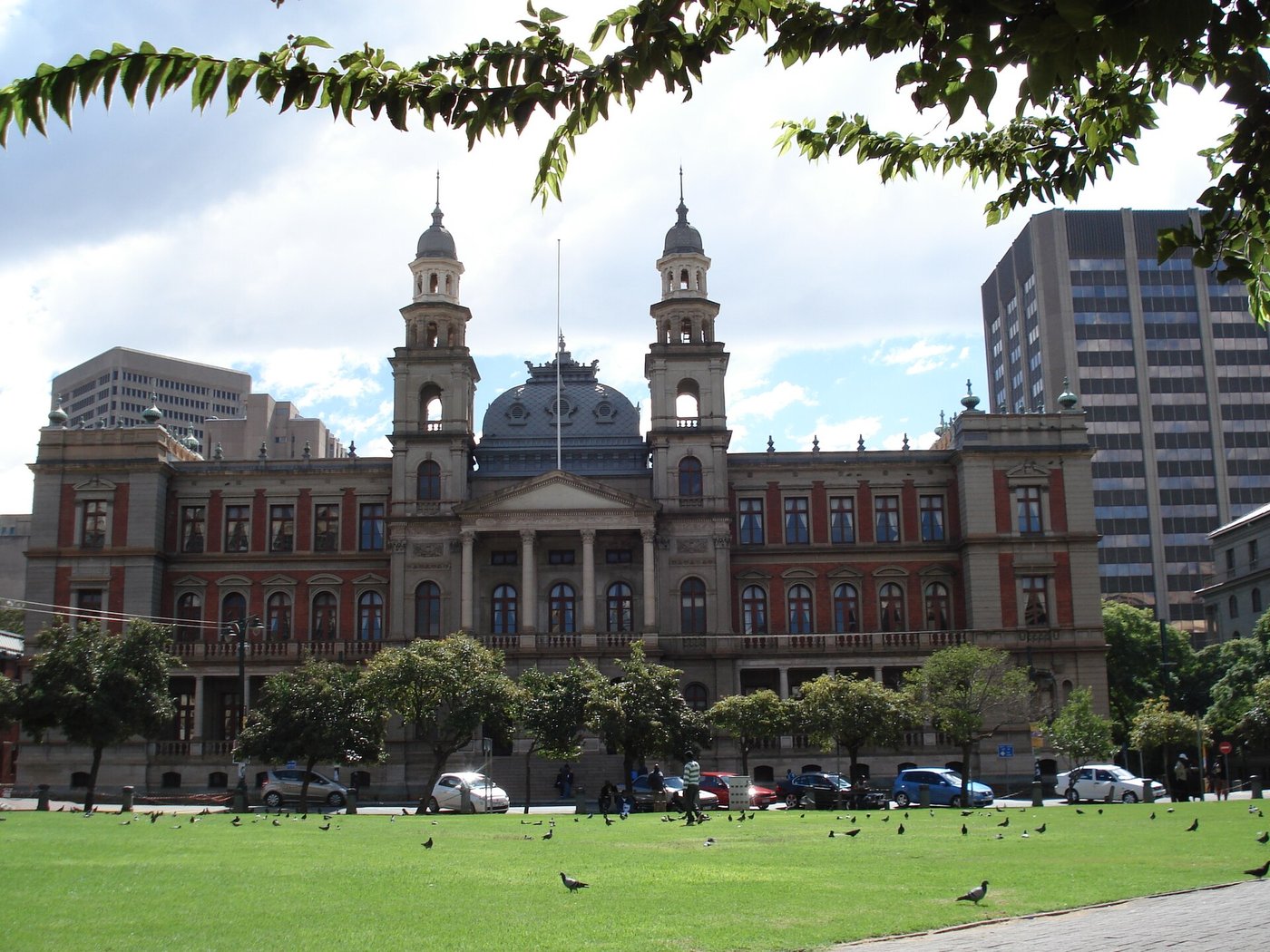
- Wikimedia Commons, "File:Palace of Justice, Church Square, pretoria.JPG" - documentary courthouse photograph used as the article image.